Sustainable harvesting in Māori tradition, or Rongoā, is the practice of gathering medicinal plants while maintaining the ecological and spiritual balance of the forest. By adhering to tikanga, practitioners ensure that only what is necessary is taken, protecting the mauri of the plant and securing future generations’ access to healing resources.
Understanding Tikanga and Sustainable Harvesting Māori
In the realm of Rongoā Māori, sustainability is not merely a modern environmental buzzword; it is an ancient philosophy woven into the very fabric of Tikanga—the Māori way of doing things. When we discuss sustainable harvesting Māori, we are speaking about a reciprocal relationship between the practitioner and the land (Papatūānuku). This relationship is governed by the principle of Kaitiakitanga, or guardianship, which dictates that humans are not masters of the environment but its protectors.
Central to this practice is the concept of Mauri, or life force. Every plant, stone, and stream possesses Mauri. When a practitioner enters the forest (Te Ngahere), they are entering a sacred space. To harvest sustainably is to act in a way that enhances the Mauri of the forest rather than depleting it. This involves deep observation, spiritual preparation, and a profound understanding of the seasons and lunar cycles known as Maramataka.

The Concept of Mauri and Life Force
Mauri is the essential vitality that binds the physical and spiritual worlds. In the context of Rongoā, the potency of a medicine is directly linked to the Mauri of the plant at the time of harvest. If a plant is stressed by drought, over-harvesting, or environmental degradation, its Mauri is weakened, and its healing properties are diminished. Sustainable harvesting Māori practices ensure that the plant remains vibrant and healthy, thereby preserving its medicinal efficacy for the long term.
Whakapapa: The Genealogical Connection to Flora
Practitioners view plants as senior relatives in the hierarchy of creation. This genealogical connection, or Whakapapa, means that harvesting a leaf is akin to asking a relative for assistance. This perspective naturally leads to a more respectful and sustainable approach. One does not take from a relative without permission, and one certainly does not take more than the relative can afford to give.
Over-harvesting Prevention: Safeguarding Native Species
Over-harvesting prevention is perhaps the most critical component of sustainable harvesting Māori. As the global interest in indigenous medicine grows, the pressure on New Zealand’s native flora increases. Traditional practitioners employ several strategies to prevent the depletion of these precious resources.
One primary rule is the “rule of thirds” or localized variations thereof. A practitioner may only harvest from a small percentage of a plant population, ensuring that the majority of the plants are left untouched to reproduce and support the local ecosystem. For example, when harvesting Kawakawa (Macropiper excelsum), a practitioner will only take a few leaves from each bush, specifically looking for leaves with holes in them, as these are often the most medicinally potent and signify that the plant is already part of the forest’s natural exchange.

Identifying Vulnerable Ecosystems
Not all forests are equal in their resilience. A practitioner must be able to assess the health of a specific grove before deciding to harvest. If a site shows signs of stress—such as yellowing leaves, lack of new growth, or the presence of invasive pests—the sustainable practitioner will move to a different location or postpone harvesting altogether. This ability to read the land is a skill honed over years of apprenticeship and observation.
Seasonal Calendars and Maramataka
The Māori lunar calendar, Maramataka, provides a sophisticated framework for sustainable harvesting Māori. Certain days are auspicious for gathering leaves, while others are better for roots or bark. By following these cycles, practitioners ensure they are harvesting at times when the plant’s energy is concentrated in the desired part, which maximizes potency while minimizing the physical volume of material required. This efficiency is a natural deterrent to over-harvesting.
Plant Communication: The Sacred Dialogue
To the uninitiated, the idea of communicating with plants may seem metaphorical, but in Rongoā, it is a practical and spiritual reality. Sustainable harvesting Māori involves a dialogue between the harvester and the forest. This communication begins with Karakia (prayer or incantation), which serves to settle the practitioner’s mind and notify the forest spirits of their intentions.
By quieting the mind, a practitioner can sense the “permission” of the plant. If a particular tree feels “heavy” or if a bird gives a warning call, the practitioner respects these signs and moves on. This intuitive check-and-balance system is a powerful tool for sustainability, as it prevents the harvesting of plants that are not ready or are under stress.
The Role of Karakia in Harvesting
Karakia is not just a ritual; it is a tool for alignment. It aligns the practitioner’s vibrations with those of the forest. In sustainable harvesting Māori, Karakia acts as a commitment to the environment. It is a verbal contract that the practitioner will only take what is needed and will use the gift with respect. This spiritual accountability ensures that the practitioner remains mindful of their impact on the ecosystem.
Waste Management and Circularity in Rongoā Preparation
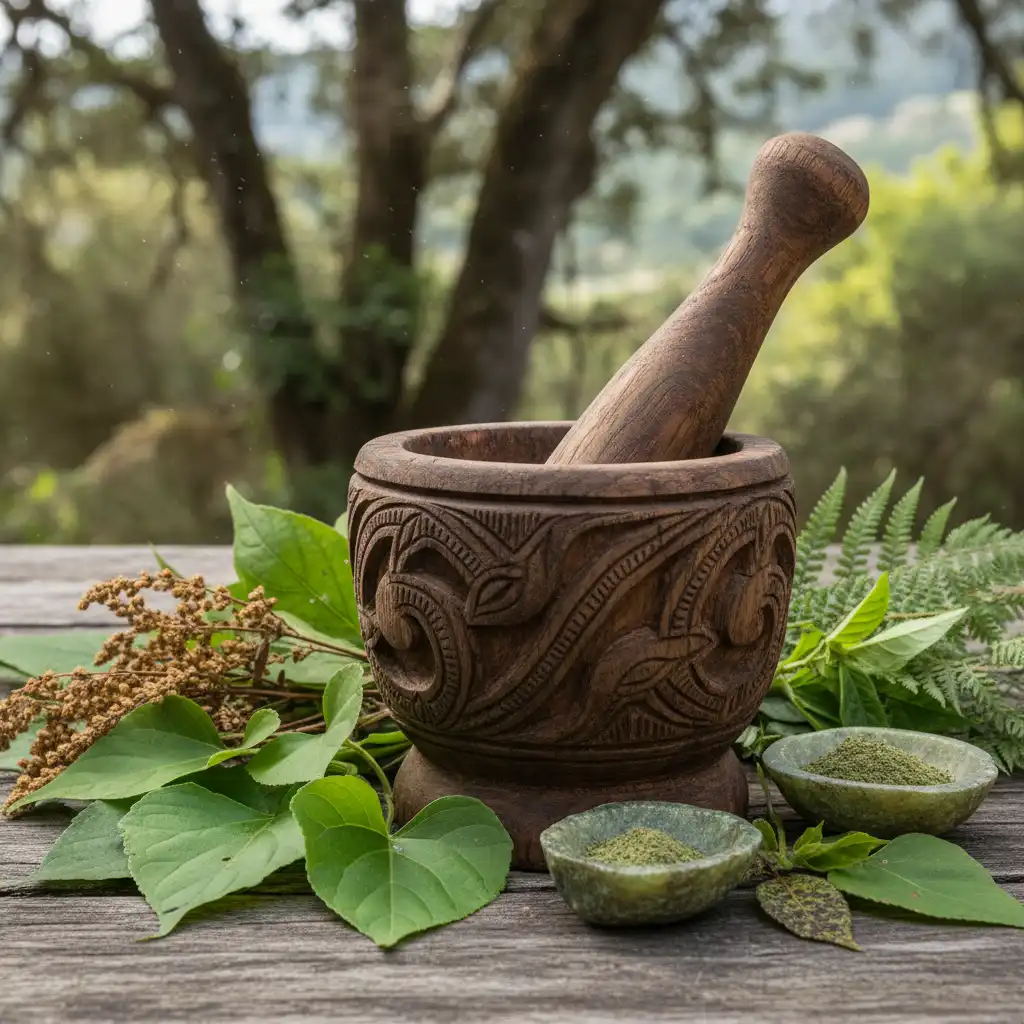
Sustainability extends beyond the forest and into the pharmacy. Waste management in Rongoā preparation is characterized by a zero-waste philosophy. Traditional Māori medicine preparation emphasizes using every part of the harvested material or returning unused portions to the earth in a way that completes the nutrient cycle.
When a practitioner prepares a tincture, infusion, or poultice, the “spent” plant material is rarely thrown in the trash. Instead, it is returned to the forest or a garden, often at the base of the same species of plant from which it was taken. This practice, known as returning the body to the whenua (land), ensures that the physical nutrients and the residual Mauri are recycled back into the ecosystem.
Zero-Waste Processing Techniques
In a clinical or home setting, modern Rongoā practitioners are finding innovative ways to minimize waste. This includes using solar infusions to reduce energy consumption, employing reusable glass vessels, and ensuring that any byproduct—such as stalks or extra leaves—is utilized for compost or secondary products like herb-infused soaps. Sustainable harvesting Māori is thus supported by sustainable manufacturing.
Forest Health Metrics: Measuring Sustainability
While traditional knowledge is paramount, many modern Rongoā practitioners are integrating contemporary forest health metrics to validate and enhance their sustainable harvesting Māori practices. By measuring specific indicators, practitioners can provide empirical evidence of the benefits of Tikanga-based management.
Metrics such as species richness, canopy density, and the presence of “indicator species” (like specific birds or insects) help determine if a forest is thriving. In areas where Rongoā is practiced correctly, these metrics often show higher levels of biodiversity compared to unmanaged or poorly managed areas. This is because the act of careful, intentional harvesting can actually stimulate growth and thin out overcrowded areas, much like professional pruning.

Biodiversity Indicators in Indigenous Forests
A healthy forest for Rongoā is one that supports a wide range of life. Practitioners look for the presence of epiphytes, mosses, and a variety of birdlife like the Tūī or Kererū. These creatures are essential for seed dispersal and pollination. Sustainable harvesting Māori ensures that the habitat for these species remains intact, fostering a resilient ecosystem that can withstand external pressures like climate change.
Clinical Integration: Bridging Traditional and Modern Medicine
As Rongoā Māori finds its place within modern clinical settings, the need for ethical sourcing and sustainable harvesting Māori becomes even more acute. Hospitals and clinics integrating these practices must ensure that their supply chains adhere to the principles of Tikanga. This means moving away from mass-produced, commercially-exploited extracts and moving toward small-batch, locally-sourced medicines gathered by practitioners who understand the land.
Clinicians have a responsibility to educate patients on the value of sustainability. When a patient understands that their medicine was harvested with Karakia and respect for the Maramataka, it adds a layer of spiritual healing to the physical remedy. This holistic approach is the hallmark of the Rongoā Māori holistic lifestyle.
Ethical Sourcing for Practitioners
For those in clinical practice, ethical sourcing involves building relationships with local Iwi and Hapū (tribes and sub-tribes). It means ensuring that those who harvest the plants are fairly compensated and that the land is being regenerated. By prioritizing sustainable harvesting Māori, the clinical integration of Rongoā becomes a force for environmental restoration as much as for human health.
In conclusion, sustainable harvesting in Rongoā Māori is a multifaceted discipline that combines spiritual wisdom with ecological science. By focusing on over-harvesting prevention, plant communication, waste management, and forest health metrics, practitioners ensure that the ancient tradition of Rongoā remains a vibrant and effective healing modality for the future. The health of the people is inseparable from the health of the land; by caring for one, we inevitably heal the other.
People Also Ask
What are the core principles of rongoā Māori?
The core principles include Kaitiakitanga (guardianship), Mauri (life force), Whakapapa (genealogy), and Tikanga (customary protocol). These principles ensure a holistic approach to health that balances physical, spiritual, and environmental well-being.
How do I identify if a plant is safe for rongoā?
Safety in Rongoā involves both correct botanical identification and assessing the plant’s health. It is essential to learn from an experienced practitioner and to avoid plants in areas contaminated by pesticides or pollution.
Why is tikanga important in harvesting?
Tikanga provides the ethical and spiritual framework for harvesting. It ensures that the practitioner approaches the forest with respect, prevents over-exploitation, and maintains the spiritual potency of the medicine.
What is the role of prayer (karakia) in harvesting?
Karakia is used to ask for permission, show gratitude, and align the practitioner’s energy with the forest. It is a vital step in maintaining the spiritual integrity and sustainability of the harvesting process.
How can we prevent over-harvesting of native flora?
Over-harvesting is prevented by following the Maramataka, using the ‘rule of thirds,’ only taking what is needed, and monitoring the overall health and reproduction of the plant population.
Can rongoā be integrated with Western medicine?
Yes, Rongoā can be integrated as a complementary therapy. Many practitioners work alongside Western medical professionals to provide holistic care that addresses the physical, emotional, and spiritual needs of the patient.