
Māori health outcomes measurement represents a comprehensive framework that evaluates patient wellbeing through the lens of Te Ao Māori, prioritizing physical, mental, spiritual, and family health. By utilizing tools like Te Whare Tapa Whā and Whānau Ora indicators, practitioners can move beyond basic clinical data to achieve profound, culturally resonant health improvements and long-term recovery.
The Evolution of Māori Health Metrics
The landscape of healthcare evaluation in Aotearoa New Zealand has undergone a seismic shift over the last several decades. Traditionally, health outcomes were measured through a biomedical lens, focusing almost exclusively on pathology, individual symptoms, and clinical data points like blood pressure, cholesterol levels, or glucose monitoring. While these metrics remain vital, they often fail to capture the holistic reality of Māori health, or Hauora. Māori health outcomes measurement now demands a sophisticated integration of indigenous knowledge (mātauranga Māori) and clinical excellence.
For many years, the deficit-based model dominated the reporting of Māori health. This model focused on where Māori health fell short compared to other demographics, highlighting disparities without necessarily providing a pathway toward holistic wellness. Today, the focus has shifted toward a strengths-based approach. This involves measuring ‘Mauri Ora’ (flourishing life force), ‘Whānau Ora’ (family wellbeing), and ‘Wai Ora’ (environmental health). This transition is not just ideological; it is a practical necessity for improving long-term health equity and patient satisfaction within the Rongoā Māori and clinical sectors.

Beyond Symptom Management: The Mauri Ora Framework
Effective Māori health outcomes measurement requires moving beyond the narrow confines of symptom management. In many Western frameworks, if a patient’s symptoms are suppressed, the treatment is deemed successful. However, from a Māori perspective, the absence of symptoms does not necessarily equate to the presence of health. True health is a state of balance between the four walls of Te Whare Tapa Whā: Taha Tinana (physical), Taha Hinengaro (mental/emotional), Taha Whānau (social/family), and Taha Wairua (spiritual).
The Role of Mauri in Health Assessment
Mauri is the life force that exists in all things. In a clinical and Rongoā Māori context, measuring the vitality of a patient’s mauri provides a deeper understanding of their recovery journey. A practitioner might assess if a patient’s mauri is ‘noho’ (dormant), ‘oho’ (awakening), or ‘ora’ (flourishing). This qualitative metric allows for a more nuanced discussion about internal energy and motivation, which are critical precursors to physical healing. When we measure mauri, we are looking at the patient’s drive, their connection to their environment, and their overall sense of purpose.
Integrating Te Whare Tapa Whā into Clinical Practice
Integrating these pillars into modern clinical practice involves creating new assessment tools. For example, a clinician might use a Likert scale or narrative-based reporting to evaluate a patient’s sense of spiritual connection alongside their physical mobility. This holistic metric ensures that if a patient is physically recovering but remains socially isolated or spiritually disconnected, the care plan can be adjusted to address those gaps. This prevents the ‘revolving door’ syndrome where patients return to clinics because the underlying causes of their ill-health were never addressed.

Whānau Ora Indicators: Collective Vitality
In Māori health outcomes measurement, the unit of analysis is often the whānau (extended family) rather than the individual. This is the cornerstone of the Whānau Ora approach. If one member of the family is unwell, the entire collective is affected; conversely, the health of the individual is bolstered by a strong, resilient whānau. Therefore, metrics must include whānau-centered indicators such as social connectedness, collective economic security, and the passing down of cultural traditions.
Social Connectedness as a Vital Sign
Isolation is a significant risk factor for poor health outcomes. In Māori health frameworks, social connectedness—measured by the frequency and quality of engagement with whānau and hapū—is treated with the same seriousness as a physical vital sign. Metrics in this area might track a patient’s involvement in community activities or their ability to contribute to whānau responsibilities. This shift acknowledges that being a contributing member of a collective is a powerful driver of individual mental and physical health.
Intergenerational Resilience and Health
Another critical indicator is the transfer of health-related knowledge across generations. Are the younger members of the whānau learning about traditional Māori nutrition? Is the elder’s wisdom regarding Rongoā being preserved? By measuring these intergenerational factors, health systems can predict long-term community wellness. Outcomes are not just about the current patient but about the legacy of health they leave behind. This long-term view is essential for overcoming historical health inequities.

Spiritual Wellness Scoring: Quantifying Wairua
One of the most challenging yet essential aspects of Māori health outcomes measurement is Taha Wairua, or spiritual wellness. In a professional clinical setting, ‘spirituality’ can sometimes be viewed as too subjective to measure. However, in Te Ao Māori, wairua is the most fundamental aspect of a human being. It relates to one’s sense of identity, connection to ancestors (tīpuna), and relationship with the natural world.
Connecting Identity to Outcomes
Research consistently shows that Māori who have a strong sense of cultural identity tend to have better health outcomes. Therefore, measuring a patient’s connection to their iwi, their knowledge of their whakapapa (genealogy), and their comfort within Māori cultural spaces are valid health metrics. When a person knows who they are and where they come from, they possess a ‘mana’ (prestige/authority) that facilitates resilience against chronic illness and stress.
The Mana Motuhake Metric
Mana Motuhake, or self-determination, is another key spiritual metric. This involves measuring the extent to which a patient feels in control of their own health journey. A high score in Mana Motuhake means the patient is an active partner in their care, rather than a passive recipient of treatment. In Rongoā Māori, the practitioner works to restore the patient’s mana, empowering them to take charge of their own healing process through lifestyle changes and spiritual practices.
Long-term Patient Recovery and Clinical Integration
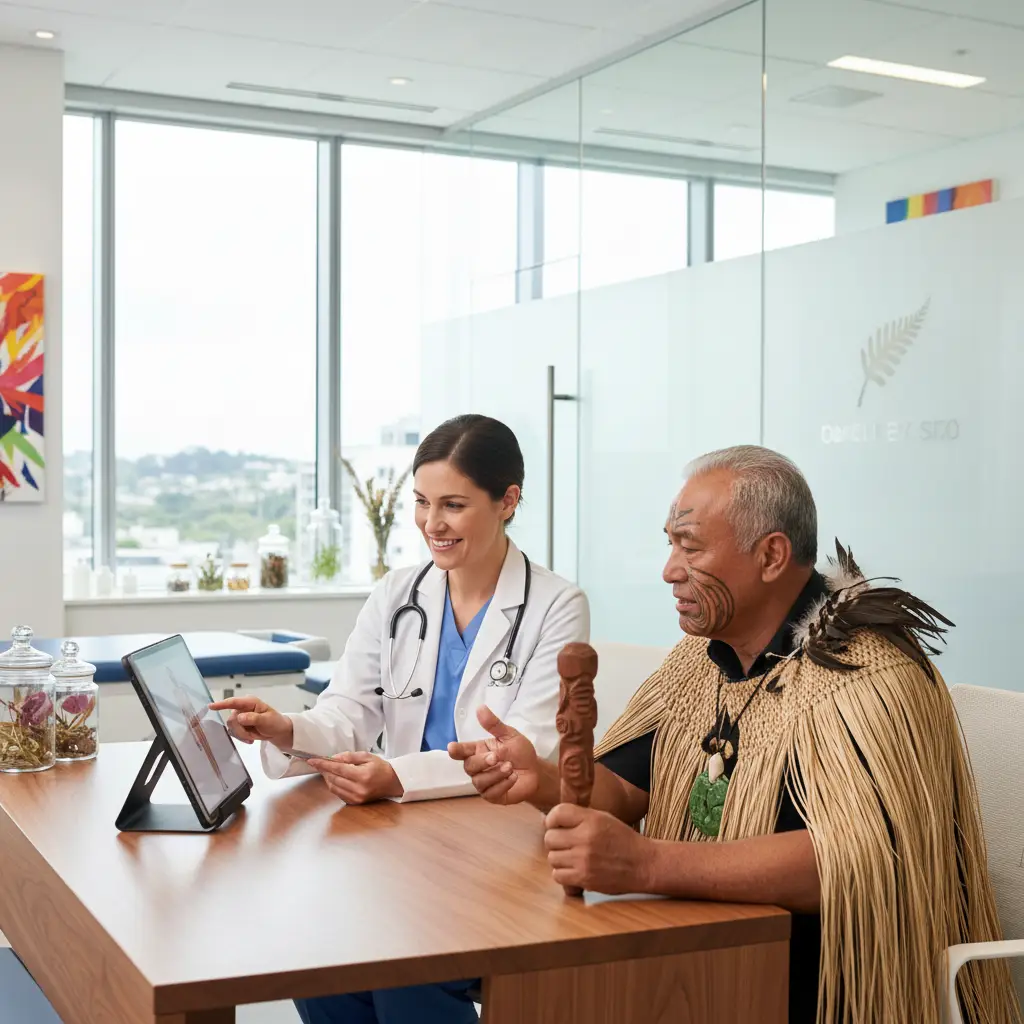
The ultimate goal of Māori health outcomes measurement is sustainable, long-term recovery. This requires a seamless integration of Rongoā Māori (traditional healing) and Western clinical medicine. By using a unified set of holistic metrics, both traditional practitioners and clinical doctors can work toward the same objectives, speaking a common language of patient wellness.
Sustainable Lifestyle Integration
Long-term recovery is measured by how well a patient integrates healthy practices into their daily life. This includes not only adherence to medication or physical therapy but also the regular use of Rongoā, such as Mirimiri (massage) or the application of native plants like Kawakawa. Metrics should track the sustainability of these habits over months and years, looking for permanent shifts in lifestyle rather than temporary improvements. Success is defined by the patient’s ability to maintain balance (Te Pae Mahutonga) independently.
Bridging Two Worlds for Better Outcomes
Clinical integration means that when a patient visits a hospital, their ‘holistic score’—including their spiritual and whānau data—is available to the medical team. This prevents fragmented care. For instance, if a doctor sees that a patient’s Taha Whānau score is low, they might refer the patient to a Whānau Ora navigator rather than simply prescribing an antidepressant. This collaborative approach, underpinned by comprehensive Māori health outcomes measurement, represents the future of healthcare in Aotearoa—a future where every New Zealander can achieve their full potential for health and wellbeing.
Conclusion: The Future of Holistic Measurement
The journey toward perfecting Māori health outcomes measurement is ongoing. It requires constant dialogue between researchers, practitioners, and Māori communities. By continuing to refine these holistic metrics, we move closer to a healthcare system that truly honors the complexity of the human spirit and the importance of collective health. As we embrace these indigenous frameworks, we not only improve outcomes for Māori but offer a more compassionate and effective model of care for the entire world.
What are Māori health outcome measures?
Māori health outcome measures are tools and metrics designed to evaluate health from a Te Ao Māori perspective. They go beyond physical symptoms to include mental, spiritual, and family dimensions, using frameworks like Te Whare Tapa Whā to ensure a comprehensive view of a person’s wellbeing.
How does Te Whare Tapa Whā measure health?
Te Whare Tapa Whā measures health by assessing four key pillars: Taha Tinana (physical), Taha Hinengaro (mental/emotional), Taha Whānau (social/family), and Taha Wairua (spiritual). A person is considered healthy only when all four ‘walls’ of the house are in balance.
What is the role of Rongoā Māori in clinical outcomes?
Rongoā Māori provides a traditional pathway to healing that complements Western medicine. It improves clinical outcomes by addressing the spiritual and cultural needs of patients, fostering greater trust in the healthcare system, and promoting sustainable lifestyle changes rooted in indigenous wisdom.
Why are collective outcomes important in Māori health?
Collective outcomes are vital because Māori culture emphasizes the whānau (family) as the primary unit of health. Individual wellness is often inseparable from the health and stability of the family group, making whānau-based metrics essential for accurate health assessment.
How do you measure spiritual wellness in a health setting?
Spiritual wellness can be measured through qualitative assessments of a patient’s sense of purpose, their connection to their cultural identity and ancestry, and their feeling of harmony with the natural environment. These factors are critical for mental resilience and physical recovery.
What is the Whānau Ora approach to measurement?
The Whānau Ora approach focuses on the collective strengths and needs of the entire family. It measures success based on the whānau’s ability to be self-managing, healthy, and participating fully in society, rather than just tracking the recovery of an individual patient.