
A homeopathic potency guide is an essential framework used to determine the strength and frequency of a homeopathic remedy based on the depth and nature of a patient’s symptoms. It relies on the principle of potentization, where substances are serially diluted and succussed (shaken vigorously). The scale typically ranges from low potencies like 6C (for local, physical symptoms) to medium potencies like 30C (general first aid), and high potencies like 200C (for mental, emotional, or deep chronic conditions).
The Mathematics of Medicine: X vs. C Scales
To navigate a homeopathic potency guide effectively, one must first understand the nomenclature that defines the strength of the remedy. Unlike conventional pharmacology, where milligrams denote the weight of the active ingredient, homeopathy uses a system of scales that indicate the ratio of dilution. The two most prominent scales found in integrative health markets, often appearing alongside treatments like Moxibustion: Heat Therapy Explained, are the Decimal (X) and Centesimal (C) scales.
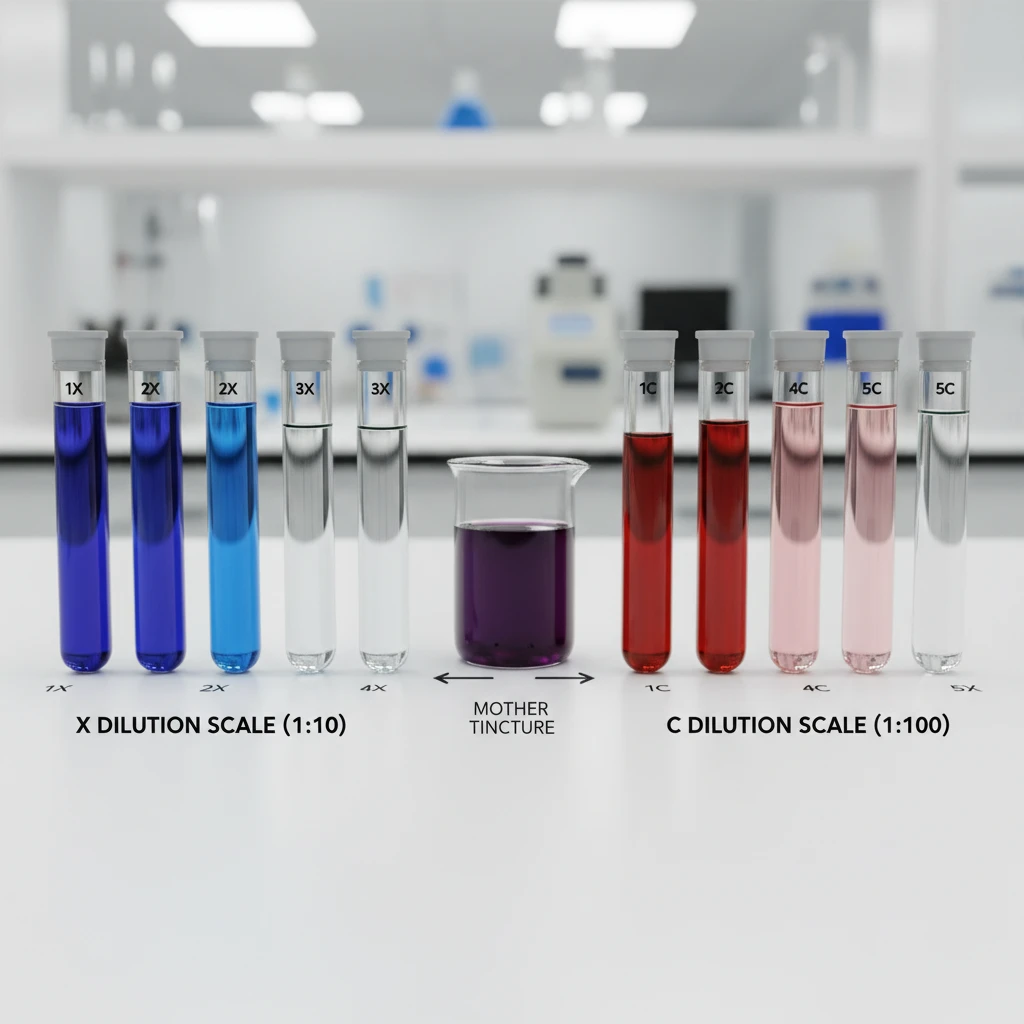
The Decimal Scale (X), sometimes denoted as ‘D’ in Europe, represents a dilution ratio of 1:10. This means that for a 1X potency, one part of the mother tincture is mixed with nine parts of a solvent (usually alcohol or water). This mixture is then succussed. To reach 6X, this process is repeated six times. The X scale is generally associated with lower potencies and is frequently used for tissue salts and organ support remedies where a more material dose is desired.
The Centesimal Scale (C) is the gold standard in classical homeopathy established by Samuel Hahnemann. The ‘C’ stands for the Roman numeral 100. In this scale, the dilution ratio is 1:100. One part of the substance is mixed with 99 parts of the solvent. A 6C remedy has undergone this 1:100 dilution process six times, whereas a 200C has undergone it two hundred times. Because the dilution factor is exponential, the C scale rises in potency much faster than the X scale.
Potentization: Dilution and Succussion
The defining characteristic of homeopathic pharmacology is the concept that less substance yields greater biological activity. This counter-intuitive principle is achieved through a process called potentization. It is not merely the dilution that creates a remedy; it is the kinetic energy added through succussion.
Succussion involves the vigorous shaking or striking of the vial against a firm surface (originally a leather-bound book) between each dilution step. According to homeopathic theory, this action releases the energetic imprint or dynamic nature of the substance into the solvent. Without succussion, a mixture is simply a dilute solution with no therapeutic homeopathic value. This distinction is critical when discussing high potencies like 200C, which statistically contain no molecules of the original crude substance, yet are considered clinically stronger than a 6C.
The Big Three: 6C, 30C, and 200C Explained
While there are thousands of potential potencies (including M for 1,000C and LM for 1:50,000), the vast majority of prescribing revolves around three core strengths: 6C, 30C, and 200C. Understanding the specific utility of each is the cornerstone of any homeopathic potency guide.
6C: The Local Builder
The 6C potency is considered a “low potency.” It is close enough to the material substance that it is often used for conditions that are purely physical and localized. It is the potency of choice for sub-acute conditions or when the symptoms are not entirely clear. Because it is low potency, it has a short duration of action and typically requires frequent repetition (3 to 4 times a day).
Practitioners often select 6C for:
- Minor localized injuries (e.g., a mild bruise).
- Organ drainage or detoxification support.
- Conditions where the vital force is low, and the body cannot handle a strong energetic stimulus.
30C: The General Standard
If you purchase a homeopathic kit online or visit a health food store, the tubes are almost invariably 30C. This is the “medium potency” and is widely regarded as the safest and most versatile option for Home prescribers. It strikes a balance between depth of action and safety.
The 30C potency is ideal for acute conditions with clear symptoms. It acts deeper than a 6C and lasts longer, usually requiring less frequent dosing (perhaps twice a day or just once). It is the standard for:
- Acute illnesses like colds, flu, or earaches.
- First aid situations (Arnica 30C is a staple).
- Situations where there is a mix of physical and mild emotional symptoms.
200C: The High Potency
The 200C potency is a “high potency” and is significantly more powerful. In classical homeopathy, as the potency increases, the remedy’s action moves from the physical organs to the mental and emotional sphere. A 200C remedy penetrates deeply into the organism and can trigger a profound healing response, such as when Boosting Fertility Naturally.
However, with great power comes the need for caution. 200C is typically reserved for:
- Severe acute crises (e.g., shock or intense trauma).
- Chronic conditions with strong mental/emotional components (anxiety, grief).
- “Constitutional” prescribing where the remedy matches the patient’s entire personality profile.

Matching Potency to Pathology: Physical vs. Mental
One of the most reliable rules of thumb in a homeopathic potency guide is the correlation between the potency scale and the hierarchy of symptoms. Homeopathy views health holistically, placing mental and emotional symptoms at a higher hierarchical value than skin eruptions or local pain.
Low Potencies (6X, 6C, 12C) are best suited for pathology that is expressed on the physical plane. If a patient has a sprained ankle but feels emotionally fine, a low potency like Arnica 6C or 30C is appropriate. The energy of the remedy resonates with the dense physical tissues.
High Potencies (200C, 1M, 10M) resonate with the mind and nervous system. If a patient presents with a physical ailment that is directly caused by an emotional trauma—for example, a stomach ulcer caused by grief—a high potency (Ignatia 200C or Natrum Mur 200C) is often indicated. The remedy targets the root emotional disturbance, and the physical symptoms resolve as a secondary effect.
For further reading on the hierarchy of health and systems biology, authoritative sources like the National Center for Biotechnology Information (NCBI) host various papers discussing non-linear biological effects, which parallels homeopathic theory.
The Arndt-Schulz Law and Biological Controversy
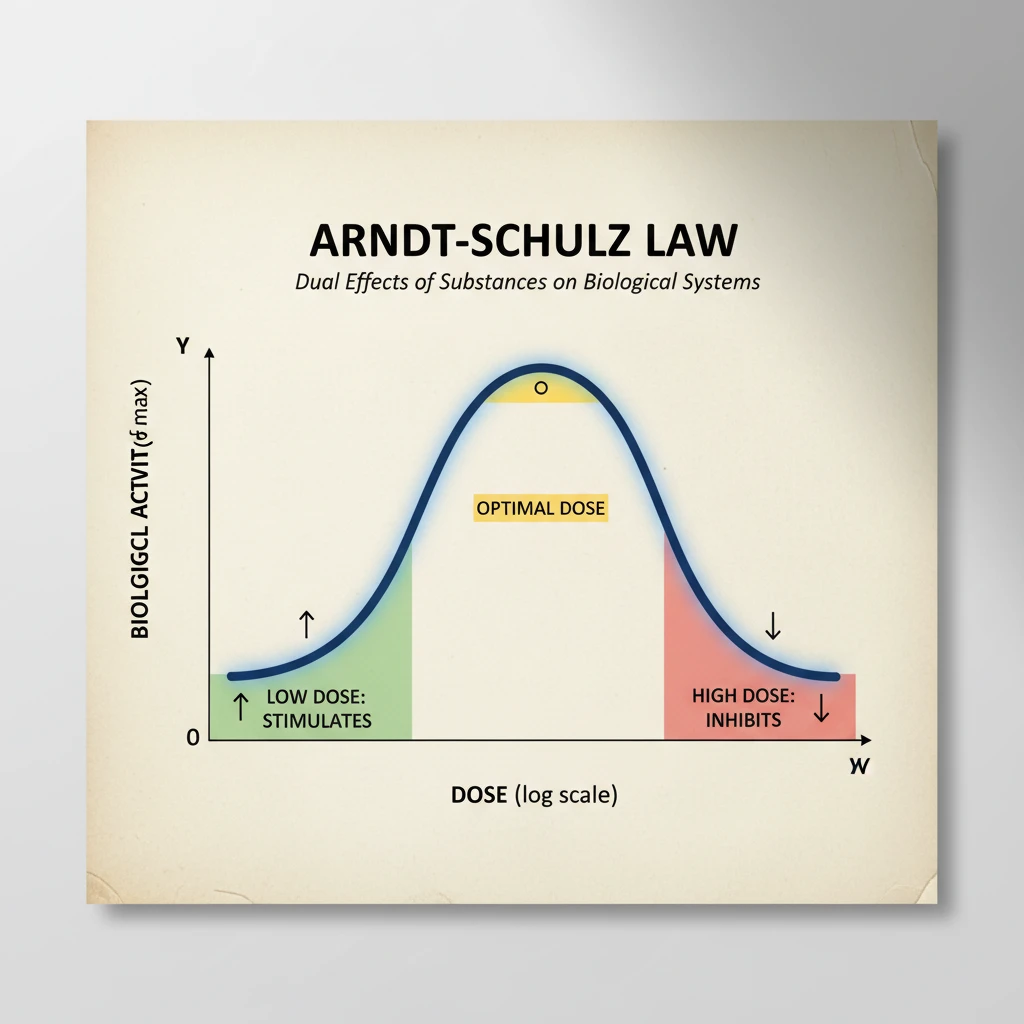
To understand why varying potencies exist, one must look at the Arndt-Schulz Law. Originating in the late 19th century, this pharmacologic principle states that:
- Weak stimuli accelerate physiological activity.
- Medium stimuli inhibit physiological activity.
- Strong stimuli destroy physiological activity.
In the context of homeopathy, the “weak stimulus” is the high potency remedy. While conventional medicine relies on the “strong stimulus” (large chemical doses) to suppress symptoms (e.g., an anti-inflammatory suppressing an immune response), homeopathy uses the micro-dose to stimulate the body’s own regulatory mechanisms. This is similar to the modern toxicological concept of hormesis, where low-dose exposure to a stressor induces a beneficial adaptive response.
While the Arndt-Schulz law is no longer cited as a universal law in modern pharmacology, it provides the historical framework for why homeopaths believe that a 200C (which is chemically ‘weaker’ but energetically ‘stronger’) can provoke a stronger healing response than a crude tincture. The controversy lies in the mechanism of action, which remains a subject of debate between materialist pharmacology and energetic medicine.
Safety Protocols and Dosing Frequency
Even with a comprehensive homeopathic potency guide, safety remains paramount. While homeopathic remedies are non-toxic in the chemical sense, they are biologically active. Taking a remedy too frequently or at too high a potency can lead to an “aggravation,” where symptoms temporarily worsen before improving, or a “proving,” where the patient begins to experience the symptoms the remedy is meant to cure.
General Dosing Rules:
- Stop on Improvement: The most critical rule in homeopathy. As soon as symptoms begin to improve, stop taking the remedy. Only redose if the improvement stalls or symptoms return.
- Inverse Frequency: The higher the potency, the less frequent the dose. A 6C might be taken three times a day for a week. A 200C might be taken once, and then not again for weeks or months, depending on the practitioner’s advice.
- Acute vs. Chronic: In acute emergencies (like a sudden fever), dosing can be frequent (every 15-30 minutes) usually with 30C. In chronic cases (arthritis, depression), dosing is spaced out significantly.
For those interested in the regulatory status of these remedies, the National Center for Complementary and Integrative Health (NCCIH) provides an overview of how these products are viewed in the United States context.
People Also Ask
What happens if I take the wrong homeopathic potency?
Generally, if you take a potency that is incorrect or a remedy that doesn’t match your symptoms, nothing happens. The body simply ignores the energetic signal. However, taking a very high potency (200C or higher) frequently without needing it can sometimes cause a temporary aggravation of symptoms.
Is 30C stronger than 200C?
No, in homeopathy, the higher the number, the “stronger” or deeper acting the remedy is. Therefore, 200C is significantly stronger and more potent than 30C, despite containing less physical substance.
Can I take 6C and 30C together?
It is generally not recommended to mix potencies of the same remedy simultaneously. It is better to stick to one potency that matches the intensity of your symptoms. If 6C is not working, a practitioner might switch you to 30C, but they are rarely taken at the exact same moment.
How long does a 200C dose last?
A single dose of 200C can continue to act in the body for weeks or even months. It is designed to stimulate a long-term healing response, which is why it is rarely repeated on a daily basis.
What does the ‘K’ mean in some potencies like 200K?
The ‘K’ refers to the Korsakovian method of dilution. Unlike the Hahnemannian method (C scale) which uses a new vial for every dilution step, the Korsakovian method empties the vial and uses the residue clinging to the walls for the next step. It is faster to manufacture but slightly different in preparation.
Is homeopathy safe for children and pets?
Yes, homeopathy is widely considered safe for children, infants, and pets because the remedies contain negligible amounts of active chemical substance, reducing the risk of toxic side effects or drug interactions.