The Rātā medicinal plant, comprising primarily Northern Rātā (Metrosideros robusta) and Southern Rātā (Metrosideros umbellata), is a cornerstone of Rongoā Māori healing. Home to diverse therapeutic applications, the bark and nectar serve as traditional remedies for treating wounds, dysentery, ringworm, and inflammation, while modern phytochemical analysis explores its antimicrobial potential.
Botanical Overview: Distinguishing the Species
To understand the medicinal profile of Rātā, one must first distinguish between the two primary species utilized in New Zealand’s flora: Northern Rātā (Metrosideros robusta) and Southern Rātā (Metrosideros umbellata). Both belong to the Myrtaceae family, sharing a lineage with the iconic Pōhutukawa and Mānuka.
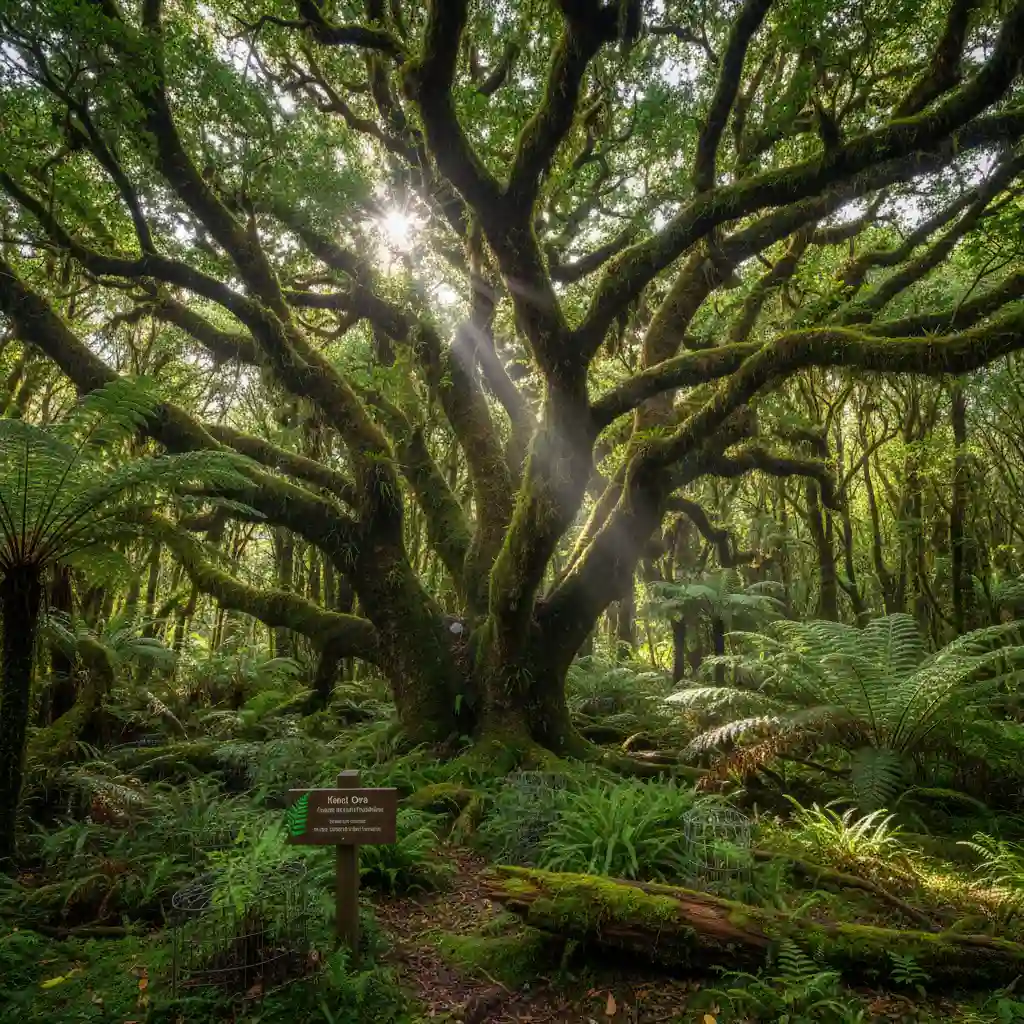
Northern Rātā is often widely recognized as a hemi-epiphyte. It typically begins its life high in the canopy of a host tree, sending roots down to the ground which eventually coalesce to form a massive trunk, often outliving and replacing the host. Southern Rātā, conversely, usually grows from the ground up and is more prevalent in the cooler climates of the South Island and Stewart Island. despite these growth habit differences, both species share significant phytochemical overlaps that have made them valuable in traditional medicine.
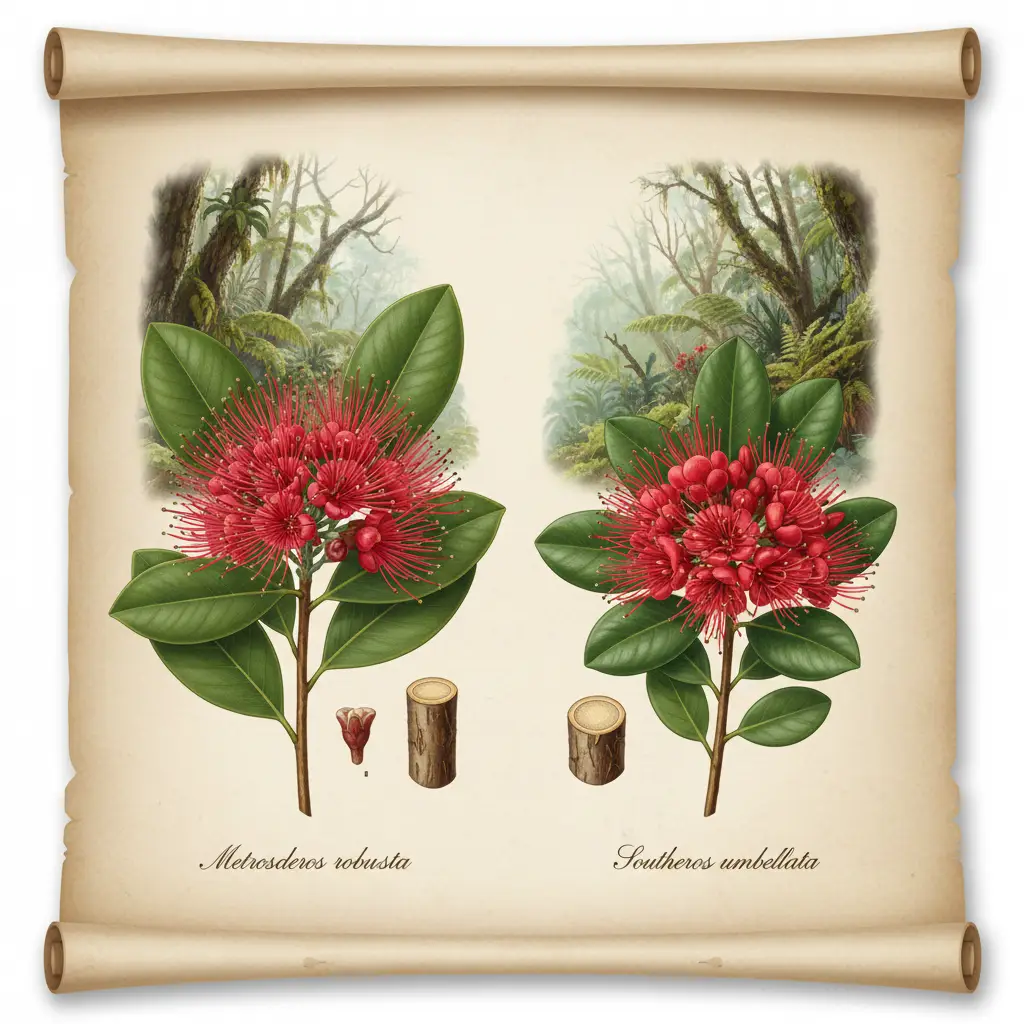
The visual identification of these trees—characterized by their brilliant red needle-like flowers and leathery leaves—is crucial for practitioners of herbal medicine. The integrity of the bark and the potency of the nectar are influenced by the tree’s maturity and its environment, factors that traditional healers (tohunga) have observed for centuries.
Medicinal Uses in Rongoā Māori
In the pantheon of Rongoā Māori (traditional Māori medicine), the Rātā medicinal plant holds a prestigious position, primarily utilized for its strength-giving and binding properties. The application of Rātā is diverse, addressing both internal and external ailments.
The Power of the Bark (Pia and Wai Rākau)
The inner bark of the Rātā tree is the primary source of its medicinal efficacy. Traditionally, pieces of the bark were boiled to create a decoction. This liquid, rich in tannins, acts as a powerful astringent. It was, and continues to be, used to stop bleeding and treat severe wounds. The astringency contracts body tissues, which helps to close open wounds and creates a protective layer against infection.
Furthermore, this decoction was historically administered internally to treat dysentery and diarrhea. The binding nature of the compounds within the bark helps to settle the digestive tract and reduce inflammation. For external skin conditions, such as ringworm and other fungal infections, a lotion prepared from the bark has been cited as an effective remedy.
Nectar and Flowers
The nectar of the Rātā, known as wai kaihual, was traditionally collected by tapping the flowers against the side of a vessel. This nectar is not only a source of energy but was also used to soothe sore throats. Rātā honey, a derivative product produced by bees foraging on these flowers, retains many of these soothing characteristics and is highly distinctive with its light color and mild, buttery flavor.
Phytochemical Screening of Rātā Extracts
Modern scientific analysis validates many of the traditional uses of Rātā through rigorous phytochemical screening. Understanding the chemical constituents of Metrosideros species allows for a bridge between indigenous knowledge and integrated herbal medicine.
Research indicates that Rātā bark and leaves are abundant in polyphenolic compounds. The primary bioactive constituents identified include:
- Condensed Tannins (Proanthocyanidins): These are responsible for the plant’s strong astringency. Tannins precipitate proteins, which explains the plant’s ability to stop bleeding and protect wounds.
- Ellagic Acid: A naturally occurring phenolic antioxidant found in numerous fruits and vegetables, ellagic acid in Rātā contributes to its anti-proliferative and antioxidant properties.
- Flavonoids: Including catechin and quercetin derivatives, these compounds provide anti-inflammatory support and free-radical scavenging capabilities, much like the focus of The Ayurvedic Anti-Inflammatory Diet.
- Gallic Acid: Known for its antifungal and antiviral properties, the presence of gallic acid supports the traditional use of Rātā against ringworm and skin infections.
For a deeper understanding of the chemical family to which Rātā belongs, the Metrosideros genus page on Wikipedia offers extensive botanical and chemical context regarding these myrtaceous plants.

Modern Therapeutic Potential & Applications
The convergence of Rongoā and modern pharmacology opens new avenues for the Rātā medicinal plant, particularly when Understanding Potency: 6C, 30C, 200C for clinical preparations. As antibiotic resistance becomes a global concern, the antimicrobial properties of New Zealand native plants are under increasing scrutiny.
Antimicrobial and Antifungal Activity
Studies screening New Zealand native plants have shown that extracts from Metrosideros species exhibit activity against common pathogens, including Staphylococcus aureus. The high tannin content disrupts the cell walls of bacteria, rendering them unable to replicate. This suggests a potential future for Rātā-based topical formulations in treating antibiotic-resistant skin infections.
Wound Care Innovations
Given its historical success in wound healing, Rātā is a candidate for inclusion in modern hydrogels and wound dressings. The combination of antimicrobial action and tissue-contracting astringency creates an ideal environment for rapid healing, particularly in weeping or slow-to-heal ulcers.
Conservation Status and Sustainable Harvesting
While the medicinal potential of Rātā is high, the ecological reality of the species requires careful navigation. Both Northern and Southern Rātā face significant threats that impact their availability for Rongoā and commercial use.
Threats: Possums and Myrtle Rust
The introduced brushtail possum prefers Rātā foliage, often stripping trees bare and causing canopy collapse. Furthermore, the arrival of Myrtle Rust (Austropuccinia psidii), a fungal disease affecting the Myrtaceae family, poses a severe threat to the survival of these trees. The Department of Conservation (DOC) actively monitors this threat, as it can decimate new growth and seedlings.
Tikanga and Sustainable Harvest
For the New Zealand Integrated Herbal Medicine community, adherence to Tikanga (cultural protocols) is mandatory. This involves:
- Karakia (Prayer): Acknowledging the connection between the harvester, the plant, and the environment.
- Selective Pruning: Taking only what is needed (never stripping the trunk entirely) and harvesting from the side of the tree facing the sun to ensure rapid regrowth.
- Hygiene: Ensuring all tools are sterilized to prevent the spread of Myrtle Rust between trees.
Conclusion
The Rātā medicinal plant stands as a testament to the depth of Rongoā Māori and the validity of traditional knowledge when viewed through the lens of modern phytochemistry. From its powerful astringent bark to its therapeutic nectar, Rātā offers significant potential for natural health applications. However, the future of this medicine is inextricably linked to the health of New Zealand’s forests. Sustainable harvesting and rigorous conservation efforts are essential to ensure that the healing power of Rātā remains available for future generations.
People Also Ask
What is Rātā used for in medicine?
Rātā is primarily used in traditional medicine as a strong astringent and antiseptic. Its bark is boiled to create lotions or decoctions for treating wounds, broken bones, ringworm, and dysentery. The nectar is also used to soothe sore throats.
Is Rātā honey good for you?
Yes, Rātā honey is considered beneficial. While it may not have the high methylglyoxal (MGO) levels of Mānuka honey, it is a low-moisture honey with natural enzymatic activity and a mild flavor, making it a healthy natural sweetener with general wellness properties.
What is the difference between Northern and Southern Rātā?
Northern Rātā (Metrosideros robusta) often starts as an epiphyte high in other trees before sending roots down, whereas Southern Rātā (Metrosideros umbellata) typically grows from the ground up. Northern Rātā is found in the North Island and top of the South Island, while Southern Rātā is more common in the South.
Can you eat Rātā flowers?
The nectar of the Rātā flower is edible and was traditionally consumed by Māori. However, eating the whole flower is not a common culinary practice, although they are non-toxic. Care must be taken not to damage the tree or spread Myrtle Rust during collection.
Is Rātā related to Pōhutukawa?
Yes, both Rātā and Pōhutukawa belong to the Metrosideros genus within the Myrtaceae family. They share similar red, brush-like flowers and chemical profiles, including high tannin content in their bark.
How do you identify a Rātā tree?
Rātā trees are identified by their brilliant red, needle-like flowers (blooming in summer) and dark green, leathery, oval leaves. Northern Rātā often has a massive, hollow-looking trunk formed by coalesced roots, while Southern Rātā looks more like a conventional tree.