NZ native berries health benefits are derived from their exceptional concentrations of anthocyanins, polyphenols, and vitamin C, which these plants evolved to combat New Zealand’s high UV environment. Consuming varieties like Kōtukutuku, Tūrutu, and Totara supports immune function and combats oxidative stress, playing a vital role in both modern nutrition and traditional Rongoā Māori healing practices.
The Unique Phytochemistry of Aotearoa’s Flora
New Zealand’s geographical isolation for over 80 million years has resulted in a flora, such as Rātā: Traditional Uses & Phytochemical Analysis, that is distinct from anywhere else on Earth. One of the most fascinating aspects of NZ native berries health potential is the specific adaptation these plants have undergone to survive in an environment with a hole in the ozone layer and naturally high levels of ultraviolet (UV) radiation.
To protect their genetic material from UV damage, New Zealand native plants produce high levels of secondary metabolites, particularly polyphenols and anthocyanins. These are the same compounds that provide antioxidant benefits to humans when consumed. Research suggests that the antioxidant activity in some New Zealand natives can be significantly higher than their European or North American counterparts.
Understanding the health benefits of these berries requires looking beyond basic macronutrients. It involves delving into the bioactive compounds that reduce inflammation, support cardiovascular health, and neutralize free radicals. For the modern forager or health enthusiast, our Home page offers a connection to the land (Whenua) and a source of potent natural medicine.
Top Edible NZ Native Berries and Their Profiles
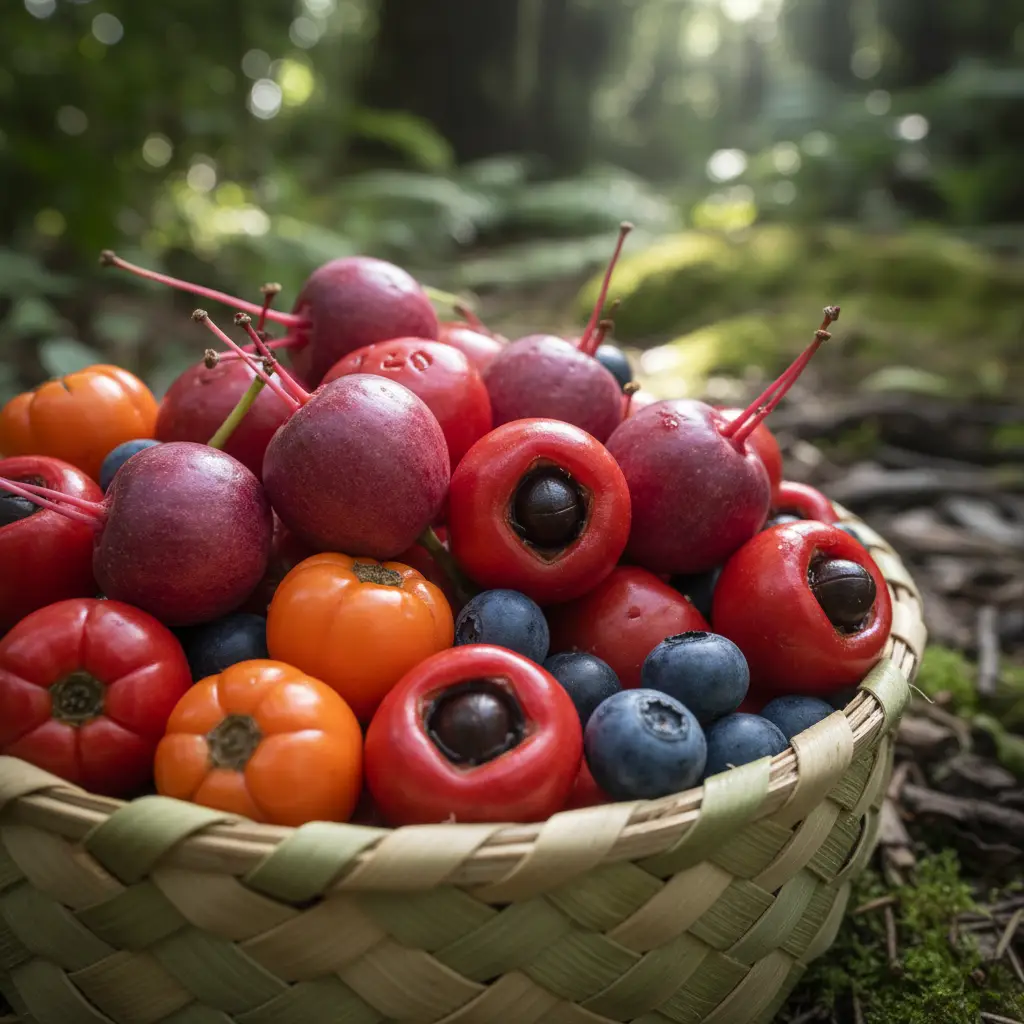
While many of New Zealand’s berries are food for birds and not humans, several species stand out for their palatability and nutritional value. Here is a detailed look at the most prominent edible varieties.
Kōtukutuku (Tree Fuchsia)
The Kōtukutuku (Fuchsia excorticata) is perhaps the most famous of the edible native berries. Known as kōnini by Māori, these berries are dark purple to black when ripe and possess a sweet, juicy flavor often compared to tamarillo or grape. They are rich in anthocyanins, which give them their deep color. Historically, they were a staple food source, often eaten raw or pressed into jams.
Tūrutu (New Zealand Blueberry)
Dianella nigra, or Tūrutu, produces bright violet-blue berries. While there is some debate regarding the edibility of different Dianella species, Tūrutu berries have been traditionally consumed in small quantities. They are visually striking and contain unique flavonoids. However, caution is advised as large quantities may have a laxative effect. The value here lies often in the trace minerals and specific phytochemicals unique to the lily family.
Tōtara
The mighty Tōtara tree produces a small, bright red fruit attached to a seed. It is crucial to distinguish the parts: the red, fleshy pedestal (aril) is sweet, juicy, and edible, rich in terpenes and sugars that provide a quick energy boost. However, the seed itself should be discarded. The antioxidant profile of the Tōtara aril is linked to the tree’s legendary durability and resistance to rot, transferred in part through its bioactive compounds.
Kawakawa Fruit
While Kawakawa is primarily known for its medicinal leaves, the female trees produce upright, orange fruit spikes. These fruits are sweet and have a distinct peppery finish, owing to the same compounds found in the leaves (myristicin and elemicin). They are excellent for digestion and contain anti-inflammatory properties that soothe the stomach and mouth.
Antioxidant Capacity: Research and Wellness
The term “superfood” is often thrown around loosely, but NZ native berries health properties are backed by the science of plant stress responses. The primary mechanism of action for these health benefits is the donation of electrons to unstable free radicals in the human body, a process mediated by antioxidants.
Studies conducted by New Zealand research institutes have analyzed the phenolic content of various native fruits. The results often show that native berries possess varying degrees of antioxidant strength, often comparable to or exceeding commercially grown blueberries and blackcurrants. The deep pigmentation of the Kōnini (fuchsia berry), for example, indicates a high concentration of cyanidin-3-glucoside, a potent anthocyanin known for supporting eye health and cognitive function.
Furthermore, the vitamin C content in these natives contributes to collagen synthesis and immune system fortification. In a world where processed foods dominate, incorporating wild-harvested or sustainably sourced native berries can reintroduce complex phytochemicals that are missing from the modern diet.
Rongoā Māori: Cultural and Medicinal Significance
To discuss these berries without acknowledging Rongoā Māori (traditional Māori healing) would be to ignore the foundation of this knowledge. In the Rongoā worldview, health is holistic, encompassing Taha Tinana (physical health), Taha Wairua (spiritual health), Taha Hinengaro (mental health), and Taha Whānau (family health).
Berries were not just “snacks”; they were seasonal indicators and medicine. For example, the abundance of certain berries would signal the readiness of other food sources (kai). The act of harvesting was governed by tikanga (protocols) to ensure sustainability. You can learn more about the botanical classifications and cultural history on Wikipedia’s Flora of New Zealand page.
Medicinally, berries like the Kawakawa fruit were used to treat toothache and abdominal pain. The juice of the Poroporo berry (though the green berry is toxic, the ripe orange berry is edible in some species, but caution is heavily advised) was traditionally applied to skin complaints, a method also discussed in Ponga (Silver Fern): Exploring its Topical Applications. The integration of these foods into the diet provided a baseline of preventative medicine, keeping inflammation low and immunity high throughout the changing seasons.
Seasonal Availability and Harvesting
Understanding the seasons is critical for accessing NZ native berries health benefits safely and sustainably. Unlike supermarket fruit available year-round, native berries are ephemeral.
- Summer (Raumati): This is the peak season for many berries. Kōtukutuku berries usually ripen from late summer into autumn. Kawakawa fruit ripens in mid-to-late summer.
- Autumn (Ngahuru): Tōtara berries are often found in autumn, providing a burst of sweetness as the weather cools.
- Winter (Hōtoke): Few berries are available, which made the preservation of summer harvests (though less common than drying fish or kumara) a valuable skill in some regions.
When harvesting, always adhere to the principle of taking only what you need and leaving enough for the birds, which are the primary seed dispersers for the native forest. Without the Kererū and Tūī, these tree species would struggle to regenerate.
Critical Safety Guidelines: Identification and Toxicity
Foraging in New Zealand is generally safer than in many other countries, but there are deadly exceptions. Misidentification can lead to severe poisoning. It is imperative to consult authoritative guides, such as those provided by the Department of Conservation (DOC), before consuming anything.
The Tutu Danger
The most dangerous plant in New Zealand is the Tutu (Coriaria arborea). All parts of the plant, including the seeds inside the dark purple berries, contain a neurotoxin called tutin. Historically, Māori produced a juice from the berry petals by carefully straining out the toxic seeds through toetoe grass, but this process is extremely risky and should not be attempted by modern foragers. Eating the whole berry can be fatal.
Karaka Kernels
The Karaka tree produces bright orange fruit. The fleshy pulp is edible and smells like a ripe apricot, but the inner kernel contains karakin, a potent toxin that causes paralysis and death. In traditional practice, the kernels were rendered edible only after weeks of complex processing (steaming and flushing in running water). For the casual forager, stick to the flesh or avoid it entirely to be safe.
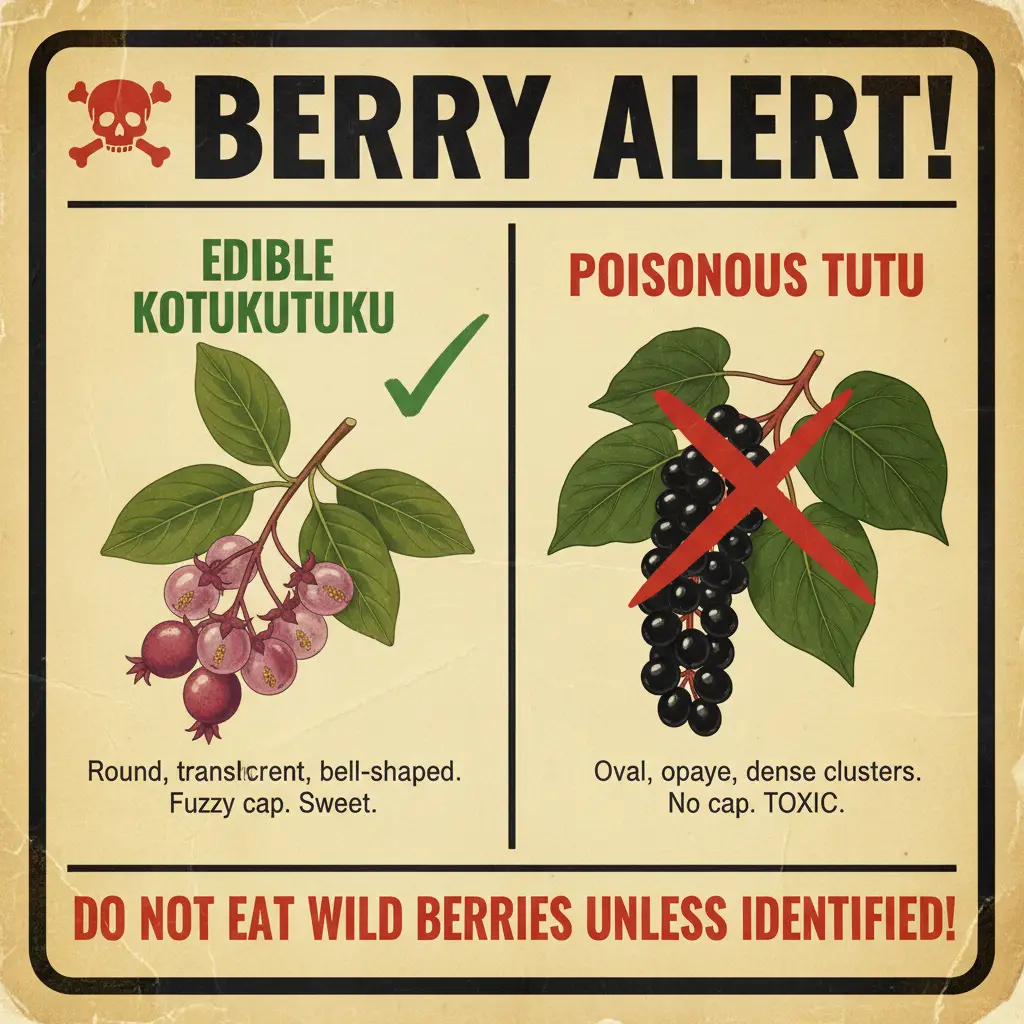
Always follow the golden rule of foraging: If you are not 100% sure of the identification, do not eat it.
People Also Ask
What are the most popular edible native berries in NZ?
The most popular edible native berries include Kōtukutuku (tree fuchsia), which tastes like sweet tamarillo; Tōtara (the red aril only); and the fruit of the Kawakawa tree. These are prized for their unique flavors and historical importance in Māori cuisine.
Are there any poisonous berries in New Zealand?
Yes, New Zealand has highly poisonous berries. The Tutu berry is the most dangerous; its seeds contain a lethal neurotoxin. The Karaka berry kernel is also toxic if not processed correctly, though the outer flesh is edible. Poroporo berries are toxic when green.
Can you eat Tūrutu berries?
Tūrutu (Dianella nigra) berries are considered edible in small quantities and were traditionally eaten by Māori. However, they are not consumed in large amounts today due to potential laxative effects and the availability of more palatable alternatives.
What are the health benefits of Kawakawa fruit?
Kawakawa fruit is rich in antioxidants and anti-inflammatory compounds. It is known to support digestion, soothe toothaches, and provide a source of vitamins. The peppery taste also stimulates circulation and oral health.
How do you identify Kōtukutuku berries?
Kōtukutuku berries (kōnini) grow on the Tree Fuchsia. They are oblong, roughly 1-2cm long, and turn from green to a dark purple-black when ripe. The tree itself is easily identified by its peeling, papery orange-brown bark.
Is the Karaka berry safe to eat?
Only the outer orange flesh of the ripe Karaka berry is safe to eat raw. The inner seed (kernel) contains a deadly toxin called karakin. Unless you are experienced in the traditional processing methods to remove the toxin, you should never eat the kernel.