Karakia Rongoā refers to traditional Māori healing prayers and incantations used to invoke spiritual guidance and restore balance to a person’s mauri (life force). These sacred chants are essential in Rongoā Māori, serving to clear negative energy, bless medicinal plants before harvesting, and set a focused intention for holistic recovery.
The Spiritual Foundations of Rongoā Māori
To understand the profound impact of Karakia Rongoā, one must first appreciate the holistic worldview of Māori health, a concept explored in Understanding Energetics in Different Herbal Systems: A Comparative Study. In traditional society, healing is never merely a physical act. It is an intricate weaving of the physical, mental, social, and spiritual realms. This concept is most famously codified in the Te Whare Tapa Whā model of health, where taha wairua (spiritual health) is considered the most essential pillar.
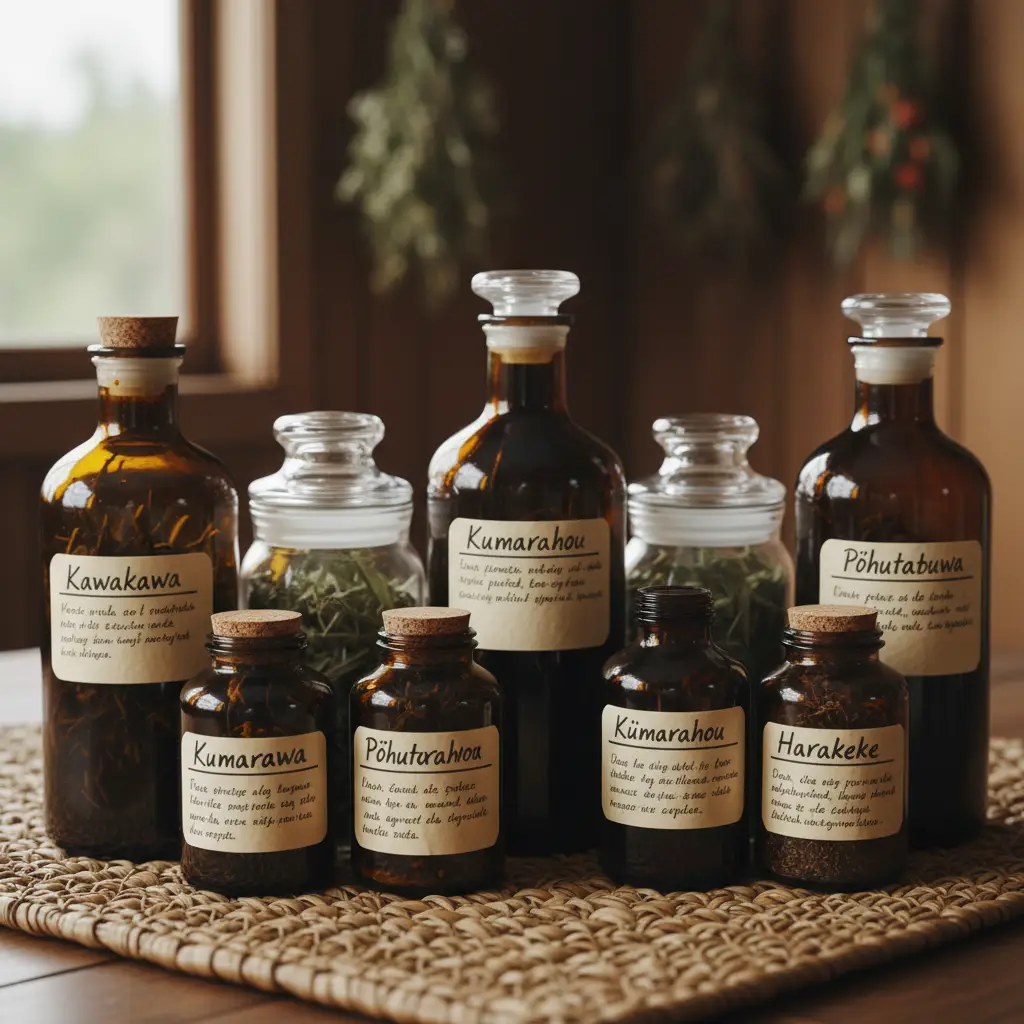
Rongoā Māori (traditional healing) operates on the understanding that illness often stems from a disruption in the mauri (life force) or a breach of tapu (sacred laws). Therefore, applying a physical remedy—such as a herbal balm made from Kawakawa or Kumarahou, or utilizing NZ Native Berries: Antioxidant Properties & Health—without addressing the spiritual imbalance is seen as treating only the symptom, not the root cause.
Karakia serves as the bridge between the physical and spiritual worlds. It is the mechanism by which the healer (tohunga or kairongoā) communicates with the divine, the environment, and the ancestors to facilitate healing, as detailed on our Home page. It transforms a simple botanical extract into a sacred medicine imbued with healing intent.

The Role of Karakia in Setting Intention
In the realm of energy medicine and holistic therapy, “intention” is a buzzword often used to describe focused thought. However, in Rongoā Māori, the intention set through karakia is far more dynamic. It is an active vibration. The spoken word in Māori tradition carries immense power; it has the ability to manifest reality.
When a practitioner recites a karakia before a healing session, they are performing whakawātea—a clearing of the space. This process serves several critical functions:
- Clearing the Slate: It removes the “noise” of the outside world, allowing both the healer and the patient to enter a state of noa (freedom from restriction), ready to receive healing.
- Focusing the Mauri: It directs the life force of the plants, the healer, and the patient toward a singular goal: restoration.
- Protection: It places a spiritual boundary around the healing space, ensuring that safe and positive energies are maintained throughout the process.
Without this spiritual grounding, the application of herbal remedies is considered less effective, as the “spirit” of the medicine has not been awakened.
Traditional Karakia Rongoā Examples and Translations
While many karakia are specific to certain iwi (tribes) or whānau (families) and are kept tapu (sacred/restricted), there are general karakia widely used in the community to bless kai (food), open meetings, or bless rongoā. Below are examples of chants often utilized to clear energy and set intentions for healing.
Karakia Tīmatanga (Opening Prayer)
This karakia is often used to open a space, clearing the winds from all directions to ensure peace and clarity before healing begins.
Whakataka te hau ki te uru
Whakataka te hau ki te tonga
Kia mākinakina ki uta
Kia mātaratara ki tai
E hī ake ana te atakura
He tio, he huka, he hau hū
Tīhei mauri ora!
Translation:
Cease the winds from the west,
cease the winds from the south.
Let the breeze blow over the land,
let the breeze blow over the ocean.
Let the red-tipped dawn come with a sharpened air,
a touch of frost, a promise of a glorious day.
Behold, there is life!
A Simple Invocation for Rongoā
When applying a balm or consuming a tonic, a shorter incantation may be used to bless the medicine specifically.
Unuhia te rito o te harakeke
Kei hea te kōmako e kō?
Whakatairangitia, rere ki uta, rere ki tai;
Ui mai ki ahau,
He aha te mea nui o te ao?
Māku e kī atu,
He tangata, he tangata, he tangata.
Translation:
If you remove the central shoot of the flax bush,
where will the bellbird sing?
Proclaim it to the land, proclaim it to the sea;
Ask me,
What is the greatest thing in the world?
I will reply,
It is people, it is people, it is people.
This well-known whakataukī (proverb) is often used as a karakia to remind the practitioner that the ultimate goal of all rongoā and medicine is the well-being of the people.
Connecting with Tīpuna (Ancestors) for Healing
In the Māori worldview, the past is not behind us; it is before us, guiding our steps. Whakapapa (genealogy) connects a person not just to their living relatives, but to their tīpuna (ancestors) and the natural world. Healing is a collaborative act that involves these unseen participants.
When Karakia Rongoā is performed, it acts as a conduit to the ancestral realm. A practitioner might call upon specific ancestors known for their healing prowess to guide their hands or to lend strength to the patient. This acknowledges that the knowledge of Rongoā is not “owned” by the current practitioner but is a taonga (treasure) passed down through generations.
For the patient, hearing these ancient words can trigger a deep psychological and spiritual release. It reconnects them to their lineage, reminding them that they are part of a resilient chain of survival. This sense of belonging is, in itself, a powerful medicine that combats the isolation often felt during illness.
For more on the cultural significance of these connections, resources like Te Ara – The Encyclopedia of New Zealand provide extensive historical context on traditional healing practices.
Tikanga: Protocols for Harvesting Rongoā Rākau
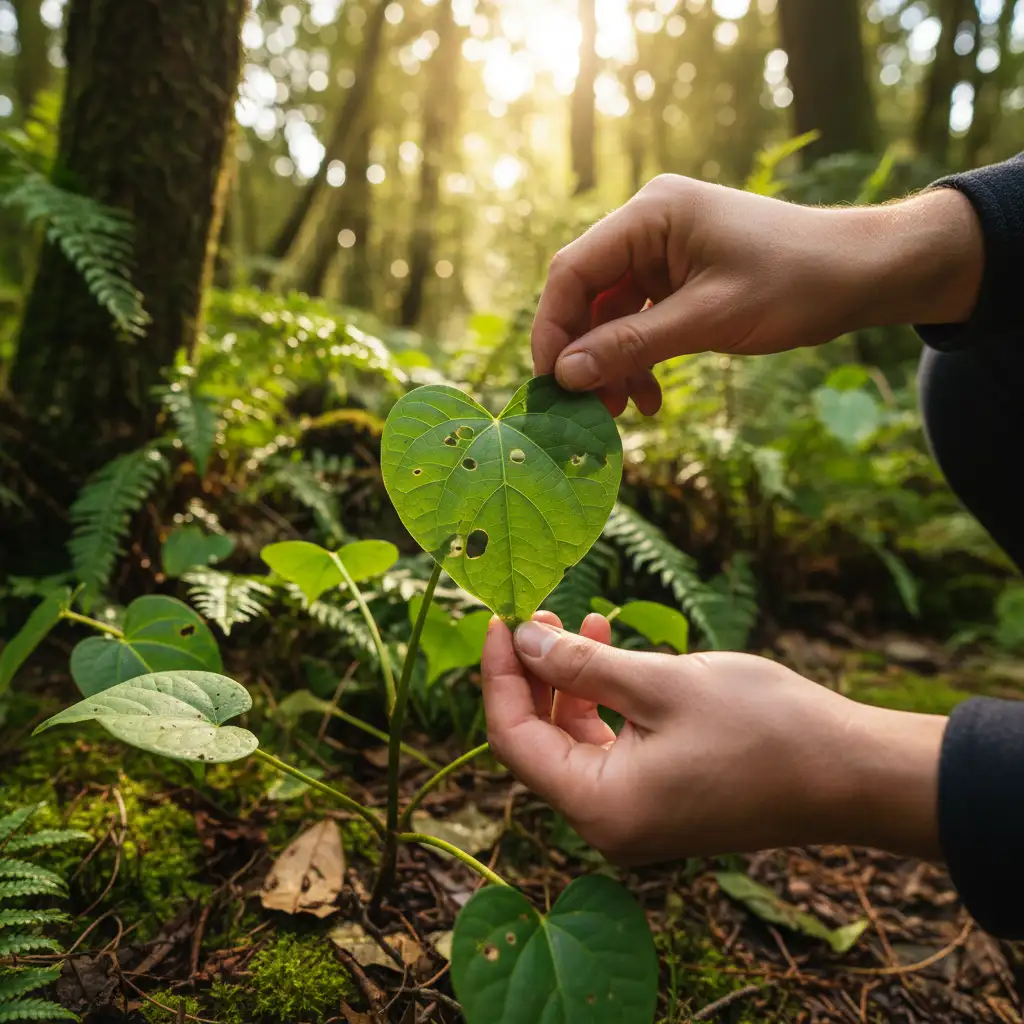
One of the most critical applications of karakia occurs long before a patient is treated—it happens in the bush during the harvesting of rongoā rākau (medicinal plants). You cannot simply walk into the forest (Te Wao Nui a Tāne) and take what you please. This is a domain protected by spiritual guardians, primarily Tāne Mahuta (God of the Forest).
The protocol (tikanga) for harvesting involves several steps where karakia is mandatory:
- The Ask (Te Uiuinga): Before cutting any leaf or bark, the harvester recites a karakia to ask permission. They state their intention: who the medicine is for and why it is needed.
- The Offering: Often, a small offering is left, or the first cutting is returned to the earth as a sign of reciprocity.
- The Harvest: Harvesting is done with gratitude, taking only what is needed (never stripping a plant bare) and ensuring the plant can continue to grow.
- The Closing: A karakia of thanks is offered to close the interaction.
This ritual ensures that the mauri of the plant remains intact. It is believed that plants harvested without karakia or respect lose their potency and may even cause harm.
Integrating Karakia into Modern Holistic Practice
New Zealand’s healthcare landscape is evolving. There is a growing recognition of the value of Rongoā Māori alongside Western clinical medicine. This integration is supported by the Ministry of Health, which acknowledges Rongoā as a legitimate health service.
For modern herbalists, naturopaths, and holistic practitioners in NZ, integrating karakia offers a way to deepen the therapeutic relationship. However, it requires cultural safety and authenticity. Here are ways to integrate these practices respectfully:
- Learn Correct Pronunciation: The vibration of the words matters. Invest time in learning Te Reo Māori pronunciation.
- Understand the Context: Do not use a funeral karakia for a birth blessing. Understand the meaning behind the chants.
- Invite Participation: If the client is Māori, ask if they would like to open with a karakia or if they have a specific one they prefer. This empowers the patient.
- Silence as Karakia: If you are not confident in speaking Te Reo, a moment of focused, silent intention setting is a valid form of spiritual preparation that aligns with the principles of karakia.
By respecting the traditions of Karakia Rongoā, practitioners honor the land (Whenua) they practice on and open the door to a more profound, spirit-led healing experience.
People Also Ask
What is the purpose of a Karakia?
The purpose of a karakia is to invoke spiritual guidance, offer protection, and set a specific intention. In healing contexts, it clears negative energy, blesses the medicine, and connects the participants to the spiritual realm and ancestors.
Can anyone say a Karakia?
Yes, anyone can say a karakia if they do so with respect and genuine intention. However, specific tapu (sacred) healing karakia generally require training and initiation by a tohunga or elder to be used effectively and safely.
What is the difference between Rongoā and Western medicine?
Rongoā Māori is holistic, treating the physical, spiritual, mental, and family aspects of health simultaneously. Western medicine tends to focus primarily on treating physical symptoms and biological pathology, though integrative approaches are becoming more common.
Do I need to be Māori to use Rongoā?
No, you do not need to be Māori to benefit from Rongoā healing or to learn about the plants. However, practitioners of Rongoā are expected to adhere to the tikanga (cultural protocols), including the use of karakia and sustainable harvesting, to respect the culture from which the knowledge originates.
What is a Karakia Timatanga?
A Karakia Tīmatanga is an opening prayer used to start a gathering, meeting, or healing session. Its goal is to unify the group, clear distractions, and bring everyone’s focus to the present moment.
Why is Karakia important for harvesting plants?
Karakia is vital during harvesting to ask permission from Tāne Mahuta (the forest guardian) and to acknowledge the life force of the plant. It ensures the harvest is sustainable and that the plant’s mauri (energy) is retained for effective medicine.


