
Ignatia Amara uses for emotional health primarily target acute grief, bereavement, romantic heartbreak, and the immediate aftereffects of shock. In homeopathic medicine, it is the premier remedy for inconsistent mental states, frequent involuntary sighing, and the sensation of a lump in the throat known as globus hystericus, helping to balance the nervous system during times of extreme emotional suppression. To learn more about our philosophy, visit our Home page.
Understanding Ignatia Amara: The ‘Funeral Bean’
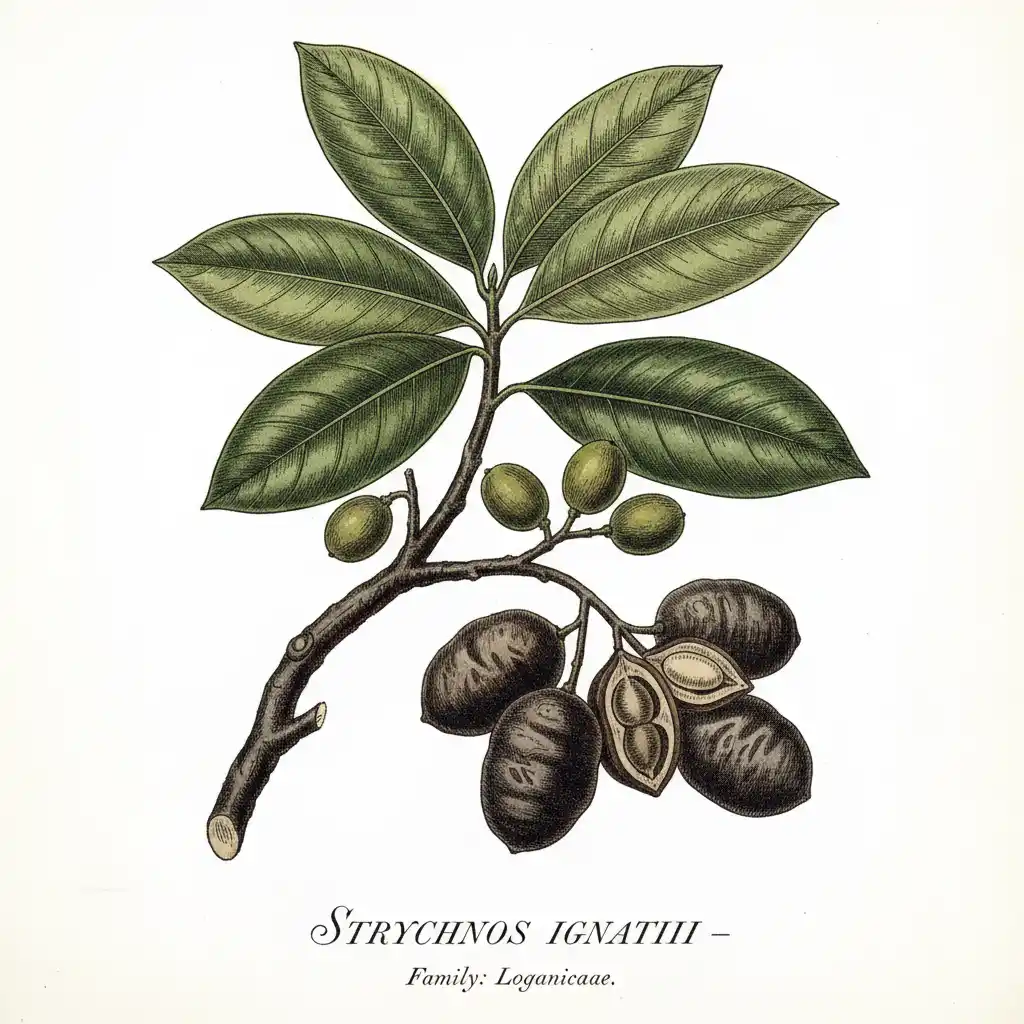
Ignatia Amara, often referred to simply as Ignatia, is derived from the seeds of the Strychnos ignatii tree, a climbing shrub native to the Philippines and parts of China. Historically known as St. Ignatius’ bean, this botanical substance contains strychnine, a potent alkaloid. However, in the context of homeopathic medicine, the substance is prepared through a process of serial dilution and succussion (vigorous shaking). This process renders the final remedy non-toxic while, according to homeopathic theory, retaining the energetic imprint necessary to stimulate the body’s healing response.
In the realm of integrative health and natural medicine, reflecting The Future of Integrative NZ Herbal Medicine, Ignatia is frequently categorized as a “polychrest” for the nervous system—a remedy with a wide range of uses, specifically tailored to the emotional sphere. It is often the first line of defense for individuals who have recently suffered a trauma that they are struggling to process or express outwardly. Unlike remedies that treat chronic, long-standing depression, Ignatia is uniquely suited for the acute phase of emotional turbulence.
Core Indications: Acute Emotional Distress
The primary Ignatia Amara uses for emotional stability revolve around the reaction to loss. It is colloquially known among homeopaths as the “grief remedy,” but its scope extends beyond simple sadness. It is indicated for a specific type of emotional processing characterized by suppression, idealism, and sudden mood swings.
Coping with Grief and Bereavement
When an individual faces the death of a loved one, the loss of a job, or a significant life transition, the nervous system can enter a state of shock. Ignatia is indicated when the person is trying to “keep it together” publicly but is crumbling internally. They may refuse to cry in front of others, leading to a buildup of emotional pressure. The remedy is often administered to help release this suppressed grief, allowing the patient to weep freely and begin the natural healing process.
Romantic Heartbreak and Disappointment
One of the most specific indications for Ignatia is ailments arising from disappointed love. This can range from a breakup or divorce to receiving bad news about a partner. The Ignatia state is one of romantic idealism shattered by reality. The individual may ruminate obsessively on the past or the “what ifs,” leading to a state of hysterical sorrow followed by numbness.
Shock and Emotional Fright
Beyond sadness, Ignatia is used for the aftereffects of fright or shock. This could be receiving bad news via a phone call or witnessing a traumatic event. In these instances, the body’s fight-or-flight response becomes “stuck,” leading to trembling, twitching, or an inability to focus. Ignatia acts to reset this sympathetic nervous system response.
The Physiology of Grief: Key Physical Symptoms
In homeopathy, mental states are almost always accompanied by physical markers (concomitants). Ignatia Amara is famous for a set of paradoxical and specific physical symptoms that manifest directly from emotional stress.
The Signature ‘Sighing’ Symptom
If there is one hallmark symptom that points to Ignatia, it is involuntary sighing. Patients requiring this remedy often take deep, audible breaths or sighs frequently without realizing it. This is the body’s physiological attempt to oxygenate the blood and release the tension held in the diaphragm due to suppressed sobbing. If a person is grieving and constantly sighing, Ignatia is almost always the indicated remedy.
The Lump in the Throat (Globus Hystericus)
Anxiety and grief often manifest as a sensation of a lump in the throat that cannot be swallowed away. Medically termed globus hystericus, this sensation feels like a constriction or a ball rising from the stomach to the throat. Ignatia is the specific remedy for this sensation, particularly when it is triggered by emotional upset. The sensation is often described as a spasm of the esophagus caused by the effort to hold back tears.

The Paradox of Contradictory Symptoms
A unique feature of the Ignatia profile is the presence of contradictory or paradoxical symptoms. For example:
- Throat Pain: A sore throat that feels better when swallowing solid food but worse when swallowing liquids or empty swallowing.
- Digestion: Nausea that is relieved by eating a heavy meal but aggravated by light snacks.
- Mood: Laughing one minute and crying the next (hysteria).
These contradictions reflect the chaotic state of the emotional mind, where signals are crossed and the body behaves illogically.
Differentiating Ignatia from Other Anxiety Remedies
To use Ignatia effectively, one must distinguish it from other major homeopathic remedies used for anxiety and depression, often incorporating Natural Remedies for Anxiety: A Holistic Protocol. Misprescribing can lead to a lack of results.
Ignatia vs. Natrum Muriaticum
Ignatia and Natrum Muriaticum are closely related; in fact, Ignatia is often called the “acute” of Natrum Mur. While Ignatia is for recent grief (days or weeks), Natrum Mur is for chronic, long-standing grief (years) where the person has built a wall around their heart. If Ignatia fails to resolve the grief after a period of time, or if the grief is old, a homeopath may switch the prescription to Natrum Mur.
Ignatia vs. Aconite
Aconite (Aconitum Napellus) is used for sheer panic and terror, often accompanied by a fear of death. The onset is sudden and violent. Ignatia, while also used for shock, is more focused on the emotional reaction (sadness, disappointment) rather than the terror-filled panic attack associated with Aconite.
Ignatia vs. Pulsatilla
Pulsatilla patients are also weepy and emotional, but they seek consolation and feel better when comforted. They are “clingy” and soft. In contrast, the Ignatia patient often rejects consolation, preferring to be alone with their grief. Consolation may even aggravate the Ignatia patient, making them angry or more withdrawn.
Potency Selection and Dosage Guidelines
Selecting the correct potency is vital for the efficacy of homeopathic remedies. For emotional conditions, the “centesimal” (C) scale is most commonly used.
Acute Situations (30C vs. 200C)
For most self-limiting emotional situations, such as a recent breakup or a bad day involving shock, a 30C potency is the standard recommendation. It is gentle enough for frequent repetition but strong enough to act on the mental plane.
- Dosage: Take 3-5 pellets under the tongue. In acute distress (e.g., during a funeral or immediately after bad news), the dose can be repeated every 30 minutes for up to 3 doses.
- Maintenance: As symptoms improve, reduce frequency to twice daily, then stop as soon as the emotional balance is restored.
200C Potency: This higher potency is often reserved for severe acute shock or trauma. It acts deeper and faster but should be used with more caution. It is typically taken as a single dose or repeated only once. For detailed guidelines on potency, refer to resources like the National Center for Complementary and Integrative Health (NCCIH).

Safety, Precautions, and Integrative Context
While homeopathic remedies are generally considered safe due to their high dilution, they should be used as part of a holistic approach to mental health. Ignatia Amara is not a substitute for professional psychiatric care in cases of clinical depression, suicidal ideation, or severe anxiety disorders.
Furthermore, coffee and mint are traditionally thought to antidote (neutralize) the effects of homeopathic remedies. While this is debated in modern homeopathy, it is often recommended to avoid strong flavors like mint toothpaste or espresso for 15 minutes before and after taking the remedy.
For those interested in the botanical origins, the Strychnos ignatii plant has a long history in herbalism, though its raw form is toxic. More information on the plant species can be found through botanical databases such as Wikipedia’s entry on Strychnos ignatii.
When to Stop the Remedy
A key rule in homeopathy is to stop taking the remedy once improvement is noticed. Unlike pharmaceutical antidepressants which require a steady blood level, homeopathy acts as a catalyst. Once the body’s healing mechanism is triggered (e.g., the patient feels a sense of calm or can finally sleep), the remedy should be discontinued to avoid “proving” (developing symptoms of the remedy due to overuse).
People Also Ask
What emotions is Ignatia Amara used for?
Ignatia Amara is primarily used for emotions related to grief, bereavement, disappointment in love, shock, and suppressed anger. It is specifically indicated for rapidly changing moods, hysteria, and silent grief where the person withdraws from others.
How quickly does Ignatia Amara work for anxiety?
In acute emotional situations, Ignatia Amara can work very quickly, often within minutes to an hour. Users frequently report a sense of calm, a release of tension (such as a deep sigh), or the ability to finally cry and release pent-up emotion shortly after taking a dose.
Can I take Ignatia Amara every day?
It is generally not recommended to take Ignatia Amara indefinitely every day. In homeopathy, remedies are taken until symptoms improve and then stopped. If symptoms persist daily for a long period, a chronic remedy (like Natrum Muriaticum) or professional consultation is usually required.
What is the difference between Ignatia and Natrum Mur?
Ignatia is for acute, recent grief and emotional shock with changing moods. Natrum Muriaticum is for chronic, long-term grief where the person has built an emotional wall, dwells on the past, and may suffer from depression or headaches related to old emotional wounds.
Is Ignatia Amara safe for sleep issues?
Yes, Ignatia Amara is often used for insomnia caused by emotional upset, grief, or looping thoughts about a traumatic event. It helps quiet the mind and relax the nervous system, allowing for natural sleep without the sedative side effects of sleeping pills.
What are the side effects of Ignatia Amara?
Homeopathic Ignatia Amara is highly diluted and generally has no chemical side effects or interactions with conventional medications. However, taking it too frequently when not indicated can lead to a temporary aggravation of symptoms, known as a “proving.”