
Natural insomnia treatment is a comprehensive, non-pharmaceutical approach to restoring healthy sleep patterns by addressing the root causes of sleep disruption. It involves circadian rhythm entrainment through light exposure, rigorous sleep hygiene protocols, physiological cortisol management, and the use of evidence-based herbal supports like Valerian and Passionflower to optimize neurotransmitter function and promote deep, restorative rest.
Mastering Circadian Rhythm Entrainment
The foundation of any effective natural insomnia treatment—often discussed on our Home page—lies in the biology of the circadian rhythm. This internal clock, governed by the suprachiasmatic nucleus (SCN) in the hypothalamus, dictates when we feel alert and when we feel sleepy. In modern society, artificial lighting and irregular schedules often desynchronize this rhythm, leading to chronic insomnia.
To fix this, we must look at light as a drug. It is the primary “zeitgeber” (time-giver) that cues the body to produce hormones. The management of light exposure is arguably more potent than many over-the-counter sleep aids.
The Morning Cortisol Pulse
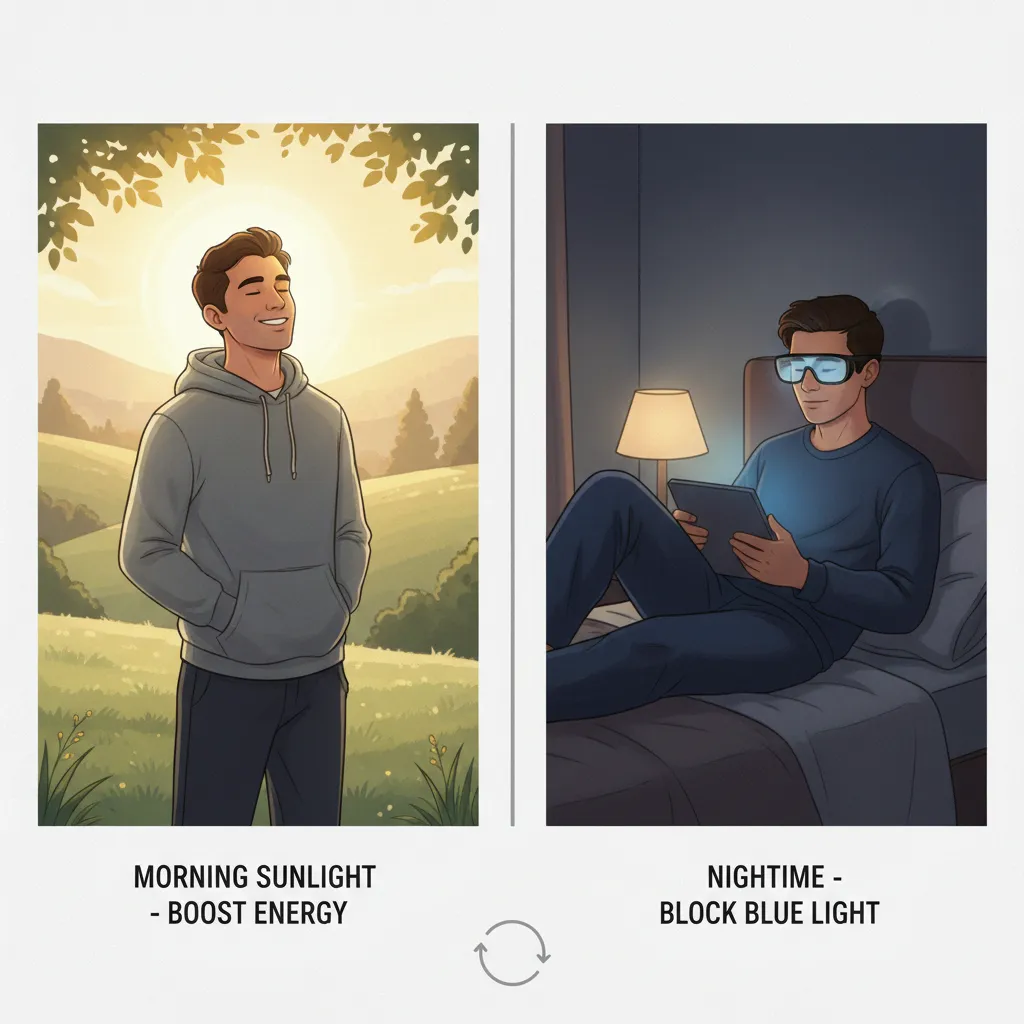
Paradoxically, a good night’s sleep begins the moment you wake up. To reset your circadian clock, you require exposure to bright light—ideally sunlight—within 30 to 60 minutes of waking. This exposure triggers a healthy spike in cortisol (which you want in the morning, not at night) and starts a timer for the release of melatonin approximately 12 to 14 hours later.
Aim for at least 10,000 lux of light intensity. On a clear day, outdoor light provides this easily. On overcast days, you may need 20 to 30 minutes of outdoor exposure. Through a window, light intensity drops significantly, often failing to trigger the necessary biological signal. If you live in a dark latitude, utilizing a 10,000 lux therapy lamp is a viable substitute.
The Evening Darkness Protocol
Just as morning light signals “awake,” evening darkness signals “rest.” Melatonin, the hormone of darkness, is easily suppressed by blue and green wavelengths of light emitted by screens and LED bulbs. To practice holistic management of insomnia, you must institute a digital sunset.
- Limit Screen Time: Avoid backlit devices 2 hours before bed.
- Blue Light Blockers: If screens are unavoidable, use amber or red-tinted glasses that block 100% of blue light.
- Dim the Environment: Use floor lamps with warm-colored bulbs (2700K or lower) placed at eye level or below to simulate a sunset environment.
The Definitive Sleep Hygiene Checklist
Sleep hygiene refers to the behavioral and environmental practices that precede sleep. While often dismissed as basic advice, clinical data supports strict adherence to these protocols—including the consumption of nutrient-dense plants like Pūhā: Nutritional Value and Health Benefits—as a frontline natural insomnia treatment. An optimized bedroom environment removes the physiological friction that prevents the onset of sleep.
According to the Centers for Disease Control and Prevention (CDC), consistency in sleep hygiene is a critical factor in long-term health outcomes. Below is a comprehensive checklist to audit your current sleep environment.
Thermal Regulation
Your core body temperature must drop by approximately 2-3 degrees Fahrenheit to initiate sleep. If your room is too warm, this physiological process is inhibited.
- Ideal Temperature: Keep the bedroom between 60°F and 67°F (15.6°C – 19.4°C).
- Breathable Bedding: Utilize natural fibers like cotton, bamboo, or linen which allow for thermoregulation, unlike synthetics which trap heat.
- Warm Bath Effect: Taking a warm bath or shower 90 minutes before bed causes blood vessels to dilate (vasodilation), radiating heat away from the core and signaling the body that it is time to sleep.
Sensory Deprivation
Any sensory input can keep the nervous system in a state of hyperarousal.
- Noise: If you cannot control street noise, use a white noise machine or a fan. White noise masks sudden changes in sound frequency that typically wake the brain.
- Light: Blackout curtains are essential. Even a small amount of light from a streetlamp or an alarm clock LED can disrupt sleep cycles. Use an eye mask if total blackout is impossible.
Managing Cortisol: The “Tired but Wired” Fix
Many individuals suffering from insomnia experience the “tired but wired” sensation. This is often driven by dysregulated cortisol. Under normal circumstances, cortisol should be highest in the morning and lowest at midnight. However, chronic stress can lead to an inverted curve where cortisol spikes in the evening, suppressing melatonin and inducing alertness.

The Physiological Sigh
To manually downregulate the nervous system from a sympathetic (fight or flight) state to a parasympathetic (rest and digest) state, you can utilize breathwork. The “physiological sigh” is a pattern of breathing that rapidly offloads carbon dioxide and lowers heart rate.
How to do it: Take two short inhales through the nose (one deep, one top-up) followed by a long, extended exhale through the mouth. Repeating this for 1-3 minutes can physically force the body into a state of relaxation suitable for sleep.
Cognitive Offloading
Rumination—worrying about the future or replaying the past—is a major driver of evening cortisol. Keep a “worry journal” by your bedside. If your mind is racing with tasks for tomorrow, write them down. By externalizing the thought, you signal to your brain that the information is safe and does not need to be actively rehearsed in working memory, allowing the mind to let go.
The Synergistic Herbal Stack: Valerian, Hops, and Passionflower
In the realm of Integrative Health, herbal medicine offers a powerful natural insomnia treatment alternative to benzodiazepines and Z-drugs. The combination of Valerian, Hops, and Passionflower is a classic, clinically supported stack—useful when Registering a Natural Health Product in NZ: A Guide for Businesses—that works synergistically to promote sedation and reduce anxiety.
Valerian Root (Valeriana officinalis)
Valerian is perhaps the most researched herbal sleep aid. Its mechanism of action involves the inhibition of the breakdown of GABA (gamma-aminobutyric acid), the brain’s primary inhibitory neurotransmitter. By increasing GABA availability in the synaptic cleft, Valerian reduces neuronal excitability.
Note: Valerian can take time to build up in the system. While some feel immediate effects, studies suggest that consistent use over two weeks yields the best results for chronic insomnia.
Hops (Humulus lupulus)
Yes, the same plant used to brew beer is a potent sedative. Hops contain a flavonoid called xanthohumol and bitter acids that have a sedative effect. Hops are rarely used alone; they are almost always paired with Valerian. The combination has been shown in studies to improve sleep latency (the time it takes to fall asleep) more effectively than either herb alone.
Passionflower (Passiflora incarnata)
Passionflower treats the anxiety component of insomnia. If your sleep issues are driven by racing thoughts or general anxiety, Passionflower is the critical addition to the stack. It also modulates GABA receptors, but through a different binding site than Valerian, providing a multi-target approach to calming the nervous system.

Nutritional Anchors for Better Sleep
Beyond herbs, your baseline nutrition plays a massive role in sleep quality. Deficiencies in key minerals can lead to restless legs and frequent waking.
Magnesium Glycinate
Magnesium is a cofactor in over 300 enzymatic processes, including the regulation of neurotransmitters. A large portion of the population is deficient in magnesium. For sleep, Magnesium Glycinate is the preferred form because glycine is an inhibitory amino acid that lowers core body temperature and promotes relaxation. Taking 200-400mg of Magnesium Glycinate with dinner can be a game-changer for sleep maintenance.
The Caffeine and Alcohol Trap
To truly manage insomnia holistically, you must audit your intake of stimulants and depressants.
- Caffeine: Has a half-life of 5-7 hours. A coffee at 4:00 PM means 50% of that caffeine is still in your brain at 10:00 PM, blocking adenosine receptors (the chemical that makes you feel sleepy). Cut off caffeine intake by 12:00 PM or 1:00 PM at the latest.
- Alcohol: While alcohol helps you fall asleep (sedation), it destroys sleep quality. It fragments REM sleep and suppresses deep wave sleep. For natural insomnia treatment, alcohol should be minimized or consumed at least 3 hours before bed.
Cognitive Behavioral Therapy for Insomnia (CBT-I)
While this guide focuses on physiological and environmental changes, the psychological aspect cannot be ignored. CBT-I is considered the gold standard first-line treatment for chronic insomnia by the American College of Physicians.
CBT-I works by challenging the negative thoughts and anxieties associated with sleep (e.g., “If I don’t sleep now, I will fail at work tomorrow”). It also employs “Sleep Restriction Therapy,” a method where time in bed is temporarily restricted to match the actual time spent sleeping, thereby increasing sleep drive and efficiency. Combining the herbal stack and hygiene protocols mentioned above with CBT-I principles creates a robust, holistic defense against sleeplessness.
People Also Ask
What is the most effective natural remedy for insomnia?
While individual results vary, a combination of Magnesium Glycinate and Valerian Root is often cited as the most effective natural remedy. However, the most effective behavioral remedy is consistent morning sunlight exposure to regulate the circadian rhythm.
How can I cure my insomnia naturally fast?
To cure insomnia naturally and quickly, implement Sleep Restriction Therapy immediately: only stay in bed for the hours you are actually sleeping. Combine this with a complete blackout of your bedroom, no screens 2 hours before bed, and a 4-7-8 breathing technique to lower heart rate.
What is the 10 3 2 1 0 rule for sleep?
The 10-3-2-1-0 rule is a daily routine for better sleep: 10 hours before bed, stop caffeine; 3 hours before bed, stop food and alcohol; 2 hours before bed, stop work; 1 hour before bed, stop screen time; and 0 times hitting the snooze button in the morning.
Which tea is best for deep sleep?
Valerian root tea is widely considered the most potent for deep sleep, though it has a strong earthy taste. Chamomile and Passionflower teas are also highly effective and have a milder flavor profile. Blends containing Lemon Balm can also aid relaxation.
Does drinking water help insomnia?
Hydration is important for regulating body temperature, but drinking large amounts of water right before bed can cause nocturia (frequent urination at night), which worsens insomnia. It is best to hydrate throughout the day and taper off fluid intake 2 hours before sleep.
Is a banana good for insomnia?
Yes, bananas can be good for insomnia. They contain potassium and magnesium, which are natural muscle relaxants. They also contain tryptophan, an amino acid that the body converts into serotonin and melatonin, aiding in sleep onset.