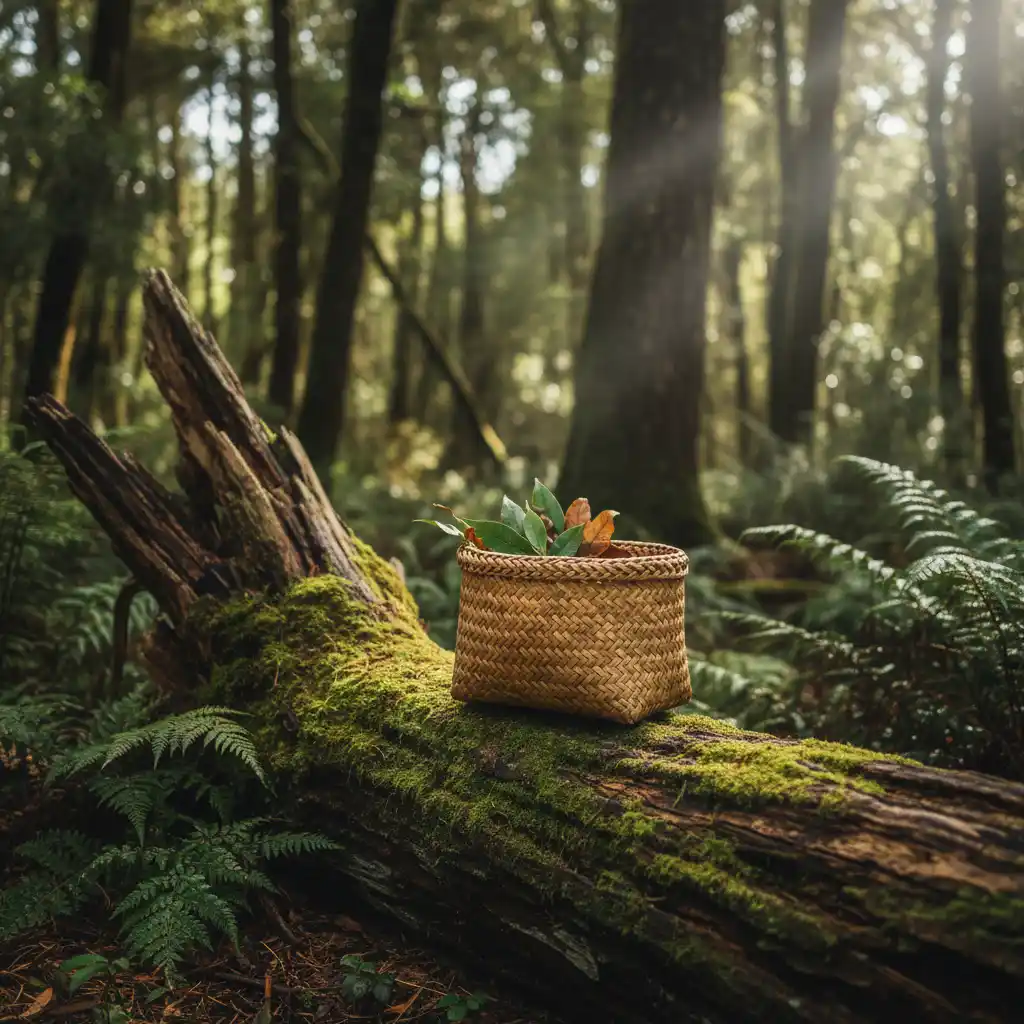
Sustainable Rongoā harvesting is the ethical practice of gathering traditional Māori medicinal plants guided by the principles of kaitiakitanga (guardianship) and tikanga (cultural protocols), which we celebrate on our Home page. To ensure ecological longevity, harvesters must prioritize the plant’s mauri (life force), utilize specific prayer rituals (karakia) to seek permission, never strip a plant bare, and strictly adhere to seasonal cycles (maramataka) to allow for regeneration and future abundance.
The Philosophy of Kaitiakitanga in Rongoā
At the heart of sustainable Rongoā harvesting lies the concept of kaitiakitanga. Often translated simply as “guardianship” or “stewardship,” this principle encompasses a much deeper, reciprocal relationship between the harvester and the natural world. In the Māori worldview (Te Ao Māori), humans are not superior to nature but are genealogically connected to it. Plants are seen as living ancestors (tuakana) that provide sustenance and healing to humans (teina).
Kaitiakitanga dictates that the health of the forest is directly linked to the health of the people. You cannot have a healed community if the environment providing the medicine is sick or depleted. Therefore, sustainable harvesting is not merely an ecological choice; it is a spiritual obligation. When a practitioner enters the bush to harvest Rongoā, they are entering the domain of Tāne Mahuta (the god of the forest). Every action taken must respect the mauri (life force) of that domain.
True sustainability in this context means ensuring that the resource remains abundant for future generations. It moves beyond the Western concept of “resource management” and into a realm of active protection. A kaitiaki (guardian) does not just take; they nurture, protect, and enhance the environment. If a patch of Kawakawa or Kumarahou looks stressed or sparse, a kaitiaki will walk away, regardless of their personal need for the medicine.

Tikanga: Essential Protocols for Respectful Harvesting
Tikanga refers to the customs, methods, and protocols that have been handed down through generations to ensure safety and propriety. In the context of Rongoā, tikanga acts as a strict sustainability framework, much like the themes explored in Ethnobotany: Learning from Global Herbal Practices. While specific practices can vary between Iwi (tribes) and Hapū (sub-tribes), there are universal principles that guide ethical harvesting.
Karakia (Prayer) and Intention
Before any plant is touched, karakia must be offered. This is not strictly religious in the Western sense but serves to settle the harvester’s mind, clear negative energy, and state the intention to the forest. It is a request for permission to take part of the plant for healing purposes. By pausing to recite karakia, the harvester slows down, observes the environment, and ensures they are acting with a clear conscience. If the “vibe” or feeling is wrong, or if the karakia falters, it is often taken as a sign that harvesting should not occur that day.
The Principle of Minimal Take
A common rule of thumb in sustainable Rongoā harvesting is to never take more than you need, and never take more than the plant can sustain. Many practitioners follow a “rule of three”: take a little for the patient, leave plenty for the plant to regenerate, and leave plenty for the insects and birds that rely on it. You should never strip a branch completely. Instead, harvest leaves from different sides of the plant (often facing East, where the light first touches, though this varies) to maintain the plant’s structural integrity.
Protecting the Rito (Central Shoot)
Perhaps the most critical rule in harvesting—whether it is Harakeke (flax) or medicinal shrubs—is to never cut the rito (the central baby shoot) or the awhi rito (the protecting parent leaves immediately next to it). The rito represents the child and the future growth of the plant. Cutting it kills the plant’s ability to regenerate. Sustainable harvesting focuses on the older, outer leaves (often called the grandparents) which have completed their life cycle and are ready to return to the earth or be used.
Conservation Status and Threatened Native Species
The resurgence of interest in natural medicine has placed immense pressure on New Zealand’s native flora. While plants like Kawakawa are currently abundant, others are facing significant threats from habitat loss, pathogens, and over-harvesting.
One of the most pressing threats is Myrtle Rust, a fungal disease affecting plants in the Myrtaceae family, including Rātā, Pōhutukawa, and the highly medicinal Mānuka and Kānuka. Because this disease is spread by wind and contact, harvesters must be hyper-vigilant. Moving from an infected area to a clean area can spread the spores. The Department of Conservation (DOC) advises strict hygiene protocols, including cleaning gear and shoes, and avoiding harvesting from any plant showing signs of the disease.
Furthermore, slow-growing plants like the Horopito and Kumarahou are easily decimated by roadside foraging. Kumarahou, known as “gumdigger’s soap,” grows in specific clay soils and has a delicate root system. Pulling at branches can uproot the entire bush. Sustainable harvesting of these species requires surgical precision—using clean, sharp secateurs rather than snapping branches by hand—to prevent dieback and infection entering the plant wounds.

The Impact of Commercialization and Climate Change
As Rongoā Māori gains global recognition, the commercial demand for ingredients creates a tension between profit and preservation. Large-scale commercial harvesting often lacks the nuance of traditional tikanga. When tons of leaf material are required for balms, teas, and supplements, the temptation to strip forests bare increases. This “commodification of nature” violates the principles of kaitiakitanga, treating the plant as a product rather than a relation.
Climate change further complicates this dynamic. The Maramataka (Māori lunar calendar), which traditionally guided harvesting times based on moon phases and seasons, is seeing disruption. Flowering seasons are shifting, and rainfall patterns are becoming erratic. Plants are under stress from prolonged droughts or intense flooding. A stressed plant produces different chemical markers and may not possess the same healing potency; this is a concept as crucial as Understanding Potency: 6C, 30C, 200C. Ethical harvesters must now be more observant than ever, adjusting their activities to align with the changing environmental reality rather than sticking rigidly to calendar dates that may no longer match the climate.
Practical Guidelines for Harvesting Common Rongoā
To practice sustainable Rongoā harvesting, one must move from theory to action. Here are specific guidelines for three of the most commonly harvested plants:
1. Kawakawa (Macropiper excelsum)
Kawakawa is robust, but it is not invincible. Traditionally, leaves with holes eaten by the looper moth caterpillar are preferred for internal use, as the plant releases more medicinal oils to heal itself in response to the insect.
Sustainability Tip: Never pull the leaves off. Use sharp snips to cut the petiole (leaf stem), leaving a small stump. This prevents damage to the main stem. Do not take more than a few leaves from any single branch.
2. Kumarahou (Pomaderris kumeraho)
This plant is highly sensitive. It has a shallow root system and can die if shaken vigorously.
Sustainability Tip: Only harvest during the appropriate season (usually avoiding the flowering season to allow for seed set, although flowers are sometimes used). Never break branches. Cut small amounts of leaf material and ensure the bush is left looking as if it hasn’t been touched.
3. Harakeke (Phormium tenax)
While often used for weaving, the gel at the base is used for Rongoā.
Sustainability Tip: Strict adherence to the fan structure is required. Identify the Rito (center), the Awhi Rito (parents), and only cut the Tipuna (grandparents/outer leaves). Cut in a downward diagonal motion away from the center to ensure rain runs off and doesn’t rot the core.
Legal Frameworks and Public Land Regulations
It is crucial to understand the legal boundaries of harvesting. In New Zealand, harvesting on public conservation land is regulated by the Department of Conservation (DOC). While there are provisions for customary harvest by Tangata Whenua (indigenous people of the land), this usually requires authorization or a concession, depending on the scale and location.
For non-Māori practitioners or commercial entities, harvesting on public land without a permit is illegal. This protects biodiversity and ensures that resources are not depleted for private gain. Ethical sourcing often means growing your own Rongoā garden or partnering with private landowners who manage their bush blocks sustainably. For authoritative information on land access and concessions, refer to Manaaki Whenua – Landcare Research or local council guidelines.