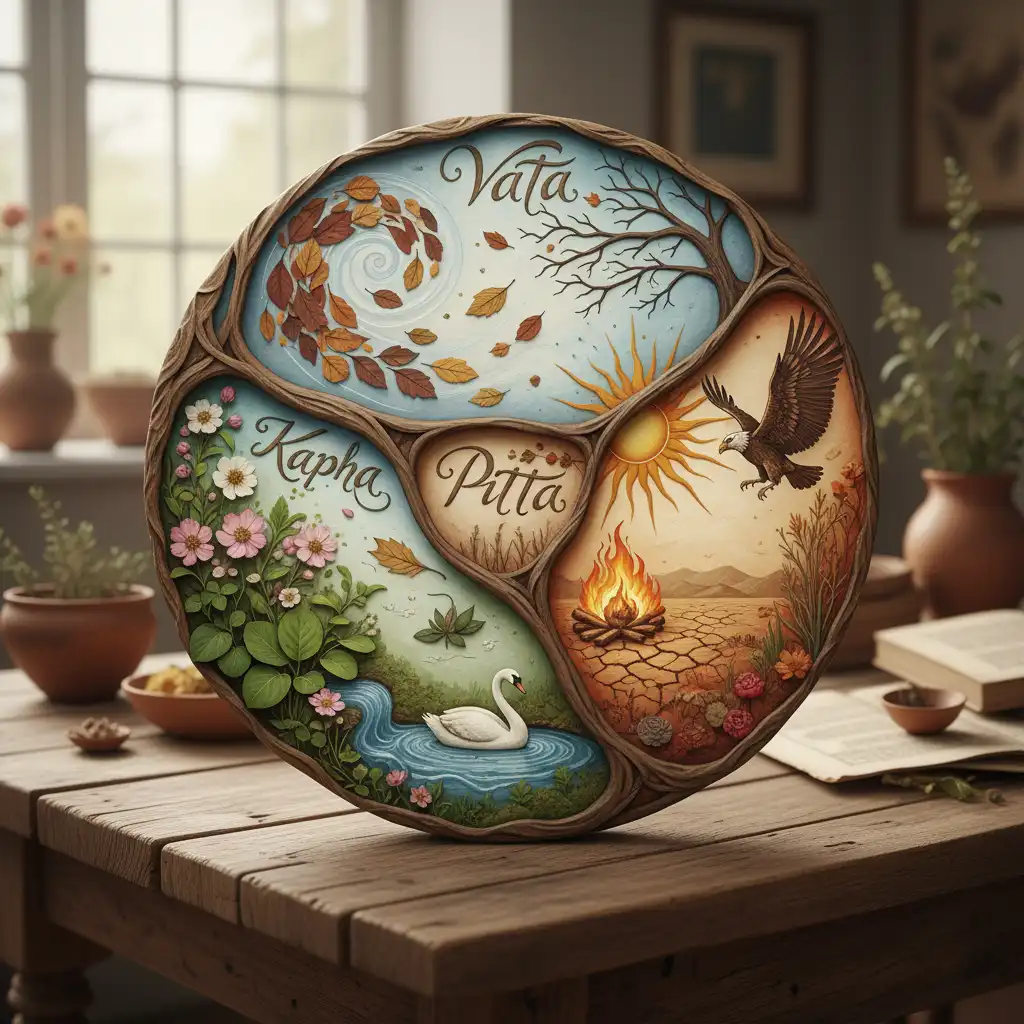
Vata Pitta Kapha characteristics represent the three fundamental bio-energies (Doshas) in Ayurveda that govern physical and mental processes. Vata is defined by the qualities of air and ether (movement and dryness), Pitta by fire and water (heat and transformation), and Kapha by earth and water (stability and heaviness). Understanding these unique traits is essential for determining your constitution (Prakriti) and correcting health imbalances.
The Foundations of Ayurvedic Physiology
Ayurveda, the ancient Indian system of medicine, operates on the premise that the universe and the human body are composed of five great elements: Ether (Space), Air, Fire, Water, and Earth. These elements pair up to form the three primary life forces, or Doshas: Vata, Pitta, and Kapha. While every individual possesses all three doshas, the unique ratio of each at the moment of conception determines your Prakriti, or unique constitution.
Understanding Vata Pitta Kapha characteristics is not merely about labeling yourself; it is a diagnostic tool used to tailor diet, lifestyle, and medical treatments. Health, in the Ayurvedic view, is the dynamic state of balance between these forces, a concept outlined on our Home page. When they are in equilibrium relative to your constitution, you experience vitality. When they are disturbed—due to stress, diet, or environmental factors—disease manifests.

Vata Characteristics: The Energy of Movement
Vata is composed of Ether and Air. It is the subtle energy associated with movement—composed of the kinetic energy in the body. It governs breathing, blinking, muscle movement, tissue pulsation, and the transmission of nerve impulses.
Physical Traits of Vata
Individuals with a predominant Vata constitution typically display a slender frame with prominent joints and lean muscle mass. They often struggle to gain weight. Their skin tends to be dry, rough, and cool to the touch. Vata types often have irregular features, such as eyes that are small or active, and teeth that may be somewhat crooked or protruding.
- Body Frame: Thin, light, tall or short.
- Skin: Dry, rough, cold, thin, transparent.
- Hair: Dry, brittle, frizzy, sparse.
- Digestion: Irregular appetite; prone to gas, bloating, and constipation.
- Sleep: Light, interrupted, prone to insomnia.
Mental and Emotional Traits
Psychologically, Vata types are the creatives of the world. They are quick to learn and grasp new concepts but are equally quick to forget them. They are enthusiastic, energetic, and flexible. However, when out of balance, this air energy manifests as fear, anxiety, and nervousness. Their minds are constantly racing, making it difficult to focus on a single task for extended periods.
Pitta Characteristics: The Energy of Transformation
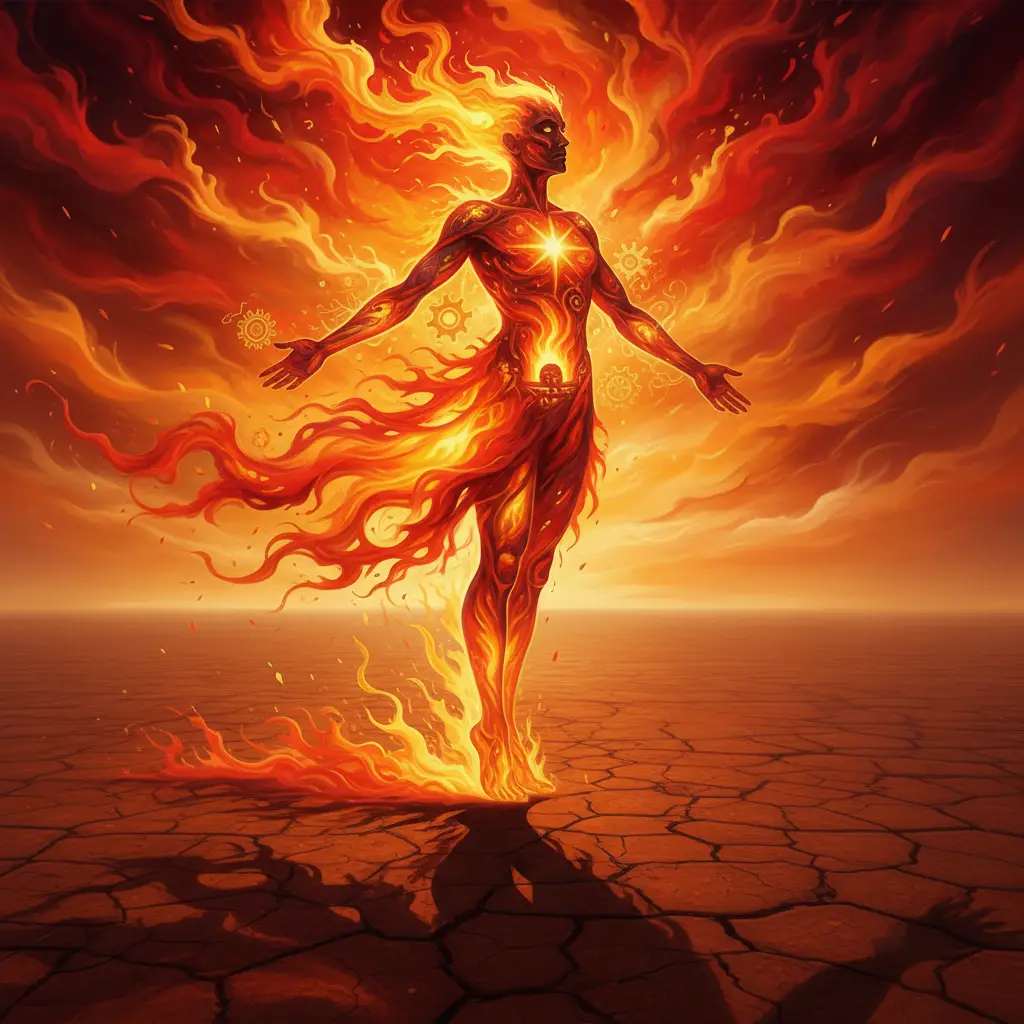
Pitta is composed primarily of Fire and secondarily of Water. It governs all metabolic processes in the body, including digestion (Agni), absorption, assimilation, and the regulation of body temperature. It is the force of transformation.
Physical Traits of Pitta
Pitta individuals usually have a medium, athletic build with moderate muscle development. They maintain their weight relatively easily but can fluctuate. Their most defining physical characteristic is heat; they run warm and may sweat profusely. Their skin is often sensitive, oily in the T-zone, and prone to acne, freckles, or moles.
- Body Frame: Medium height, moderate build, good muscle tone.
- Skin: Warm, oily, sensitive, reddish complexion, burns easily in the sun.
- Hair: Fine, straight, silky; tendency toward premature graying or balding.
- Digestion: Strong, sharp appetite (cannot skip meals); prone to acidity and heartburn.
- Sleep: Sound, moderate duration; often dreams of fire or conflict.
Mental and Emotional Traits
Mentally, Pitta types are sharp, intellectual, and direct. They possess excellent concentration and are natural leaders who love a challenge. They are articulate and precise. However, the shadow side of the fire element is irritability, anger, jealousy, and judgment. When under stress, a Pitta individual becomes critical and aggressive.
Kapha Characteristics: The Energy of Structure
Kapha is derived from Earth and Water. It provides the body with structure, solidity, and cohesion. It lubricates the joints, moisturizes the skin, maintains immunity, and protects the tissues; researchers often investigate Koromiko: Research into Traditional Diuretic and Antimicrobial Uses to see how plants support these functions. Kapha is the anabolic force of the body.
Physical Traits of Kapha
Kapha individuals have a strong, sturdy build with broad shoulders and excellent stamina. They have a tendency to gain weight easily and struggle to lose it due to a slower metabolism. Their physical features are often described as large and attractive, with big, liquid eyes and thick, lustrous hair.
- Body Frame: Large, heavy, sturdy, broad.
- Skin: Thick, oily, smooth, cool, pale.
- Hair: Thick, wavy, oily, dark.
- Digestion: Slow but steady; low appetite but enjoys food; prone to lethargy after eating.
- Sleep: Heavy, deep, excessive; difficulty waking up in the morning.
Mental and Emotional Traits
Kapha types are the peacemakers. They are calm, grounded, patient, and loving. They learn slowly but have outstanding long-term memory. They are loyal and supportive friends. However, when the heavy earth element accumulates, they can become possessive, greedy, lethargic, and resistant to change. Depression in Kapha types often manifests as a lack of motivation rather than sadness.
Recognizing Signs of Imbalance (Vikriti)
While your Prakriti is your baseline, your Vikriti is your current state of health. Ideally, they should match. However, lifestyle choices often cause one dosha to spike, masking your true nature. Recognizing Vata Pitta Kapha characteristics in their aggravated states is crucial for healing, especially when Ensuring Quality Control for Homemade Remedies and Small Batches.
Vata Imbalance
When Vata is aggravated, the body dries out and destabilizes. Symptoms include dry skin, constipation, joint pain (cracking joints), weight loss, insomnia, and tremors. Mentally, the person experiences severe anxiety, fear, and an inability to make decisions.
Pitta Imbalance
Excess Pitta manifests as heat and inflammation. Physical signs include skin rashes, acne, acid reflux, ulcers, diarrhea, and bloodshot eyes. Emotionally, the person becomes impatient, controlling, and prone to outbursts of anger.
Kapha Imbalance
Aggravated Kapha leads to accumulation and stagnation. This results in weight gain, water retention, sinus congestion, allergies, and excessive mucus production. Mentally, it presents as stubbornness, depression, and excessive attachment to material objects.
For a deeper understanding of how these imbalances are classified in modern integrative medicine, resources like the National Center for Complementary and Integrative Health (NCCIH) provide valuable context on Ayurvedic safety and efficacy.
How Doshas Shift with Seasons and Age
Ayurveda teaches that we are not static beings; we fluctuate with the macrocosm of nature. The dominance of specific doshas changes throughout our lifespan and the yearly seasonal cycle.
The Doshas and Aging
Life is divided into three stages:
1. Childhood (Kapha Stage): From birth to puberty, the body is building tissue. This is a time of growth, mucus, and potential congestion (common in kids).
2. Adulthood (Pitta Stage): From puberty to around age 50, the body is metabolically active. This is the time of ambition, drive, and productivity.
3. Elderhood (Vata Stage): From age 50 onwards, the body begins to dry and shrink. Skin wrinkles, bones become more brittle, and sleep becomes lighter.
The Doshas and Seasons
To maintain balance, one must adjust their lifestyle according to the season:
Vata Season (Autumn/Early Winter): Cold, dry, and windy. Favor warm, cooked, oily foods to counteract dryness.
Kapha Season (Late Winter/Spring): Wet, heavy, and cold. Favor light, dry, spicy foods to clear congestion.
Pitta Season (Summer): Hot and bright. Favor cooling, hydrating foods like melons and leafy greens to prevent overheating.
The Limitations of Online Dosha Quizzes
While online quizzes are a popular entry point for learning Vata Pitta Kapha characteristics, they have significant limitations. Most people answer based on their current state (Vikriti) rather than their birth constitution (Prakriti). For example, a Kapha person with high stress might test as Vata because they are currently anxious, leading to incorrect treatment recommendations.
Furthermore, very few people are mono-doshic (purely Vata, Pitta, or Kapha). Most individuals are dual-doshic (e.g., Vata-Pitta or Pitta-Kapha), and some are Tridoshic (equal balance of all three). These nuances are often lost in multiple-choice algorithms. For an accurate diagnosis, a consultation with a practitioner who performs Nadi Pariksha (pulse diagnosis) is recommended. You can read more about the history and complexity of these systems on Wikipedia’s Ayurveda page.
People Also Ask
What are the physical characteristics of Vata?
Vata physical characteristics typically include a light, thin frame, prominent joints, and dry skin. Vata types often have irregular features, such as small eyes or thin lips, and tend to have cold hands and feet due to poor circulation.
How do I know if I am Vata, Pitta, or Kapha?
You can determine your dosha by analyzing your long-term physical and mental traits, such as body frame, digestion, and temperament. However, because current imbalances can mask your true nature, consulting an Ayurvedic practitioner for pulse diagnosis is the most accurate method.
What is the rarest dosha combination?
The rarest constitution is Tridoshic, where Vata, Pitta, and Kapha are present in equal proportions. This balance provides excellent health and immunity but is difficult to maintain.
Can your dosha change over time?
Your Prakriti (birth constitution) does not change; it is your genetic blueprint. However, your Vikriti (current state of doshas) changes constantly due to age, season, diet, and stress.
What foods should Pitta avoid?
Pitta types should avoid spicy, sour, and salty foods that increase internal heat. This includes chili peppers, fermented foods, excessive garlic, alcohol, and caffeine.
What are the symptoms of Kapha imbalance?
Kapha imbalance symptoms include weight gain, fluid retention, excessive sleep, lethargy, sinus congestion, and a feeling of heaviness in the body and mind.