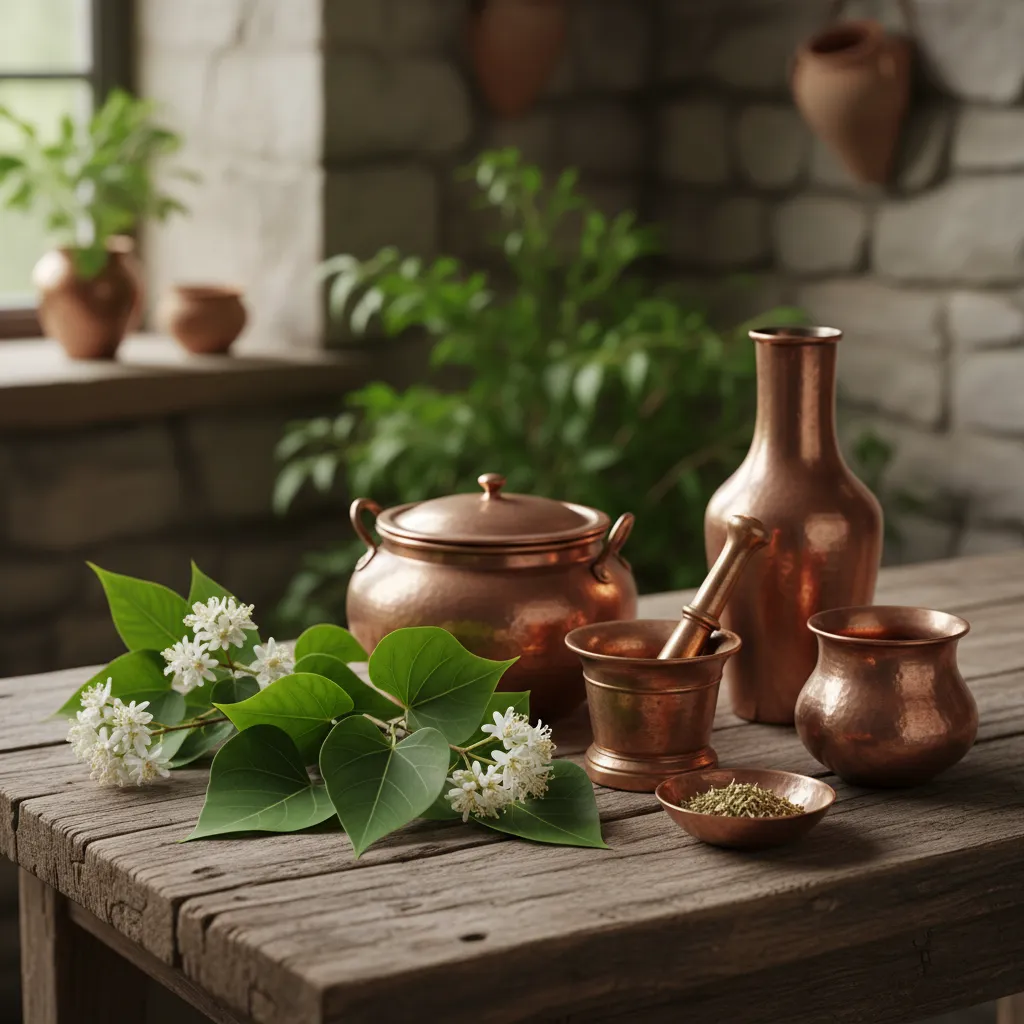
Holistic herbal practice NZ is an integrative healthcare framework that combines evidence-based Western herbal medicine with the indigenous wisdom of Rongoā Māori, Traditional Chinese Medicine (TCM), and Ayurveda. To establish a successful practice at Home in New Zealand, practitioners must honor Te Tiriti o Waitangi, adhere to tikanga (cultural protocols), and utilize a synergistic approach that treats the physical, mental, spiritual, and family dimensions of health using both native flora and global materia medica.
Principles of Holistic Health and Wellness in Aotearoa
Establishing a holistic herbal practice in New Zealand requires a fundamental shift from the reductionist model of conventional medicine—which often treats isolated symptoms—to a systems-based approach that views the patient as a complex, interconnected whole. In Aotearoa, this definition of “holistic” is uniquely shaped by indigenous frameworks that are essential for any practitioner, regardless of their cultural background, to understand and respect.
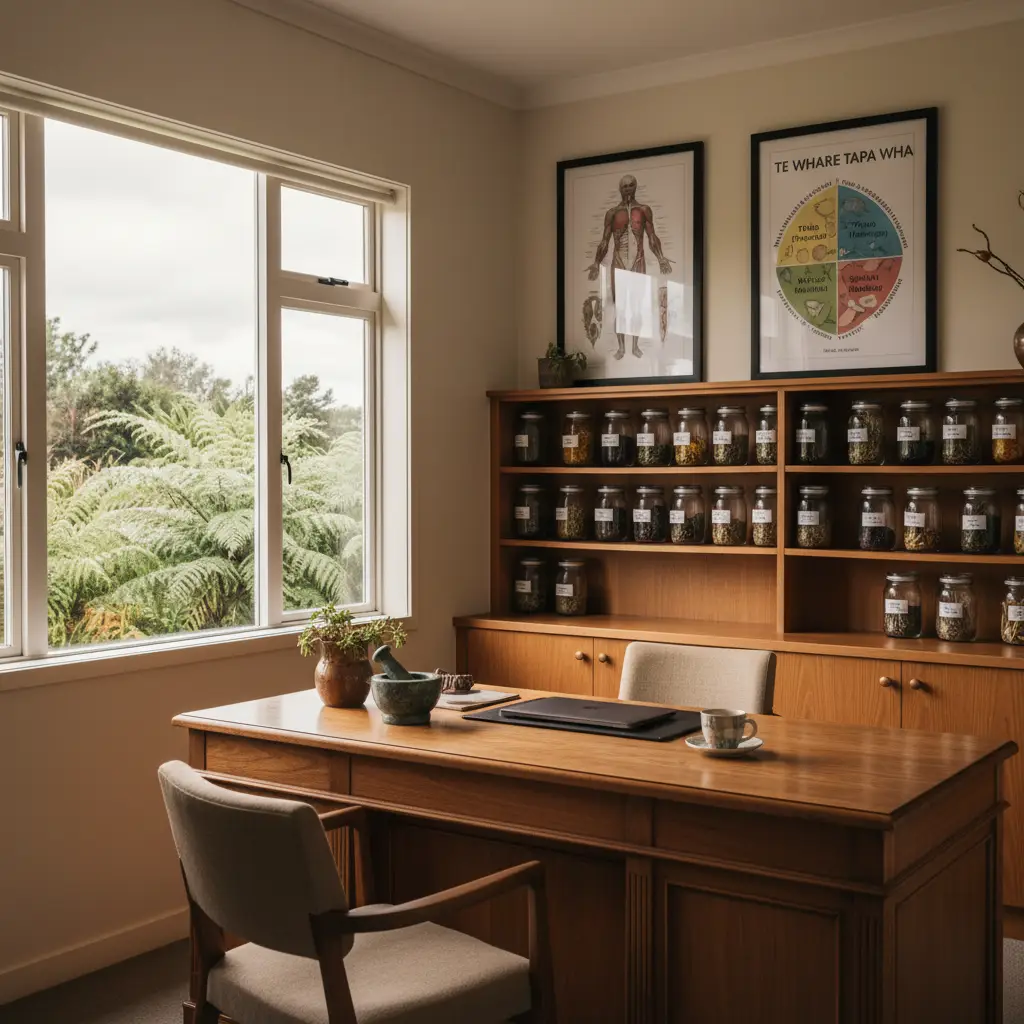
The cornerstone of holistic health in New Zealand is the Te Whare Tapa Whā model, developed by Sir Mason Durie. This model compares health to the four walls of a wharenui (meeting house). If one wall is missing or damaged, the structure becomes unstable. A robust holistic herbal practice NZ must address all four dimensions:
- Taha Tinana (Physical Health): The capacity for physical growth and development. In herbalism, this involves the physiological effects of phytochemistry on the body’s systems.
- Taha Wairua (Spiritual Health): The capacity for faith and wider communication. This acknowledges the energetic properties of plants and the spiritual connection between the patient and their environment.
- Taha Hinengaro (Mental/Emotional Health): The capacity to communicate, to think, and to feel. This explores the nervine and adaptogenic herbs that support the nervous system and emotional resilience.
- Taha Whānau (Family Health): The capacity to belong, to care, and to share. A holistic practitioner considers the patient’s social environment and support networks.
By grounding your practice in these principles, you ensure that your clinical approach is culturally safe and relevant to the New Zealand population. This foundation allows for the seamless integration of diverse herbal traditions, creating a practice that is both scientifically rigorous and spiritually grounded.
Integrating East, West, and Rongoā Māori
The true power of a modern holistic herbal practice NZ lies in the intelligent synthesis of different medical paradigms. Rather than using these systems in isolation, an integrative practitioner looks for the “golden thread” that connects the pharmacological precision of Western herbalism with the energetic wisdom of Eastern traditions and the spiritual connection of Rongoā.
The Role of Rongoā Māori
Rongoā Māori is not merely the use of native plants; it is a system of healing that encompasses mirimiri (massage), karakia (prayer), and rākau rongoā (herbal remedies). For a general herbal practitioner, incorporating NZ natives requires deep respect for Tikanga (protocol). Information on these species can be found in Key Rongoā Plants: Kawakawa & Its Uses. Plants like Kawakawa (Piper excelsum) are often used for their anti-inflammatory and digestive properties, while Manuka is renowned for its antimicrobial actions. However, these must be harvested and dispensed with an understanding of their mauri (life force).
Western Herbal Medicine (WHM)
WHM brings a strong emphasis on phytochemistry and clinical research. It provides the “how” and “why” regarding a plant’s physiological action. For example, understanding the pharmacokinetics of St. John’s Wort allows a practitioner to safely manage drug-herb interactions—a critical skill in a professional setting.
Traditional Chinese Medicine (TCM) and Ayurveda
Integrating TCM and Ayurveda adds a layer of energetic diagnosis that is often missing in strict Western biomedical models. You might assess a patient’s “constitution” or “dosha,” perhaps recommending Abhyanga: The Science of Self-Massage for nervous system support. For instance, a patient presenting with “Damp Heat” (TCM diagnosis) might be treated with Western herbs like Dandelion root or NZ native Kumarahou, both of which support liver detoxification and clearing heat. This cross-pollination of modalities allows for highly specific and effective treatment protocols.
For more on the foundational concepts of these ancient systems, the Wikipedia entry on Traditional Chinese Medicine provides a comprehensive historical overview.
Developing a Personalized Herbal Treatment Plan
A “one-size-fits-all” approach is antithetical to holistic practice. Developing a personalized treatment plan involves a multi-stage process that moves from information gathering to formulation and lifestyle coaching.
1. The Comprehensive Intake
Your initial consultation should be extensive (typically 60–90 minutes). Beyond the standard medical history, you must investigate diet, sleep hygiene, stress levels, and emotional state. In an integrative practice, this might also include tongue and pulse diagnosis (TCM) or iridology, alongside reviewing recent blood tests from their General Practitioner (GP).
2. The Art of Formulation
Creating a custom formula is the hallmark of a skilled herbalist. A balanced formula usually consists of:
- The Key (King/Queen) Herb: Addresses the primary complaint (e.g., Valerian for insomnia).
- Supporting Herbs: Reinforce the action of the key herb or address secondary symptoms (e.g., Passionflower for anxiety).
- Balancing/Harmonizing Herbs: Mitigate harsh side effects or improve taste (e.g., Licorice).
- Catalysts: Improve absorption and circulation. In a NZ context, Kawakawa is an excellent catalyst due to its circulatory stimulating properties.
3. Delivery Methods
Compliance is key. While liquid extracts (tinctures) are traditional in Western herbalism, they may not suit everyone due to taste or alcohol content. A holistic herbal practice NZ should offer diverse options:
- Teas and Infusions: Great for ritual and hydration (e.g., Manuka leaf tea).
- Capsules/Tablets: For convenience and taste-sensitive patients.
- Topicals: Balms and creams, particularly relevant for Rongoā applications (e.g., Harakeke gel for skin conditions).

Ethical Considerations and Legal Frameworks
Operating a holistic health practice in New Zealand involves navigating a specific legal and ethical landscape. The primary ethical obligation is Cultural Safety. As non-Māori practitioners utilizing native flora, one must avoid appropriation. This involves acknowledging the source of knowledge, correctly pronouncing Māori names, and understanding the cultural significance of the plants used.
Scope of Practice
New Zealand does not currently have statutory regulation for herbalists or naturopaths, though voluntary registration with bodies like the Naturopaths & Medical Herbalists of New Zealand (NMHNZ) is highly recommended for credibility. Practitioners must be clear about what they can and cannot do. You cannot “diagnose” medical conditions in the same legal sense as a doctor, nor can you claim to “cure” diseases restricted by the Medicines Act.
Collaboration with Allopathic Medicine
Professionalism implies knowing when to refer. A holistic herbal practice NZ should aim to work alongside GPs and specialists. This is particularly important when treating patients on pharmaceutical medications. Understanding the CYP450 enzyme pathways and potential herb-drug interactions is a non-negotiable safety standard.
For official guidelines on health service standards in New Zealand, refer to the New Zealand Ministry of Health website.
Kaitiakitanga: Sourcing and Sustainability
In the Māori worldview, Kaitiakitanga refers to guardianship and protection. A holistic herbal practice cannot be truly holistic if it depletes the environment it relies upon. Sustainability is a critical pillar of modern practice.
Wildcrafting vs. Cultivation
While wildcrafting (foraging) is traditional, the increasing popularity of Rongoā has put pressure on native populations of plants like Kumarahou. Ethical practitioners prioritize:
- Cultivated Sources: Buying from organic growers who farm NZ natives sustainably.
- Respectful Harvesting: If wildcrafting, taking only what is needed, never stripping a plant bare, and saying a karakia to acknowledge the exchange.
- Quality Assurance: When importing herbs for TCM or Western formulas, ensuring suppliers adhere to Good Manufacturing Practices (GMP) and test for heavy metals and pesticides.
The Future of Integrative Herbal Medicine in NZ
The landscape of healthcare in New Zealand is evolving. Patients are increasingly seeking practitioners who can bridge the gap between clinical science and traditional wisdom. The future of the “Holistic herbal practice NZ” niche lies in collaboration—hubs where Rongoā practitioners, medical herbalists, and acupuncturists work under one roof to provide comprehensive care. By maintaining high educational standards, respecting cultural lineage, and focusing on patient-centered care, herbalists can play a pivotal role in the future of Aotearoa’s health system.
People Also Ask
What qualifications do I need to practice herbal medicine in NZ?
While there is no statutory regulation, most professional herbalists hold at least a Bachelor’s degree in Natural Medicine or a Diploma in Herbal Medicine (Level 7). Membership with a professional body like the NMHNZ or NZAMH is standard for insurance and credibility.
Can I combine Rongoā Māori with Western herbal medicine?
Yes, many practitioners integrate both. However, it is crucial to do so with cultural safety and respect. Non-Māori practitioners should undergo training in Tikanga and often collaborate with Kaimahi Rongoā rather than claiming authority over indigenous knowledge.
Is herbal medicine covered by ACC or insurance in New Zealand?
Herbal medicine is generally not covered by ACC. However, some private health insurance providers (like Southern Cross) may cover consultations with registered naturopaths or herbalists under specific “wellbeing” policies.
What are the most common NZ native herbs used in practice?
Commonly used native plants include Kawakawa (digestion, inflammation), Manuka (antimicrobial), Kumarahou (respiratory, liver), and Koromiko (diarrhea, dysentery). Each has specific harvesting protocols and indications.
How does a holistic herbal practice differ from a health shop?
A practice involves a private, clinical consultation where a practitioner takes a full case history to prescribe personalized, therapeutic-dose formulations. A health shop typically offers over-the-counter retail advice which is less specific to the individual’s complex medical history.
What is the difference between a Naturopath and a Medical Herbalist?
A Medical Herbalist specializes specifically in plant medicines and their interactions. A Naturopath uses herbal medicine as one tool alongside nutrition, lifestyle coaching, and sometimes homeopathy or bodywork. In NZ, many practitioners are trained in both.