
The scientific basis of TCM is increasingly substantiated by modern research linking ancient concepts like Qi to neurophysiological pathways, connective tissue planes, and bio-electric signaling. While distinct from reductionist Western models, studies confirm that modalities like acupuncture modulate the nervous system, release endorphins, and reduce inflammation, offering a measurable physiological framework for traditional practices.
Bridging Qi with Neurophysiology
For decades, the concept of “Qi” (often translated as vital energy) was the primary stumbling block for Western scientists attempting to understand Traditional Chinese Medicine (TCM). In the absence of a visible anatomical channel for this energy, skepticism prevailed. However, the scientific basis of TCM has evolved significantly as researchers have begun to map traditional meridians against modern anatomical structures.
Current research suggests that Qi is not a mystical vapor but a metaphor for functional metabolic and physiological activity. One of the most compelling theories bridging this gap is the connective tissue theory. Research has demonstrated that a significant percentage of acupuncture points lie along fascial planes—the connective tissue network that permeates the entire body. When an acupuncture needle is manipulated, it winds the collagen fibers of the fascia, creating a mechanical signal that is transmitted through the extracellular matrix to the cytoskeleton of cells.
Furthermore, neurophysiology offers a robust explanation for the effects of TCM therapies. The insertion of needles stimulates sensory nerves, triggering a cascade of biological responses. This stimulation sends signals to the spinal cord and brain, resulting in the release of neurotransmitters such as endorphins, enkephalins, and dynorphins—the body’s natural painkillers. This mechanism, often referred to as the “Gate Control Theory of Pain,” provides a clear, measurable physiological pathway that validates the analgesic effects of acupuncture without relying on esoteric terminology.

The WHO Stance on Acupuncture
The legitimacy of the scientific basis of TCM gained substantial ground when the World Health Organization (WHO) released official reports acknowledging the efficacy of acupuncture. This was a pivotal moment in the history of integrative medicine, moving TCM from the fringes of “alternative” therapy into the sphere of recognized medical intervention.
Based on controlled clinical trials, the WHO has identified dozens of conditions for which acupuncture has been proven to be an effective treatment. These are not limited to pain management but extend to systemic issues. Some of the recognized conditions include:
- Adverse reactions to radiotherapy and chemotherapy: Significant evidence supports acupuncture in reducing nausea and vomiting.
- Allergic rhinitis: Studies show modulation of the immune response.
- Depression: Clinical trials suggest acupuncture can influence serotonin and dopamine levels.
- Hypertension: Research indicates the ability to lower blood pressure in cases of primary hypertension.
The WHO’s endorsement is not a blanket approval of all folklore but a critical acceptance of specific, evidence-backed applications. By subjecting traditional techniques to rigorous randomized controlled trials (RCTs), the global medical community is slowly dismantling the barrier between “Eastern” and “Western” medicine, favoring a model of “effective” medicine. You can read more about the categorization of these therapies at the National Center for Complementary and Integrative Health (NCCIH).
TCM Diagnostic Methods vs. Western Diagnosis
To understand the validity of TCM, one must appreciate that it operates on a different operating system than Western medicine. While Western medicine is reductionist—seeking to isolate a specific pathogen or structural pathology—TCM is holistic and functional. This fundamental difference often leads to confusion regarding the scientific basis of TCM.
Pattern Differentiation vs. Disease Identification
In Western medicine, a diagnosis usually leads to a specific disease code (e.g., “Hypertension” or “Type 2 Diabetes”). In contrast, TCM utilizes “Bian Zheng” or Pattern Differentiation. A practitioner does not just look for a disease but looks for the “pattern of disharmony” presenting in the patient. For example, three patients with a Western diagnosis of migraine might receive three different TCM treatments because their underlying patterns (e.g., Liver Yang Rising vs. Blood Deficiency) differ.
Scientific studies are now validating these diagnostic methods. For instance, tongue diagnosis, a pillar of TCM, is being digitized and analyzed using machine learning. The color, coating, and shape of the tongue have been correlated with blood flow markers, hydration levels, and inflammatory cytokines. A “purple” tongue in TCM, indicative of blood stasis, often correlates with hemorheological changes (blood viscosity) in laboratory tests.
Pulse Diagnosis and Hemodynamics
Similarly, pulse diagnosis is being re-evaluated through the lens of hemodynamics. Skilled practitioners detect subtleties in the radial pulse that correspond to the state of internal organs. Modern pulse wave analysis (PWA) devices can now measure arterial stiffness and wave reflection, parameters that surprisingly align with traditional descriptions of “wiry” or “slippery” pulses. This convergence of ancient observation and modern cardiology underscores the observational acuity of early Chinese physicians.

From Herbs to Pharmacology: The Chemical Evidence
Perhaps the strongest evidence for the scientific basis of TCM lies in pharmacognosy—the study of medicinal drugs derived from plants. Chinese herbal medicine is not merely a collection of folk remedies; it is a complex system of pharmacology that utilizes synergistic combinations of ingredients.
The most famous example of this translation from TCM to modern science is the discovery of Artemisinin. Dr. Tu Youyou was awarded the Nobel Prize in Physiology or Medicine for extracting this compound from the sweet wormwood plant (Artemisia annua), known in TCM as Qing Hao. Ancient texts described using the plant for fevers; modern science isolated the active compound to create the world’s most effective malaria treatment. This proved that traditional texts contain accurate pharmacological data, provided we have the technology to decode it.
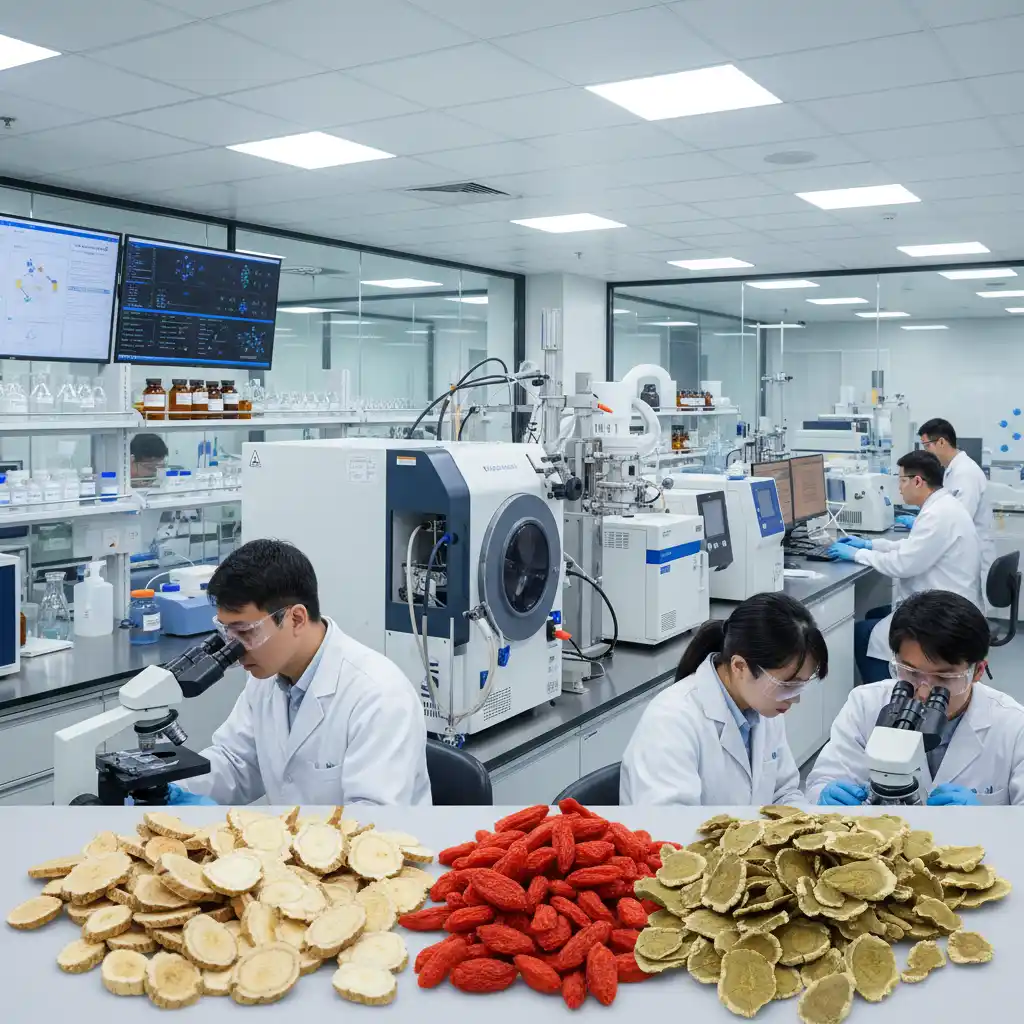
However, TCM formulas are rarely single-herb preparations. They are complex cocktails designed to enhance efficacy and reduce toxicity. Modern chromatography and mass spectrometry are now used to fingerprint these formulas, revealing that the “assistant” herbs in a formula often improve the bioavailability of the “emperor” (main) herb or protect the liver from potential toxicity. This validates the sophisticated logic of traditional herbal formulation.
Safety Standards in Chinese Herbalism
A critical component of demystifying TCM is addressing safety. For TCM to be integrated into modern healthcare, it must adhere to rigorous safety standards. The notion that “natural means safe” is a dangerous fallacy that the professional TCM community actively combats.
Modern safety standards in Chinese herbalism involve strict Good Manufacturing Practices (GMP). Professional-grade herbal products undergo varying layers of testing:
- Heavy Metal Testing: Screening for lead, mercury, arsenic, and cadmium.
- Pesticide Residue Analysis: Ensuring herbs are free from harmful agricultural chemicals.
- Microbial Testing: Checking for bacteria like Salmonella and E. coli.
- Species Authentication: Using DNA barcoding to ensure the correct plant species is used, preventing adulteration.
Furthermore, the interaction between Chinese herbs and Western pharmaceuticals is a major area of study. The scientific basis of TCM includes understanding pharmacokinetics—how herbs affect the metabolism of drugs. For example, it is well-documented that certain herbs can interact with blood thinners like Warfarin. Professional TCM practitioners are trained to recognize these interactions, ensuring that integrative care is safe for the patient.
The Future of Integrative Healthcare
The demystification of Traditional Chinese Medicine does not diminish its value; rather, it elevates it. By defining the scientific basis of TCM, we move away from blind faith and toward informed utilization. The future of healthcare is likely not “East vs. West,” but a synergistic model where acute trauma and infectious diseases are managed by Western medicine, while chronic pain, functional disorders, and preventative health utilize the holistic strategies of TCM.
Institutions like the World Health Organization continue to update their strategies on Traditional and Complementary Medicine, recognizing that for millions of people, this is the primary source of care. As technology advances, our ability to measure subtle physiological changes—from bio-photon emission to micro-circulation—will likely provide even more evidence for the mechanisms of Qi and meridians.
Ultimately, the goal is patient-centered care. Whether through a scalpel or a needle, a synthetic drug or a botanical extract, the objective remains the same: the restoration of health. The scientific validation of TCM provides the bridge necessary for patients to access the best of both worlds with confidence and safety.
People Also Ask
Is there scientific proof for Chinese medicine?
Yes, there is growing scientific proof for various aspects of Chinese medicine, particularly acupuncture and herbal medicine. Clinical trials have validated acupuncture’s efficacy for pain relief, nausea, and osteoarthritis. Furthermore, pharmacological studies have isolated active compounds in Chinese herbs (like Artemisinin for malaria) that are now standard in modern medicine.
How does acupuncture work scientifically?
Scientifically, acupuncture is believed to stimulate the nervous system, causing the release of chemicals in the muscles, spinal cord, and brain. These chemicals, such as endorphins and enkephalins, change the experience of pain and trigger the release of other chemicals and hormones that influence the body’s internal regulating system.
Are Chinese herbs safe?
Chinese herbs are generally safe when prescribed by a qualified practitioner and sourced from reputable manufacturers who adhere to Good Manufacturing Practices (GMP). However, like all substances, they can have side effects and interact with medications. Testing for heavy metals, pesticides, and adulterants is crucial for safety.
What is the difference between TCM and Western medicine?
Western medicine is generally reductionist, focusing on diagnosing and treating specific diseases or symptoms, often through pharmaceutical intervention or surgery. TCM is holistic, focusing on the balance of the body’s systems (Qi, Yin, and Yang) and treating the root pattern of disharmony rather than just the isolated symptom.
Does the WHO recognize TCM?
Yes, the World Health Organization (WHO) recognizes TCM. They have developed a strategy for Traditional Medicine and have included TCM diagnoses in the International Classification of Diseases (ICD-11), acknowledging its global relevance and the need for standardized regulation.
What is Qi in scientific terms?
In scientific terms, Qi is often interpreted as a metaphor for the body’s metabolic and physiological functions. It correlates with bio-electrical energy, the flow of fluids (blood and lymph), and the signaling pathways within the nervous system and connective tissue matrix.