Maori gardening protocols tikanga refers to the set of customary practices and spiritual guidelines used to cultivate the land in Aotearoa. These protocols encompass the observation of the Maramataka (lunar calendar), the protection of Mauri (life force) within the soil, the use of Karakia (incantations) to set intentions, and strict rules regarding the separation of Tapu (sacred) and Noa (common) to ensure a bountiful and spiritually safe harvest.
In the world of holistic health and indigenous wisdom, the garden is never merely a collection of plants or a source of food. It is a living entity, a classroom, and a direct connection to our ancestors. For those of us practicing within the realm of New Zealand native herbalism, understanding Maori gardening protocols tikanga is not an optional extra; it is the foundation upon which true sustainability and botanical potency are built.
To engage with the whenua (land) is to engage with Papatūānuku (Earth Mother). This relationship requires reciprocity. We do not simply take; we ask, we listen, and we give back. Whether you are cultivating a rongoā (medicine) garden or a vegetable patch for your whānau, applying these ancient protocols ensures that the plants you grow are vibrant, filled with mauri, and safe to use.
Understanding Mauri: The Life Force of the Soil
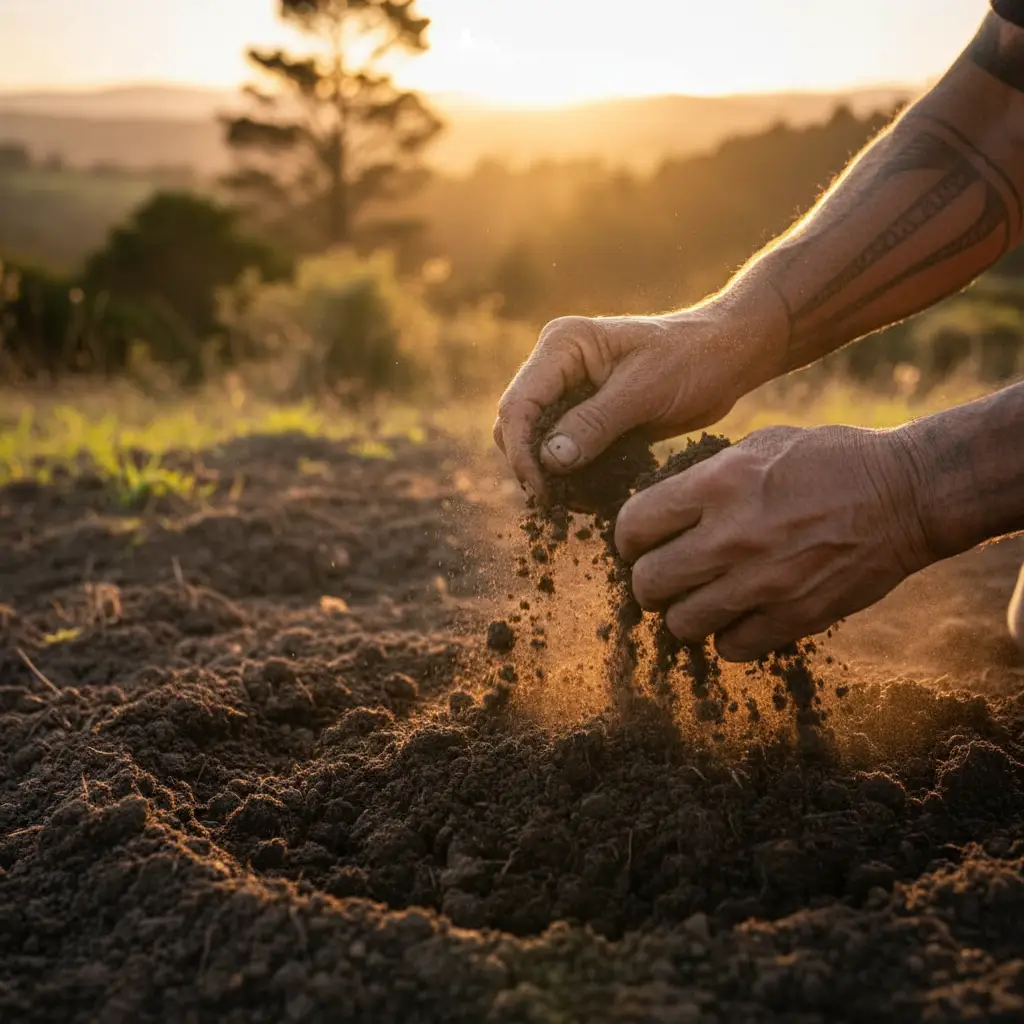
At the heart of all Maori gardening protocols tikanga is the concept of Mauri. Mauri is often translated as “life force” or “vital essence,” but in the context of the garden, it represents the elemental spark that binds the physical to the spiritual. It is the measurable vibrancy of the soil and the plants that grow within it.
In Western horticulture, we might measure soil health by NPK levels (Nitrogen, Phosphorus, Potassium) or pH balance. While these are valid metrics, tikanga looks deeper. A soil with high mauri is one that has been treated with respect, has not been poisoned by synthetic chemicals, and has been acknowledged as a living ancestor.
The Interconnected Web
When we disrupt the soil structure unnecessarily—through excessive tilling or the use of harsh sprays—we diminish its mauri. This reduction in life force transfers to the plants. A plant grown in soil with depleted mauri may look physically adequate, but from a rongoā (healing) perspective, it lacks the mana (power) required to heal.
To protect the mauri of your garden:
- Minimize Disturbance: Avoid turning the soil over unnecessarily. This preserves the fungal networks (mycelium) which act as the neural network of Papatūānuku.
- Feed the Earth First: Before asking the soil to feed you, you must feed it. This is often done through composting and mulching, viewing these additions not as “fertilizer” but as an offering of nourishment.
- Walk Gently: Be mindful of where you step. Compacting the soil around root zones restricts the flow of mauri.
The Maramataka: Planting by the Moon
One cannot discuss Maori gardening protocols tikanga without diving into the Maramataka. This is the traditional Māori lunar calendar, which dictates the rhythm of daily life, fishing, and most importantly, gardening. It is a sophisticated system of timekeeping based on the phases of the moon and the position of stars, which influence the energy levels of the earth.
The Maramataka is not a superstition; it is an observation of environmental cycles. Just as the moon affects the tides of the ocean, it affects the moisture content in the soil and the sap flow within plants. Aligning your planting schedule with these phases maximizes the chances of success.
Key Phases for the Gardener
While there are tribal variations (iwi variations) in the Maramataka, general principles apply across Aotearoa:
- Whiro (New Moon): This is a time of low energy. It is generally considered a poor time for planting or fishing. It is a time for planning, reflection, and sharpening tools. The earth is resting.
- Rakaunui (Full Moon): The energy is high. Water tables are pulled up, and sap flow is vigorous. This is an excellent time for planting, particularly root crops, as the energy begins to pull downward immediately following the peak.
- Tangaroa Phases: These days are often associated with productivity and fruitfulness. Fishing and planting are usually successful during these times.
- Korekore Phases: As the name suggests (‘kore’ meaning nothing or nil), these are lean times. It is generally advised to avoid planting during Korekore days, as the yield is likely to be poor or the plants may struggle to establish.
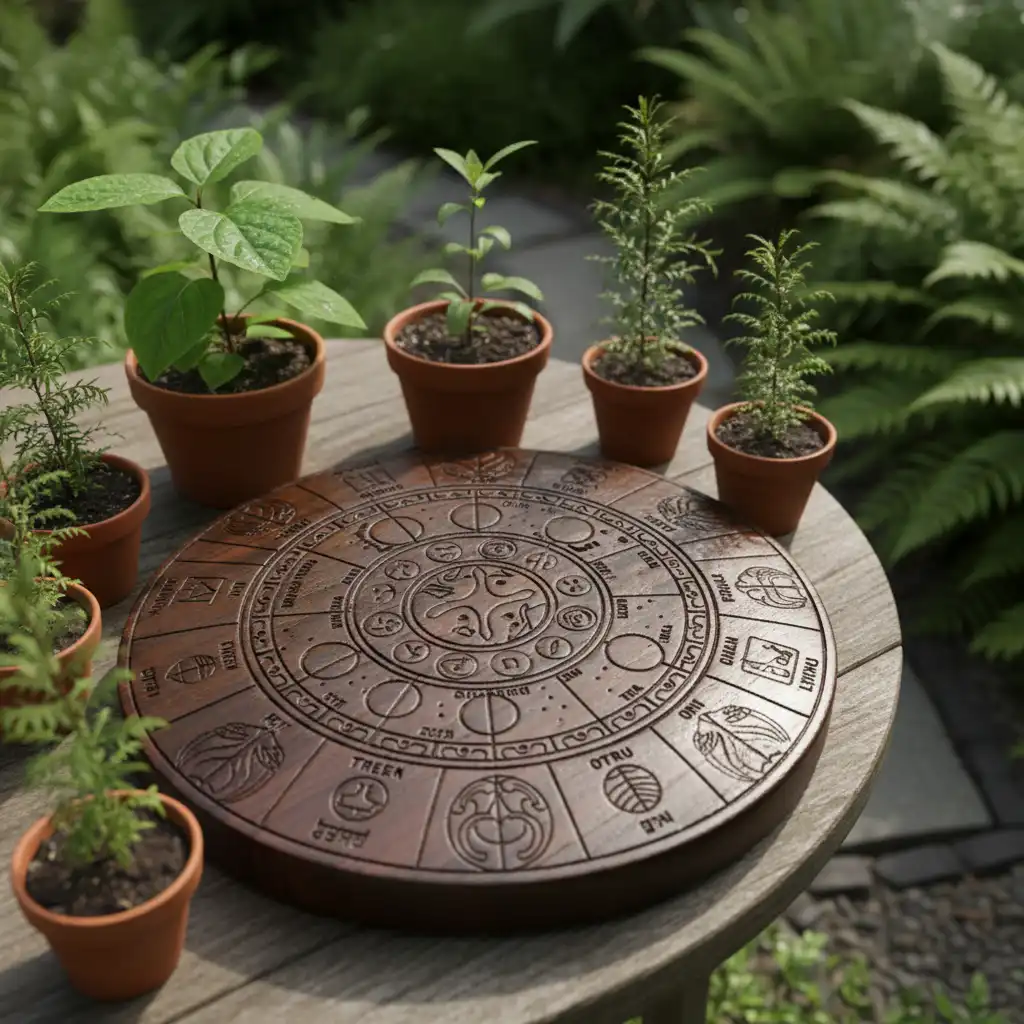
By consulting the Maramataka, the gardener moves from trying to force nature to submit, to flowing with the prevailing currents of the environment. This surrender to natural timing is a core component of tikanga.
Why Intent Matters More Than Technique
In modern agriculture, technique is king. We obsess over pruning methods, irrigation systems, and hybrid seeds. However, in the realm of tikanga, wairua (spirit/intent) supersedes technique. You can have the perfect soil and the perfect weather, but if your heart is heavy or your intent is malicious, the garden will know.
The Role of Karakia
Karakia (prayer/incantation) is the mechanism by which we align our intent. It serves as a “clearance” to enter the sacred space of the garden and interact with the children of Tāne Mahuta (God of the Forest) and Haumia-tiketike (God of uncultivated food).
Before breaking ground or planting a seed, a karakia is offered. This does not need to be a complex ancient script if you are not fluent in Te Reo Māori; the universe speaks the language of the heart. The purpose is to:
- Acknowledge the source: Recognizing that the life of the plant comes from the earth, not from you.
- Set the intention: Stating clearly that this plant is being grown for nourishment, healing, or beauty.
- Ask for protection: Ensuring the plant grows free from pests and disease.
If a gardener enters the space in a state of anger or extreme stress, it is believed that this negative energy can transfer to the food. Therefore, tikanga dictates that one should calm their mind before gardening. If you are angry, do not plant. Step back, breathe, and wait until your mauri is settled.
Navigating Tapu and Noa in the Garden
The concepts of Tapu (sacred/restricted) and Noa (common/unrestricted) act as the safety regulations of Maori culture. In the garden, these protocols ensure hygiene, safety, and spiritual integrity.
Separation of Functions
One of the most critical rules is the separation of food (kai) from bodily functions or items associated with the head. This is why you will often see specific rules such as:
- Do not sit on tables: Tables are for food; buttocks are associated with the removal of waste. To sit on a table where produce will be placed is a breach of tikanga.
- Do not step over food: Even if the plants are small, stepping over them is considered disrespectful and spiritually damaging to the crop. Always walk around garden beds.
- Wash hands/Separate tools: Tools used for weeding or clearing rubbish should ideally be cleaned before being used for planting or harvesting food. In rongoā (medicine) gardens, the protocols are even stricter—menstruating women, for example, may be asked to refrain from harvesting certain potent plants due to the clash of high tapu energies (the tapu of the womb vs. the tapu of the medicine).
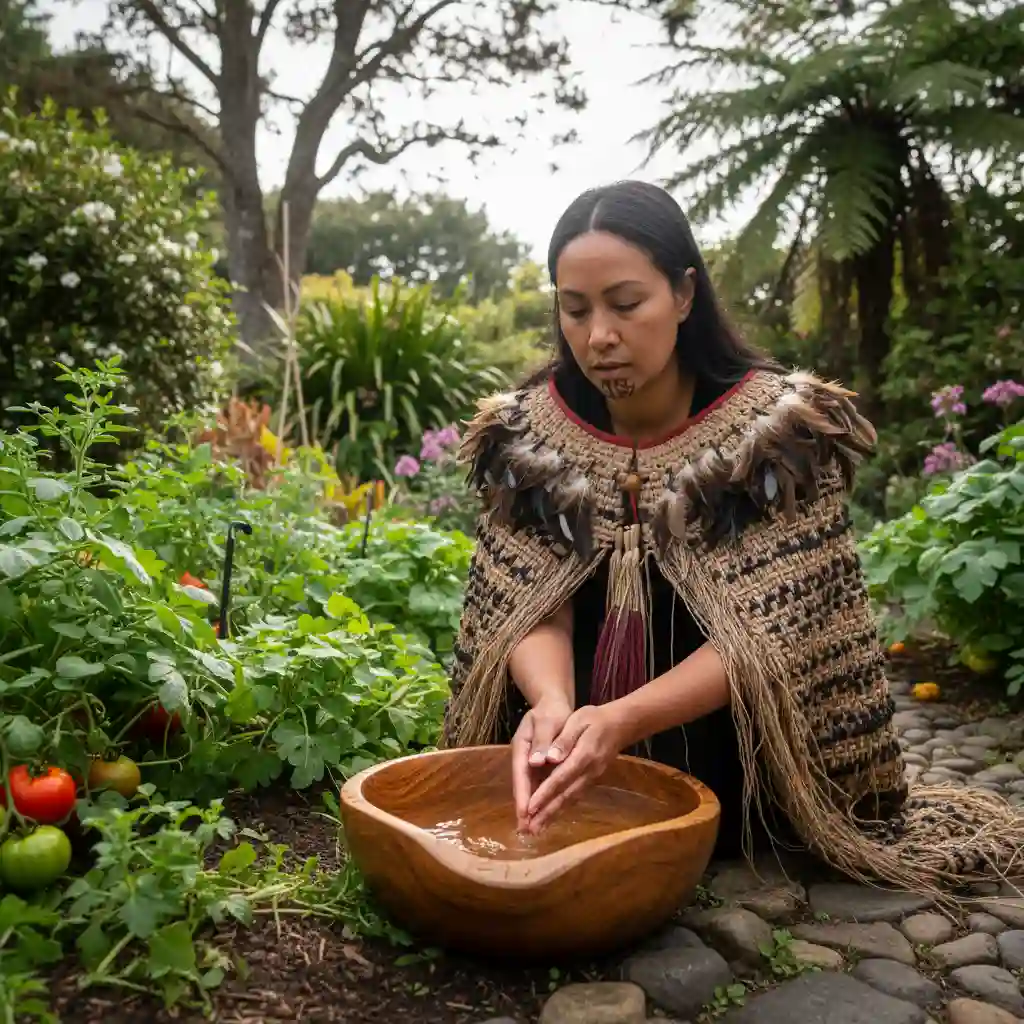
Disposal of Waste: Returning to Papatūānuku
In a linear economy, waste is thrown “away.” In the circular philosophy of Te Ao Māori (The Māori Worldview), there is no “away.” Everything comes from Papatūānuku and must eventually return to her.
Maori gardening protocols tikanga dictate strict rules regarding the disposal of organic matter. Plant waste, weeds, and food scraps should never be mixed with general landfill rubbish. To wrap organic matter in plastic and send it to a landfill is to suffocate the earth.
The Sacred Compost
Composting is elevated from a chore to a sacred duty. By returning plant matter to the soil, we complete the cycle of reciprocity. This restores the mauri of the land.
Furthermore, when harvesting rongoā (medicinal plants), any unused parts of the plant (stems, excess leaves) should be returned to the base of the plant from which they were taken. This acts as a mulch and a fertilizer, but spiritually, it is an offering of thanks. It tells the plant, “I have taken what I need, and I return the rest to you.”
Tikanga for Harvesting and Processing
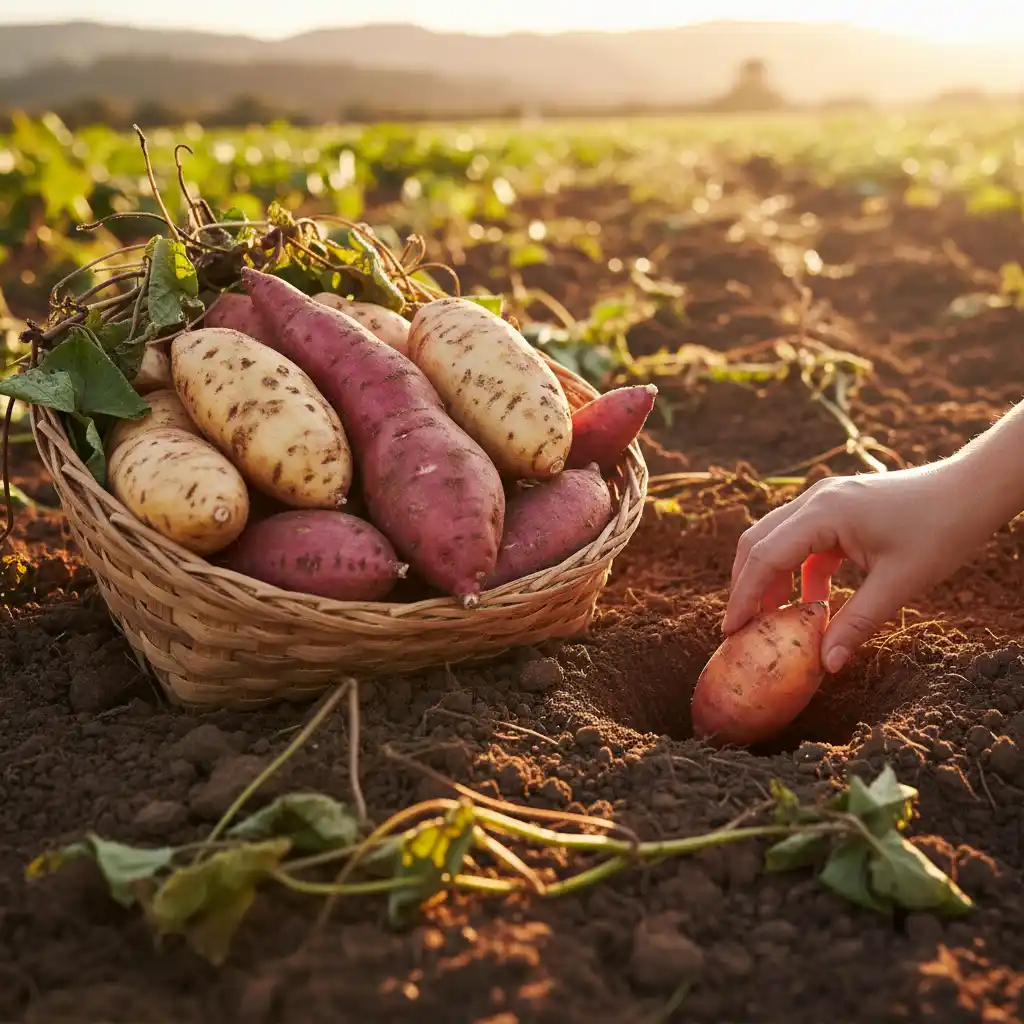
The harvest is the culmination of the partnership between the gardener and the land. However, one does not simply rip fruit from the vine. The protocol of the “First Fruits” is common across many indigenous cultures, including Māori.
The first item harvested is often not eaten. It is returned to the earth as an offering to the Atua (Gods) who made the growth possible. This ensures the fertility of the garden for future seasons. This practice curbs greed and reminds the gardener of their humble position in the ecosystem.
Sustainable Harvesting
Tikanga strictly forbids over-harvesting. A common rule of thumb in rongoā harvesting is to take only what you need for the immediate future, and never more than the plant can sustain. A visual guide often used is to never take more than one-third of the plant’s foliage. Taking too much is a violation of the plant’s mauri and ensures that it will not provide for you next year.
Applying Ancient Wisdom Today
You do not need to be of Māori descent to respect and utilize these protocols. The land of Aotearoa responds to those who treat it with respect, regardless of their whakapapa (genealogy). By adopting Maori gardening protocols tikanga, you are acknowledging the history of the land you stand on.
Start small. Begin by observing the moon. Pay attention to how you feel when you enter your garden. Stop using chemicals that harm the earth. Return your organic waste to the soil. In doing so, you will find that your garden becomes more than a source of food—it becomes a sanctuary of life, rich in mauri and abundant in yield.
Frequently Asked Questions
What is the best time to plant according to Maori protocols?
The best time to plant depends on the Maramataka (lunar calendar). Generally, the days leading up to and immediately following the Full Moon (Rakaunui) are considered highly productive for planting, as water tables are high and plant energy is active.
Can I use tap water for my garden under tikanga?
Yes, but rainwater is preferred as it is considered pure (wai māori) and directly connected to Ranginui (Sky Father). If using tap water, some practitioners let it sit to dissipate chlorine, or say a karakia to bless the water before applying it to the soil.
Why shouldn’t I step over my garden plants?
Stepping over plants is considered a breach of tapu. It disrespects the mauri of the plant and is culturally associated with diminishing the mana (power/prestige) of the food or medicine being grown.
What is the difference between growing kai and rongoā?
Kai (food) nourishes the body, while rongoā (medicine) heals the body and spirit. Rongoā gardens often have stricter protocols regarding who can harvest, the timing of the harvest, and the specific karakia used, due to the spiritual potency of the plants.
How do I dispose of diseased plants according to tikanga?
While returning to the earth is ideal, diseased plants that could infect the soil should be kept separate. They can be burned (ahi), which transforms the physical matter to ash, purifying it before it is returned to Papatūānuku.
Do I need to speak Māori to perform a karakia in the garden?
No. While traditional karakia are powerful, the intent (wairua) is the most critical element. A sincere prayer or statement of gratitude in your own language, acknowledging the earth and asking for permission, is respectful and effective.