
The environment and Māori health are inextricably linked through the concept of Te Taiao, where the well-being of the land directly mirrors the well-being of the people. This holistic relationship emphasizes that humans are part of the natural world, and health depends on maintaining balance with ecosystems through rongoā, kaitiakitanga, and spiritual connection.
The Foundations of Te Taiao and Hauora
In the Māori worldview, the relationship between the environment and Māori health is not merely a matter of proximity; it is a matter of whakapapa (genealogy). This perspective holds that humans are the younger siblings of the natural world, descending from the same primordial parents, Ranginui (the Sky Father) and Papatūānuku (the Earth Mother). This inherent connection means that when the environment is degraded, the health of the people—physical, spiritual, and mental—suffers commensurately. Conversely, a flourishing ecosystem provides the foundation for holistic wellness, known as Hauora.
Understanding environment and Māori health requires a shift away from the Western anthropocentric view, where nature is seen as a resource to be exploited. Instead, the Te Taiao framework views the environment as a living entity with its own mauri (life force). For a practitioner of rongoā Māori or a community health advocate, the health of a local river or forest is a direct clinical indicator of the community’s health. The restoration of land is, therefore, a restorative act for the human spirit and body.
Connecting with Te Ngahere
The ngahere (forest) is often referred to as the pharmacy of the Māori people. It is the domain of Tāne Mahuta, the Atua (deity) of the forest and birds. For centuries, Māori have turned to the forest not just for medicinal plants, but for the restorative power of its atmosphere. Modern science is beginning to catch up with this ancient wisdom through concepts like phytoncides—organic compounds released by trees that have been shown to boost the human immune system.

The Rongoā of Silence and Stillness
Beyond the physical application of leaves and bark, the forest offers a psychological refuge. In a world characterized by urban noise and digital fatigue, the silence of the ngahere provides a space for ‘wairua health’—spiritual well-being. The practice of being present in the forest, listening to the birdsong of the tūī and korimako, acts as a regulator for the nervous system, reducing cortisol levels and increasing feelings of belonging. This is a primary example of how the environment and Māori health intersect: the forest provides the context for healing that no sterile clinic can replicate.
Biodiversity and Medicinal Potency
The efficacy of rongoā Māori is directly dependent on the biodiversity of the ngahere. Plants such as Kawakawa, Mānuka, and Kumarahou require specific ecological conditions to develop their medicinal properties. When forests are fragmented or polluted, the mauri of these plants is weakened. Therefore, protecting the ngahere is a critical health intervention. Clinical practitioners are increasingly recognizing that advocating for forest conservation is, in fact, an act of preventative medicine for Māori populations who rely on these traditional healing systems.
Water Health and Rongoā: The Lifeblood of the People
Wai (water) is the lifeblood of Papatūānuku and is central to all Māori health practices. The various states of water—waiora (purest form), waimāori (fresh water), and waitai (sea water)—each have distinct roles in healing and ritual. The connection between water health and Māori health is profound; a polluted waterway represents a severed connection to an ancestor and a loss of a primary healing tool.

Waiora: The Spiritual Dimension of Water
In the context of traditional healing, waiora refers to water that is spiritually charged and physically pure. It is used in ceremonies to clear tapu (restriction) and to restore the balance of an individual’s mauri. When the environment is compromised, the availability of waiora diminishes. The physical contamination of rivers with nitrates or pathogens does more than just present a risk of infection; it creates a spiritual crisis for those who view the river as a source of life and identity. The restoration of waterways is thus essential for the spiritual health of Iwi and Hapū.
Water as a Diagnostic Tool
In rongoā Māori, the state of the local water source can serve as a diagnostic tool for the health of the people who live along its banks. If the fish are not safe to eat or the water is not safe to swim in, the community’s food security and physical activity levels are directly impacted. This leads to a rise in non-communicable diseases. Improving the environment and Māori health must therefore begin with the remediation of our catchments and the return of native riparian planting to filter runoff and restore the water’s mauri.
Urban Rongoā Gardens: Bridging the Gap in Modern Settings
As more Māori live in urban environments, the challenge is to maintain the connection to Te Taiao in a landscape of concrete and steel. Urban rongoā gardens have emerged as a powerful solution, bringing the healing power of the bush into the city. These gardens are more than just collections of plants; they are educational hubs and spiritual sanctuaries that foster community resilience.

Accessibility and Cultural Reclamation
For many urban Māori, access to remote forests is limited. Urban gardens provide an immediate physical connection to the land. By planting species like Kawakawa (for digestive and skin health) or Koromiko (for stomach ailments), urban dwellers can reclaim their traditional knowledge. This process of planting, nurturing, and harvesting is a therapeutic act in itself, addressing the sense of displacement that often contributes to poor mental health outcomes. It empowers individuals to take charge of their own hauora using the tools of their ancestors.
Maramataka and Urban Rhythms
Urban rongoā gardens also facilitate the practice of Maramataka, the Māori lunar calendar. This system tracks the relationship between the moon cycles, the environment, and human energy levels. By observing how plants grow and react to the phases of the moon in an urban setting, people can realign their lifestyle with natural rhythms. This alignment is a cornerstone of environment and Māori health, providing a framework for when to rest, when to plant, and when to engage in high-energy activities, thereby reducing stress and improving metabolic health.
Kaitiakitanga as Self-Care
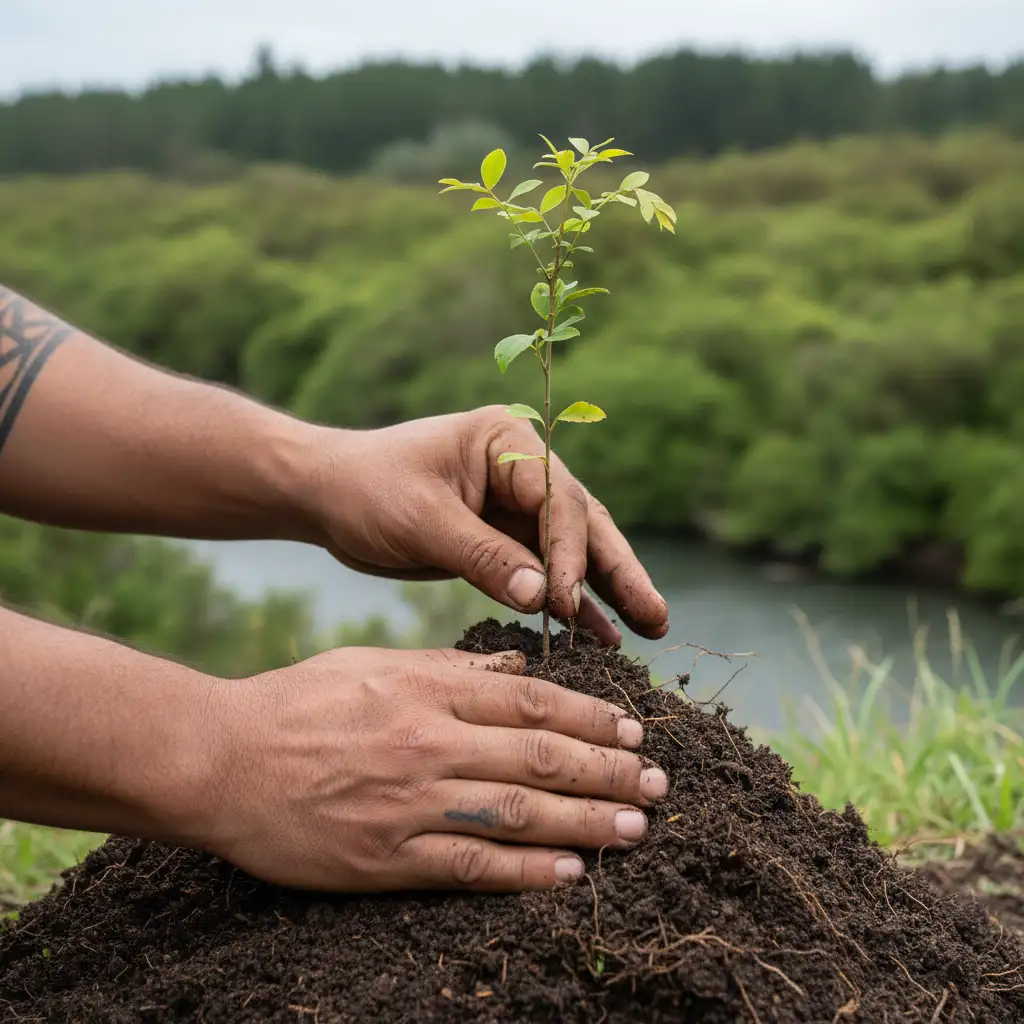
Kaitiakitanga is often translated as guardianship or stewardship, but in a health context, it is best understood as a reciprocal relationship of care. When a person acts as a kaitiaki (guardian) for the land, the land, in turn, cares for them. This shift from consumer to protector is a transformative psychological experience that builds mana and purpose.
The Psychology of Reciprocity
Engaging in environmental restoration—such as planting trees, cleaning beaches, or protecting endangered species—has significant mental health benefits. It provides a sense of agency and counters the ‘eco-anxiety’ prevalent in the modern era. For Māori, this work is also a way of honoring ancestors and ensuring a legacy for future generations (mokopuna). The act of kaitiakitanga strengthens the ‘taha wairua’ (spiritual side) and ‘taha hinengaro’ (mental side) of the Te Whare Tapa Whā health model.
Environmental Justice and Health Equity
The ability to practice kaitiakitanga is often hindered by systemic issues, such as land loss or restrictive legislation. Addressing these barriers is a critical component of improving the environment and Māori health. When Iwi and Hapū are empowered to manage their natural resources, the health outcomes of those communities improve. This is because kaitiakitanga allows for the exercise of tino rangatiratanga (self-determination), which is a known social determinant of health for indigenous peoples globally.
Clinical Integration of Environmental Health
The future of New Zealand’s healthcare system lies in the successful integration of environmental health and clinical practice. This means moving beyond the four walls of the clinic and recognizing that the ‘patient’ is not just an individual, but an individual in the context of their environment. ‘Green prescriptions’ are a start, but a truly integrated model would see rongoā practitioners working alongside GPs to facilitate nature-based healing.
Clinical settings can incorporate Te Taiao by designing spaces that reflect the natural world, using native timber, providing views of greenery, and ensuring access to outdoor spaces for karakia (prayer) and reflection. Furthermore, clinicians should support the use of traditional rongoā where appropriate, recognizing that the healing journey for many Māori involves a return to the roots of their culture and the soil of their whenua. By acknowledging the link between environment and Māori health, we can create a more equitable and effective health system for all New Zealanders.
Frequently Asked Questions
How does the environment impact Māori health?
The environment impacts Māori health through the concept of Te Taiao, where the health of the land and the people are seen as one. Clean water, thriving forests, and healthy soil provide the physical rongoā (medicine) and spiritual connection (wairua) necessary for holistic well-being.
What is the meaning of Te Taiao in a health context?
In a health context, Te Taiao refers to the natural world and the interconnectedness of all living things. It implies that true health (Hauora) is only possible when an individual is in balance with their environment, acknowledging their whakapapa to the land.
How does rongoā Māori use the natural environment?
Rongoā Māori uses the natural environment by harvesting native plants for medicinal teas, poultices, and oils. It also utilizes the spiritual energy of specific sites, like rivers or forests, for healing rituals and the restoration of an individual’s mauri.
What is the relationship between kaitiakitanga and well-being?
Kaitiakitanga (stewardship) promotes well-being by creating a reciprocal relationship with nature. Acting as a guardian of the environment builds a sense of purpose, strengthens cultural identity, and reduces stress, which are all vital components of mental health.
Why is water health so important for Māori well-being?
Water is considered the lifeblood of the environment and a source of waiora (spiritual health). Clean water is essential for traditional ceremonies, food gathering (mahinga kai), and maintaining the spiritual purity of a community.
Can urban Māori still connect with Te Taiao for health?
Yes, urban Māori can connect with Te Taiao through urban rongoā gardens, practicing Maramataka (the lunar calendar), and visiting local parks. These activities help bridge the gap between urban living and traditional environmental connection.