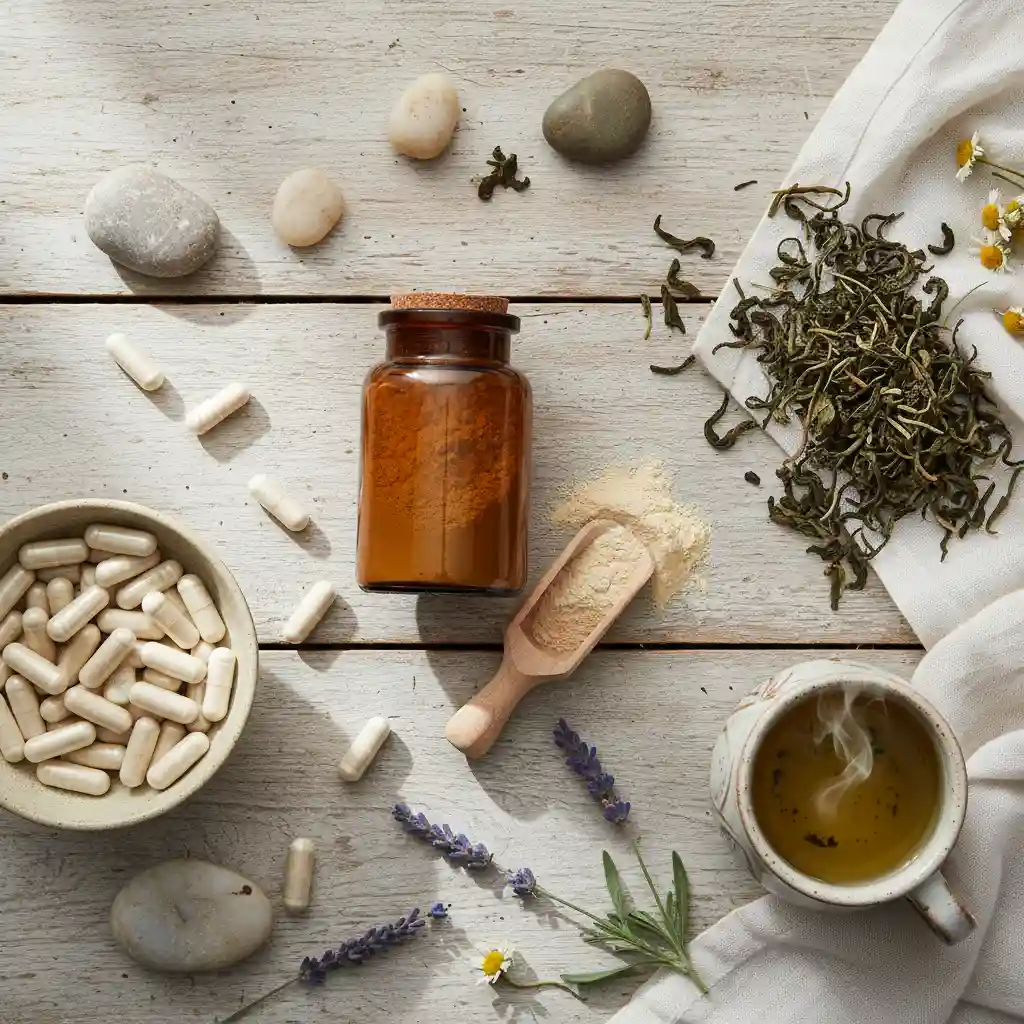
Passionflower benefits primarily center on its ability to alleviate anxiety and insomnia by modulating the brain’s neurotransmitter activity. Specifically, the compounds within Passiflora incarnata boost gamma-aminobutyric acid (GABA) levels, which lowers excitatory brain activity to induce calmness. This makes it a highly effective, non-addictive herbal alternative for managing generalized anxiety disorder (GAD) and stress-related sleep disturbances.
In the evolving landscape of New Zealand wellness, the integration of traditional Western herbalism with modern holistic health practices has brought renewed attention to botanical nervines. Among these, Passionflower (Passiflora incarnata) stands out as a premier herbal therapeutic. While many New Zealanders are familiar with the fruiting variety commonly found in backyard gardens, the medicinal species offers a profound toolkit for mental health support. As anxiety rates climb globally and within Aotearoa, understanding the clinical mechanisms and practical applications of this vine is essential for those seeking evidence-based natural health solutions.
The Biological Mechanism: How Passionflower Boosts GABA
To truly appreciate passionflower benefits, one must understand the neurobiology of anxiety. The primary mechanism of action for Passiflora incarnata involves the modulation of the GABAergic system. Gamma-aminobutyric acid (GABA) is the central nervous system’s primary inhibitory neurotransmitter. Its main function is to reduce neuronal excitability throughout the nervous system; essentially, it acts as the brain’s “brake pedal” during times of stress.
Research indicates that passionflower contains specific flavonoids, particularly chrysin and apigenin, which bind to the benzodiazepine sites on GABA receptors. Unlike pharmaceutical sedatives that may force these channels open aggressively, passionflower appears to modulate the uptake of GABA, allowing for a more natural downregulation of the fight-or-flight response.
The Role of Flavonoids and Alkaloids
The aerial parts of the plant—stems, flowers, and leaves—are rich in alkaloids and flavonoids. While early studies focused heavily on the harmala alkaloids, modern pharmacognosy suggests that the synergistic effect of the flavonoids is responsible for the anxiolytic (anxiety-reducing) activity. This complexity is why whole-plant extracts often outperform isolated compounds in herbal medicine. In the context of New Zealand’s stress-heavy environment, utilizing a herb that addresses the neurochemical root of agitation without inducing a ‘zombie-like’ state is invaluable.
Clinical Trials on Generalized Anxiety Disorder
The validation of passionflower benefits extends beyond traditional folklore into rigorous clinical settings. Several studies have evaluated the efficacy of Passiflora incarnata specifically for Generalized Anxiety Disorder (GAD), a condition characterized by persistent and excessive worry.
One of the most cited double-blind, randomized controlled trials compared the efficacy of passionflower extract to Oxazepam, a common pharmaceutical benzodiazepine. The study, conducted over four weeks, yielded groundbreaking results. Both the herbal group and the pharmaceutical group showed significant improvement in anxiety scores. However, the passionflower group reported significantly fewer issues with impairment of job performance and daytime drowsiness compared to the Oxazepam group.
Pre-Surgical Anxiety Reduction
Further supporting its efficacy, studies have examined passionflower’s utility in acute stress situations, such as pre-surgical anxiety. Patients administered passionflower extract prior to surgery reported lower anxiety levels than placebo groups, with no adverse effects on anesthesia recovery. For New Zealand healthcare practitioners and herbalists, these trials provide the data necessary to recommend passionflower as a legitimate first-line intervention for mild to moderate anxiety.
Passionflower vs. Prescription Anxiolytics
In the discourse of mental health management, the comparison between botanical agents and pharmaceutical interventions is critical. While prescription anxiolytics are necessary for severe, acute psychiatric crises, they often carry a heavy burden of side effects. Benzodiazepines, for instance, are associated with rapid tolerance buildup, physical dependence, withdrawal seizures, and cognitive impairment.
The Safety Profile Advantage:
- Non-Addictive: Passionflower does not demonstrate the same potential for abuse or physical dependence as Schedule 4 controlled drugs.
- Cognitive Function: As noted in clinical trials, passionflower is less likely to compromise motor skills or cognitive clarity, allowing individuals to maintain employment and daily responsibilities in Aotearoa’s fast-paced society.
- Withdrawal: Cessation of passionflower typically does not result in the rebound anxiety often seen when stopping synthetic sedatives.
However, it is vital to maintain a professional perspective: passionflower is not a direct replacement for medication in severe psychiatric disorders without medical supervision. It is best positioned as a treatment for mild-to-moderate anxiety or as an adjunct therapy discussed with a GP.
Safe Dosage Protocols for Adults and Teens
Achieving the optimal passionflower benefits requires adherence to correct dosing protocols. In New Zealand, passionflower is available in various forms, including dried loose leaf, tinctures (liquid extracts), and standardized capsules. The following guidelines are based on standard therapeutic doses for Passiflora incarnata.
Infusions (Tea)
For mild anxiety or sleep support, an infusion is the most traditional method. The ritual of tea preparation itself can be grounding.
- Dosage: 4 to 8 grams of dried aerial parts per day.
- Preparation: Steep 2 grams (approx. one teaspoon) in 150ml of boiling water for 10–15 minutes. Drink 3–4 times daily.
Tinctures (Liquid Extracts)
Tinctures offer higher potency and convenience. In NZ, tinctures are typically 1:2 or 1:5 ratios.
- Dosage: 1ml to 4ml, taken 3 times daily.
- Note: Always check the concentration on the bottle, as NZ herbal suppliers may vary in their extraction strengths.
Safety Considerations
While generally safe, passionflower should be used with caution in certain demographics:
- Pregnancy: Due to uterine stimulating properties of some alkaloids, it is generally advised to avoid therapeutic doses during pregnancy unless under the guidance of a qualified medical herbalist.
- Drug Interactions: Because it potentiates GABA, passionflower should not be combined with alcohol, benzodiazepines, or other sedatives, as this can lead to excessive central nervous system depression.
- MAOIs: Theoretical interactions exist with Monoamine Oxidase Inhibitors, though clinical evidence is rare.
Growing Medicinal Passionflower in New Zealand
For the herbal enthusiast in New Zealand, growing your own medicine is a rewarding endeavor. However, a crucial botanical distinction must be made. Most Kiwis are familiar with Passiflora edulis (the Black Passionfruit), which is grown for its delicious fruit. For anxiety relief, you must grow Passiflora incarnata.
Climate and Soil Requirements
Passiflora incarnata is a semi-tropical vine but is surprisingly hardy. It can thrive in the North Island’s temperate climate and can survive in the South Island if given a sheltered, frost-free position or grown in a conservatory.
- Sunlight: Requires full sun (at least 6 hours daily).
- Soil: Prefers well-draining, sandy loam. New Zealand’s clay-heavy soils (common in Auckland and Northland) should be amended with gypsum and compost to prevent root rot.
- Frost: It is herbaceous, meaning it may die back to the ground in winter and re-emerge in spring. Mulch heavily in autumn to protect the root system.
Harvesting for Medicine
Unlike the fruit-bearing species, the medicinal value lies in the leaves, stems, and flowers. Harvest the aerial parts when the plant is in early flower (usually mid-to-late summer in NZ). Dry the plant material in a shaded, well-ventilated area—such as a hot water cupboard or a dehydrator on a low setting—until the stems snap crisply. Store in an airtight glass jar away from direct sunlight.
Synergy in the NZ Apothecary
In the context of New Zealand’s multi-cultural herbalism, passionflower benefits can be enhanced by pairing it with other botanicals. This concept, known as synergy, suggests that herbs work better in teams.
Western x Rongoā Māori Blends:
While passionflower is not native to Aotearoa, it pairs exceptionally well with native plants used in Rongoā Māori. For example, anxiety often manifests as digestive upset. Combining Passionflower with Kawakawa (Piper excelsum) can address the nervous tension while the Kawakawa soothes the inflammatory response in the gut. Similarly, combining Passionflower with Lemon Balm or Manuka leaf can create a comprehensive tea for stress resilience.
By understanding the science, safety, and cultivation of this remarkable plant, New Zealanders can reclaim a powerful tool for mental wellness, bridging the gap between clinical efficacy and natural living.
Does passionflower work immediately for anxiety?
Passionflower is generally fast-acting compared to some other herbal tonics. When taken as a tea or tincture, effects can often be felt within 30 to 45 minutes. However, for chronic Generalized Anxiety Disorder (GAD), consistent use over several weeks is typically required to achieve the full regulatory effect on the nervous system.
Can I take passionflower with antidepressants?
It is crucial to consult a healthcare professional before mixing passionflower with antidepressants. There is a theoretical risk of interaction, particularly with MAOIs and SSRIs, as passionflower may affect neurotransmitter levels. Always prioritize safety and professional guidance when combining herbal supplements with prescription medication.
Is passionflower safe for children and teenagers?
Passionflower is considered one of the gentler nervines and is often used for children and teens experiencing restlessness or sleep difficulties. However, the dosage must be adjusted according to weight (usually one-third or half the adult dose). Always consult a pediatrician or a registered medical herbalist before administering to children.
What is the difference between Passiflora incarnata and Passiflora edulis?
Passiflora incarnata is the medicinal species studied for anxiety and sleep, known for its specific flavonoid profile. Passiflora edulis is the common culinary passionfruit vine found in NZ gardens. While related, P. edulis does not possess the same high concentration of therapeutic anxiolytic compounds as P. incarnata.
Does passionflower cause liver damage?
Passiflora incarnata is generally considered safe and is not associated with liver toxicity. However, kava (another anxiolytic herb) has had historical concerns regarding the liver, leading to confusion. Passionflower itself has a clean safety profile in clinical literature when the correct species is used.
Can I drive after taking passionflower?
While passionflower is less sedating than prescription benzodiazepines, it can still cause drowsiness, especially in high doses or in sensitive individuals. It is recommended to assess how your body reacts to the herb before driving or operating heavy machinery, particularly when first starting the supplement.