
Manuka essential oil benefits are primarily derived from its high concentration of beta-triketones, which provide exceptional antimicrobial, antifungal, and anti-inflammatory capabilities. Distinct from Manuka honey, this potent essential oil is steam-distilled from the leaves of the New Zealand Leptospermum scoparium tree. It is clinically recognized for combating gram-positive bacteria like Staphylococcus aureus, soothing inflammatory skin conditions, and supporting respiratory health, all while maintaining a deep connection to traditional Rongoā Māori healing practices. Learn more on our Home page.
The Botanical Profile: Leptospermum scoparium
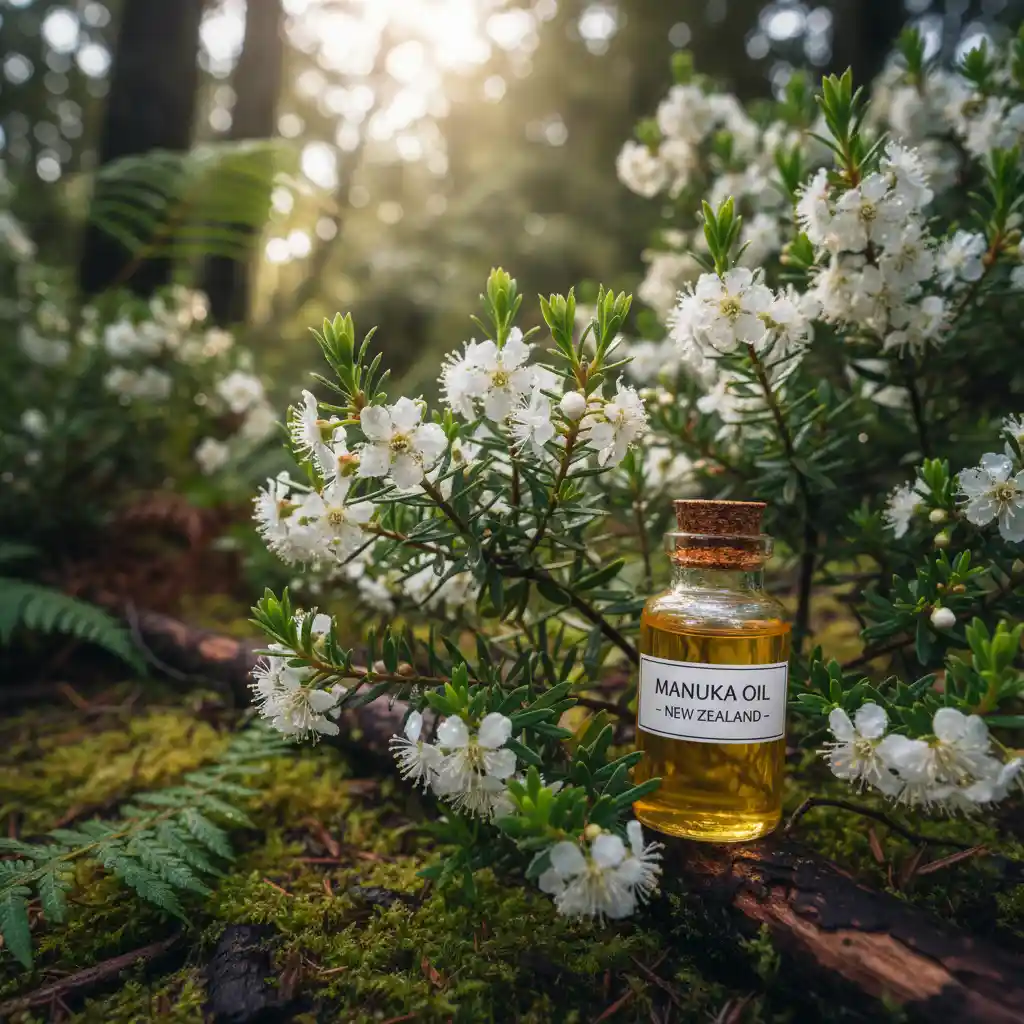
While the world has fallen in love with Manuka honey, the source of this “liquid gold”—the Manuka tree itself—holds secrets that extend far beyond the nectar collected by bees. Leptospermum scoparium, commonly known as Manuka or the New Zealand tea tree, is a scrub-type tree prolific across New Zealand. It is a resilient plant, often the first to regenerate on cleared land, acting as a nurse crop for native forests.
The essential oil is extracted primarily through steam distillation of the leaves and terminal branchlets. Unlike the honey, which relies on the interaction between nectar and bee enzymes to produce Methylglyoxal (MGO), the oil captures the lipophilic (fat-soluble) volatile compounds directly from the plant’s cellular structure. This results in a therapeutic agent that is chemically distinct from honey and, in many applications, significantly more potent on a weight-for-weight basis.
The Science: Triketones and Antimicrobial Potency
To understand the specific Manuka essential oil benefits, one must look at its chemotypes. Manuka oil is unique among essential oils due to the presence of beta-triketones (specifically leptospermone, isoleptospermone, and flavesone). These compounds are rarely found in nature in such high concentrations.
The Triketone Advantage
Research indicates that Manuka oil sourced from the East Cape region of New Zealand typically contains the highest levels of triketones. This chemical structure allows the oil to breach the cell walls of bacteria effectively. While Australian Tea Tree oil (Melaleuca alternifolia) is famous for its terpene content, Manuka oil’s triketones make it up to 33 times more effective against certain strains of gram-positive bacteria.
Antimicrobial Spectrum
Scientific studies have highlighted Manuka oil’s efficacy against a range of pathogens. It has demonstrated significant inhibitory effects against:
- Staphylococcus aureus: Including methicillin-resistant strains (MRSA).
- Streptococcus bacteria: Often responsible for throat and skin infections.
- Cutibacterium acnes: The bacteria primarily responsible for acne vulgaris.
- Fungal pathogens: Including Trichophyton species (athlete’s foot) and Candida albicans.
This broad-spectrum activity positions Manuka oil as a powerful natural alternative to synthetic antibiotics and antifungals, reflecting the Yin and Yang: Biological Parallels within nature, particularly in an era of increasing antibiotic resistance.
Rongoā Māori: Traditional Roots of Healing
Long before modern laboratories analyzed gas chromatography profiles, Māori healers (tohunga) utilized the Manuka tree as a central pillar of Rongoā Māori (traditional medicine). The knowledge of Manuka essential oil benefits is deeply rooted in these indigenous practices, which are further explored in Ethnobotany: Learning from Global Herbal Practices, although the methods of extraction differed.
Traditional Preparations
In traditional practice, the leaves were not distilled into oil but were used in infusions and vapor baths:
- Wai Manuka (Infusions): Leaves were boiled in water to create a liquid used to reduce fevers, treat urinary complaints, and act as a sedative.
- Vapor Baths: Heated rocks were placed in water with Manuka leaves, and the patient would inhale the steam to clear respiratory congestion and alleviate pain.
- Poultices: The seed capsules and leaves were chewed or pounded into a paste (poultice) applied directly to wounds, burns, and skin infections to speed healing and prevent gangrene.
- Bark Ash: The bark was sometimes burned, and the ash was rubbed onto skin diseases or used to treat scalp conditions.
Modern Manuka essential oil can be viewed as a concentrated evolution of these traditional applications, capturing the volatile essence that the ancestors released through boiling and crushing. For more on the botanical classification, you can refer to the Wikipedia entry for Leptospermum scoparium.
Evidence-Based Benefits for Skin Health
The most popular commercial application of Manuka oil is in dermatology. Because the oil is lipophilic, it penetrates the skin barrier efficiently, delivering its bioactive compounds to the dermis where inflammation and infection often reside.
Combating Acne and Bacterial Infections
Acne is fundamentally an inflammatory condition exacerbated by bacteria. While Tea Tree oil is a common remedy, it can be drying and irritating to sensitive skin. Manuka oil offers a distinct advantage: it is generally less irritating while being more potent against gram-positive bacteria like Staphylococcus and Propionibacterium acnes.
A study published by the National Institutes of Health (NIH) database suggests that the triketones in Manuka oil disrupt the cytoplasmic membrane of bacteria, leading to cell death without damaging surrounding human tissue. This makes it an ideal spot treatment for blemishes.
Wound Healing and Inflammation
Beyond fighting bacteria, Manuka oil exhibits strong anti-inflammatory properties. It suppresses the production of inflammatory cytokines, which helps reduce redness and swelling associated with eczema, insect bites, and minor wounds. When applied to cuts or abrasions, it serves a dual purpose: preventing infection (sepsis) and calming the localized immune response to speed up closure.
Respiratory Health and Aromatherapy
The traditional use of Manuka steam baths translates directly to modern aromatherapy. Manuka oil is a mucolytic and an expectorant. When inhaled, the volatile compounds help to thin mucus and expel it from the respiratory tract.
Diffusing Manuka oil can be beneficial for:
- Sinus Congestion: Reducing inflammation in the sinus cavities.
- Allergies: Calming the histamine response in the nasal passages.
- Stress and Anxiety: While less discussed than lavender, Manuka has a grounding, earthy scent that is traditionally associated with sedation and relaxation (referencing the traditional use of “tea” for sleep).
For effective use, add 3-5 drops to a steam inhaler or a bowl of hot water, cover the head with a towel, and breathe deeply. This method delivers the antimicrobial vapors directly to the lungs and sinuses.
Manuka Honey vs. Manuka Oil: The Differences
Consumers often confuse the benefits of the honey with the oil. While they come from the same plant, they are chemically and therapeutically different tools.
| Feature | Manuka Honey | Manuka Essential Oil |
|---|---|---|
| Active Compound | Methylglyoxal (MGO) & Peroxide activity | Beta-triketones (Leptospermone) |
| Solubility | Water-soluble (Hydrophilic) | Oil-soluble (Lipophilic) |
| Primary Use | Internal health, wound dressing, sore throats | Topical skin infections, acne, fungal issues |
| Potency | Mild to strong depending on UMF | Extremely concentrated (100x stronger against certain bacteria) |
For a holistic approach, they can be used together. For example, consuming Manuka honey for immune support while applying Manuka oil topically for skin outbreaks provides a comprehensive defense system.
Safety and Usage Guidelines
Despite its natural origin, Manuka essential oil is a powerful substance and must be used with respect. High concentrations of triketones can be irritating if used improperly.
- Dilution: It is generally recommended to dilute Manuka oil with a carrier oil (such as jojoba, almond, or coconut oil) before applying it to large areas of skin. A 1% to 2% dilution is standard for facial application.
- Patch Testing: Always perform a patch test on the inner arm 24 hours before widespread use to check for allergic reactions.
- Internal Use: Unlike honey, Manuka essential oil should not be ingested unless under the direct supervision of a qualified medical herbalist or aromatherapist.
- Pregnancy: As with most essential oils, consult a healthcare provider before use during pregnancy or breastfeeding.
By understanding the science and respecting the traditional origins of the plant, users can safely unlock the full spectrum of Manuka essential oil benefits for modern health challenges.
People Also Ask
What is Manuka oil good for?
Manuka oil is primarily used for its antibacterial, antifungal, and anti-inflammatory properties. It is effective for treating acne, athlete’s foot, dandruff, insect bites, and minor wounds. It is also used in aromatherapy to relieve respiratory congestion and stress.
Is Manuka oil better than Tea Tree oil?
For certain applications, yes. Research shows Manuka oil is significantly more potent against gram-positive bacteria (like Staphylococcus and Streptococcus) than Tea Tree oil. However, Tea Tree oil may be more effective against gram-negative bacteria. Manuka oil is also generally considered gentler on the skin.
Can you put Manuka oil directly on skin?
While Manuka oil is gentler than many essential oils, it is best to dilute it with a carrier oil (like jojoba or coconut oil) to minimize the risk of irritation, especially on sensitive skin. However, it can often be applied neat (undiluted) as a spot treatment for acne or insect bites in very small quantities.
Does Manuka oil help hair growth?
Manuka oil supports scalp health by reducing dandruff, inflammation, and fungal infections, which can create a better environment for hair follicles. While it does not directly stimulate growth like minoxidil, a healthy scalp is essential for preventing hair loss and supporting natural growth.
Is Manuka oil safe for dogs?
Manuka oil is often used in natural pet care products for skin irritations and hot spots. However, it must be heavily diluted. Essential oils can be toxic to pets if ingested or applied in high concentrations. Always consult a veterinarian before using essential oils on animals.
What is the difference between Manuka honey and Manuka oil?
Manuka honey is a water-soluble food product containing Methylglyoxal (MGO), used for internal health and wound care. Manuka oil is a lipid-soluble essential oil distilled from the leaves, containing triketones. The oil is much more concentrated and is strictly for topical or aromatic use, not for eating.