
Homeopathy vs naturopathy describes the distinction between a specific therapeutic modality and a broad system of medicine. Naturopathy (or Naturopathic Medicine) is a comprehensive medical system that utilizes various natural therapies—including nutrition, herbal medicine, lifestyle counseling, and sometimes homeopathy—to treat the root cause of illness. Homeopathy is a singular practice based on the “Law of Similars,” using highly diluted substances to stimulate the body’s self-healing response.
Defining the Core Disciplines: Scope and Practice
In the realm of integrative health, the terms “homeopathy” and “naturopathy” are often used interchangeably by the general public, yet they represent vastly different scopes of practice and historical origins. To understand homeopathy vs naturopathy, one must first recognize that one is a tool, while the other is a toolbox.
Naturopathic Medicine is a distinct primary health care profession, emphasizing prevention, treatment, and optimal health through the use of therapeutic methods and substances that encourage individuals’ inherent self-healing process. A licensed Naturopathic Doctor (ND) attends a four-year medical school and is trained in basic medical sciences, clinical diagnostics, and a wide array of natural therapies. Their scope includes botanical medicine, clinical nutrition, physical medicine, counseling, and often, homeopathy.
Homeopathy, founded by Samuel Hahnemann in the late 18th century, is a specific therapeutic system. It does not typically involve dietary planning, spinal manipulation, or botanical tinkering in the material sense. Instead, it focuses strictly on the administration of remedies derived from plant, mineral, or animal sources that have been potentiated to treat a patient’s total symptom picture.
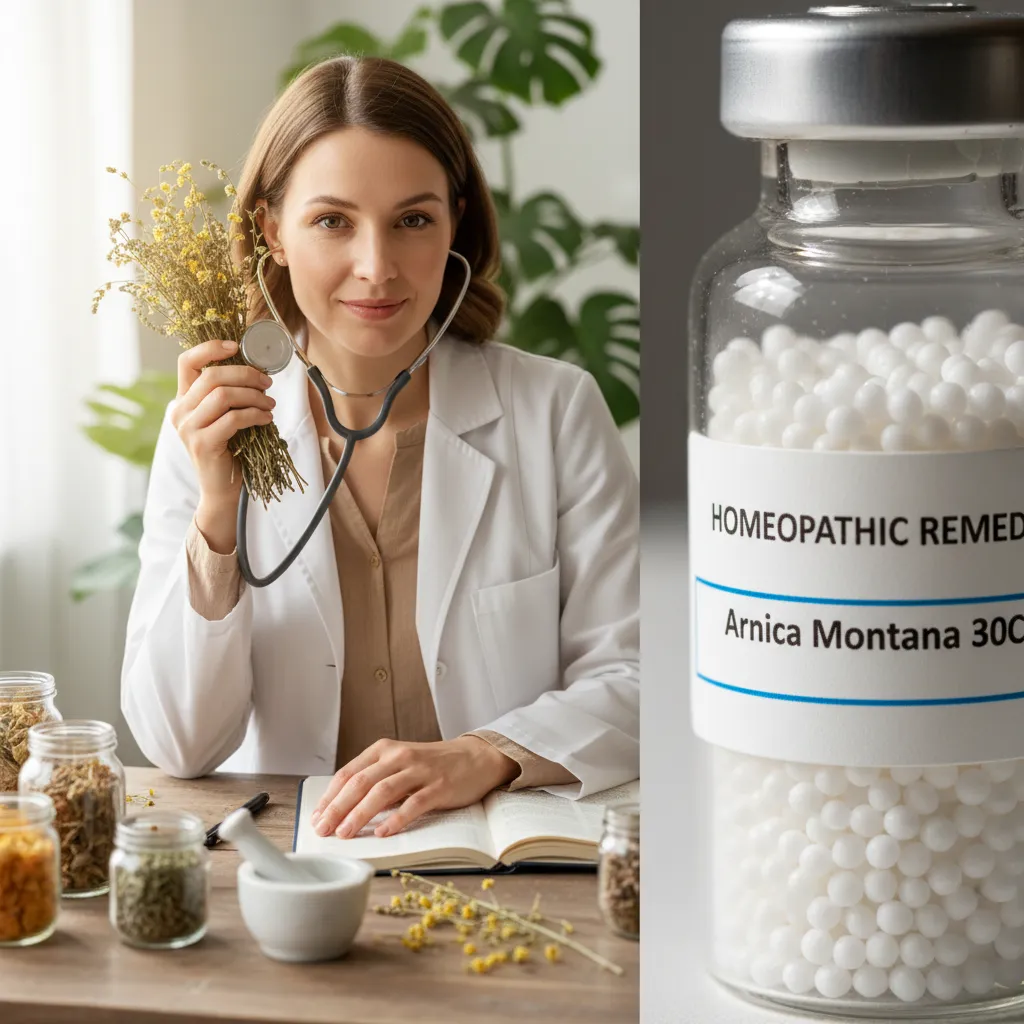
The 6 Principles of Naturopathic Medicine
Naturopathic medicine is distinguished not just by its therapies, but by its philosophy. Whether an ND uses acupuncture, nutrition, or homeopathy, their clinical decisions are guided by six fundamental principles. These principles form the ethical and practical framework of the profession.
1. The Healing Power of Nature (Vis Medicatrix Naturae)
Naturopathic medicine recognizes an inherent self-healing process in people that is ordered and intelligent. The physician’s role is to facilitate this process by identifying and removing obstacles to health and recovery.
2. Identify and Treat the Causes (Tolle Causam)
Rather than merely suppressing symptoms, the naturopathic doctor seeks to identify and remove the underlying causes of illness. Symptoms are viewed as the body’s attempt to heal, not the enemy itself.
3. First Do No Harm (Primum Non Nocere)
NDs follow three guidelines to avoid harming the patient: utilize methods and medicinal substances which minimize the risk of harmful side effects; avoid the harmful suppression of symptoms; and acknowledge and respect the individual’s healing process.
4. Doctor as Teacher (Docere)
Naturopathic doctors educate their patients and encourage self-responsibility for health. They also recognize and employ the therapeutic potential of the doctor-patient relationship.
5. Treat the Whole Person
Health and disease result from a complex interaction of physical, mental, emotional, genetic, environmental, social, and other factors. NDs treat the whole person by taking all these factors into account, rather than focusing on a specific organ or disease.
6. Prevention
Naturopathic medicine emphasizes the prevention of disease by assessing risk factors, heredity, and susceptibility to disease, and making appropriate interventions in partnership with their patients to prevent illness.
For a deeper dive into these governing philosophies, you can review the standards set by the American Association of Naturopathic Physicians (AANP).
Defining the Vital Force (Vis Medicatrix Naturae)
Central to both homeopathy and naturopathy is the concept of the Vital Force. In historical medical texts, this was referred to as Chi in Traditional Chinese Medicine, Prana in Ayurveda, or the Vis in Western Naturopathy. It represents the energetic intelligence that animates the physical body and distinguishes living matter from non-living matter.
In the context of homeopathy, illness is seen as a disruption or “mistunement” of this Vital Force. Hahnemann argued that because the disturbance is dynamic (energetic) rather than material, the cure must also be dynamic. This is why homeopaths believe that chemical drugs (which work on a chemical/material level) often suppress symptoms without correcting the underlying energetic imbalance.
In naturopathy, the Vital Force is the engine of the Vis Medicatrix Naturae (The Healing Power of Nature). A naturopath might argue that poor nutrition, lack of sleep, or environmental toxins dampen the Vital Force, preventing the body from healing itself. Therefore, the naturopathic approach is to remove these burdens so the Vital Force can rebound and restore homeostasis.

Understanding Homeopathic Dilution and Similars
To fully grasp the homeopathy vs naturopathy debate, one must understand the unique—and often controversial—mechanism of homeopathy. It relies on two primary laws: the Law of Similars and the Law of Infinitesimals (Potentization).
The Law of Similars (Similia Similibus Curentur)
This principle states that “like cures like.” A substance that causes symptoms in a healthy person can cure similar symptoms in a sick person. For example, peeling an onion causes tearing eyes and a runny nose. Therefore, Allium cepa (derived from red onion) is a common homeopathic remedy for hay fever or colds presenting with those exact symptoms.
Potentization and Dilution
This is where homeopathy diverges most sharply from conventional naturopathic nutrition or herbalism. Homeopathic remedies are prepared by serial dilution and succussion (vigorous shaking). The scales are typically:
- X Scale (Decimal): 1:10 dilution.
- C Scale (Centesimal): 1:100 dilution.
A remedy marked “30C” has been diluted 1 to 100, thirty times over. Scientifically, once a solution passes 12C (Avogadro’s limit), it is statistically unlikely that a single molecule of the original substance remains. Homeopaths maintain that the water retains a “memory” or energetic imprint of the substance, which interacts with the patient’s Vital Force.
The Placebo Effect vs. Clinical Observations
Critics of homeopathy often attribute its successes to the placebo effect. The argument is that because the remedies contain no active ingredients, any improvement is due to the patient’s belief in the treatment or the natural course of the illness.
However, proponents and practitioners point to several factors that challenge the “placebo only” hypothesis:
- Veterinary and Pediatric Success: Homeopathy is widely used on animals and infants, populations where the placebo effect (which relies on psychological expectation) is theoretically less applicable or non-existent.
- Clinical Observations: Experienced homeopaths report that the wrong remedy has no effect, while the correct remedy (the Simillimum) triggers a specific healing response, often initially aggravating symptoms (a “healing crisis”) before improvement, a pattern distinct from standard placebo relief.
- Integrative Research: While large-scale meta-analyses have been mixed, various studies have shown effects beyond placebo in specific conditions. The National Center for Complementary and Integrative Health (NCCIH) notes that while the evidence is not conclusive for many conditions, the debate remains active in the scientific community.
In contrast, naturopathy utilizes many modalities with well-established biological mechanisms, such as nutritional biochemistry and botanical pharmacology. While the placebo effect is a component of all medical interventions (including surgery and pharmaceuticals), naturopathic treatments like dietary changes or herbal antimicrobials have measurable physiological effects on the body.

Comparison: Licensing, Diagnostics, and Treatment
When choosing between a homeopath and a naturopathic doctor, it is vital to understand the logistical and legal differences.
Training and Licensing
- Naturopathic Doctors (ND/NMD): In regulated jurisdictions (like many US states and Canadian provinces), NDs are licensed primary care providers. They must pass the NPLEX board exams. They can order blood work, perform physical exams, and in some states, prescribe pharmaceuticals.
- Homeopaths: Certification varies widely. Some are licensed medical doctors or NDs who specialize in homeopathy. Others are “professional homeopaths” with certification from bodies like the Council for Homeopathic Certification (CHC), but they are generally not licensed as physicians and cannot diagnose disease or order medical tests.
Diagnostic Tools
- Naturopathy: Uses standard Western diagnostics (blood labs, imaging) alongside functional testing (stool analysis, hormone panels) and physical exams.
- Homeopathy: Relies heavily on the “Repertorization” process—a detailed interview regarding the patient’s physical, emotional, and mental symptoms to find the matching remedy. Physical pathology (like a blood test result) is less important than the experience of the symptom (e.g., “burning pain relieved by cold applications”).
Treatment Approach
- Naturopathy: Multimodal. An ND might prescribe a Vitamin D supplement, a botanical tincture for adrenal support, a diet change, and a homeopathic remedy simultaneously.
- Classical Homeopathy: Unimodal. A classical homeopath typically prescribes one single remedy at a time to observe its clear effect on the Vital Force.
People Also Ask
Are naturopaths and homeopaths the same thing?
No. A Naturopathic Doctor (ND) is a general practitioner of natural medicine who may use homeopathy as one of many tools. A homeopath is a specialist focused exclusively on the use of homeopathic remedies. All licensed NDs are trained in homeopathy, but not all homeopaths are trained in naturopathic medicine.
Is homeopathy scientifically proven to work?
The scientific consensus is mixed. While some individual studies show positive results, many large-scale systematic reviews argue that the effects of homeopathy are not significantly different from a placebo. However, millions of patients and integrative practitioners worldwide report clinical success, and research into the physics of water memory and nanoparticles is ongoing.
Can naturopaths prescribe antibiotics?
This depends on the jurisdiction. In licensed states (such as Oregon, Washington, and Arizona), licensed Naturopathic Doctors have broad prescriptive authority and can prescribe antibiotics and other pharmaceuticals when necessary. In unlicensed states, they cannot.
What is the difference between herbal medicine and homeopathy?
Herbal medicine uses material doses of plant substances (tinctures, teas, capsules) to exert a pharmacological effect on the body (similar to drugs but more complex). Homeopathy uses ultra-diluted substances (often past the point of containing physical matter) to trigger an energetic or immune response.
Does insurance cover naturopathy or homeopathy?
In the United States, some private insurance plans cover visits to licensed Naturopathic Doctors, especially in states where they are regulated as primary care providers. Homeopathy is rarely covered by standard insurance unless administered by an MD or DO, though it may be eligible for HSA/FSA spending.
What conditions are best treated with homeopathy?
Homeopathy is often sought for chronic conditions that have not responded to conventional treatment, such as allergies, eczema, irritable bowel syndrome (IBS), migraines, and autoimmune conditions. It is also popularly used for acute issues like teething, bruising (Arnica), and minor colds.