
DIY herbal remedies NZ refers to the practice of harvesting and processing New Zealand’s unique flora, such as Kawakawa, Manuka, and Kumarahou, into therapeutic preparations like infusions, balms, and tinctures. To successfully create these remedies at home, practitioners must adhere to strict identification protocols, follow traditional Tikanga (harvesting ethics), and utilize precise extraction methods to preserve the medicinal bio-actives found in native plants.
The Resurgence of Rongoā Māori and Home Herbalism
In recent years, Aotearoa has witnessed a profound resurgence in the interest surrounding natural health and self-sufficiency. This movement is not merely a trend toward organic living but a deepening connection to the land (Whenua) and a revitalization of Rongoā Māori—traditional Māori healing systems. For New Zealanders, creating DIY herbal remedies NZ style means more than just mixing herbs; it involves engaging with a unique biodiversity that evolved in isolation for millions of years.
The native forests of New Zealand offer a pharmacy of potent botanicals. From the analgesic properties of the Kawakawa leaf to the antimicrobial power of Manuka, the local flora provides abundant resources for managing common ailments. However, bridging the gap between seeing a plant in the bush and utilizing it safely in a medicine cabinet requires knowledge, respect, and technique. This guide serves as a comprehensive resource for integrating these ancient traditions with modern herbal preparation methods to create effective, safe, and sustainable home remedies.

Essential Safety Guidelines for Home Remedies
Before harvesting a single leaf or brewing a tea, safety must be the paramount concern. The line between a medicine and a toxin can often be a matter of dosage, identification, or preparation method. When engaging in home herbalism, strict adherence to safety protocols ensures that your remedies heal rather than harm.
Plant Identification
Correct identification is the cornerstone of herbal safety. New Zealand has several poisonous plants that can look deceptively similar to medicinal ones. For example, while the Tutu plant is highly toxic, it can sometimes be confused with other shrubbery by the untrained eye. Never harvest a plant unless you are 100% certain of its identity. Use reputable field guides, consult with local Rongoā practitioners, or use botanical identification apps verified by experts.
Tikanga and Sustainable Harvesting
In the context of DIY herbal remedies NZ, safety extends to the environment. Adhering to Tikanga (cultural protocols) is essential. This includes asking permission from the forest (often through karakia or prayer), taking only what you need, and harvesting in a way that allows the plant to regenerate. For instance, when harvesting Kawakawa, it is customary to pick leaves from the side of the bush facing the rising sun and never to strip a branch bare. Sustainable harvesting ensures that these medicinal resources remain available for future generations.
Dosage and Medical Interactions
Natural does not mean harmless. Herbal preparations contain active chemical constituents that can interact with pharmaceutical medications. For example, St John’s Wort (though an introduced species often used in NZ) interacts with blood thinners and antidepressants. Always consult a healthcare professional before integrating strong herbal remedies into your routine, especially if you are pregnant, nursing, or on prescription medication. For reliable information on plant toxicity and conservation status, refer to the Department of Conservation (DOC) website.
Tools and Equipment for Herbal Crafting
You do not need a laboratory to create high-quality herbal medicines, but having the right tools ensures cleanliness, consistency, and efficacy. Most equipment can be found in a standard kitchen, though dedicating specific tools to herbalism is recommended to avoid cross-contamination with food flavors (like onions or garlic).
Essential Hardware
To begin your journey into herbal crafting, gather the following essentials:
- Glass Jars with Lids: Wide-mouthed mason jars are ideal for macerating oils and tinctures. Glass is non-reactive and easy to sterilize.
- Double Boiler: Essential for making balms and salves. It allows you to melt beeswax and heat oils gently without scorching the delicate plant matter.
- Cheesecloth or Muslin: Used for straining plant material from oils and tinctures. A fine mesh ensures no sediment remains in your final product, which extends shelf life.
- Amber Glass Bottles: Light is the enemy of herbal potency. Storing finished tinctures and oils in amber or cobalt blue bottles protects them from UV degradation.
- Digital Scale: Precision is key for consistent recipes. Weighing ingredients (especially beeswax and dried herbs) is more accurate than volume measurements.
- Mortar and Pestle: For grinding dried roots, seeds, or barks to increase the surface area for extraction.
Sanitization
Bacteria and mold can ruin a batch of remedies and pose health risks. All jars, bottles, and utensils should be sterilized before use. This can be done by washing them in hot soapy water and then placing them in an oven at 110°C for 15-20 minutes, or by using a dishwasher with a high-heat sanitizing cycle. Ensure all equipment is completely dry before use, as water is a breeding ground for bacteria in oil-based preparations.
Core Herbal Preparation Methods
Understanding the difference between various preparation methods is crucial for extracting the right constituents from the plant. Different parts of the plant (roots vs. flowers) and different solvents (water vs. alcohol vs. oil) yield different results.
Infusions and Decoctions
Water-based preparations are the simplest and most common form of herbal medicine.
Infusions are used for delicate plant parts like leaves, flowers, and aromatic aerial parts (e.g., Kawakawa leaves, Manuka tips). To make an infusion, pour boiling water over the plant material and cover it to keep the volatile oils from escaping. Steep for 10-15 minutes.
Decoctions are required for hard, woody parts like roots, bark, and berries (e.g., Kumarahou leaves which are tough, or Dandelion roots). These materials need active simmering to release their medicinal compounds. Place the plant material in cold water, bring to a boil, and simmer gently for 20-40 minutes. The liquid is then strained and drunk.
Herbal Balms and Salves (Pani)
Balms are excellent for topical applications, such as treating eczema, cuts, or muscle pain. The process involves two stages: creating an infused oil and then thickening it with beeswax.
Step 1: Solar Infused Oil. Fill a jar 3/4 full with dried herbs (fresh herbs can cause mold due to water content). Cover with a carrier oil like olive or sweet almond oil. Place in a sunny window for 4-6 weeks, shaking daily. Strain the oil.
Step 2: Creating the Balm. Gently heat the infused oil in a double boiler. Add beeswax shavings. A standard ratio is roughly 30g of beeswax for every 240ml of oil, though this can be adjusted for a harder or softer consistency. Once melted, pour into tins to set.

Tinctures
Tinctures are concentrated liquid extracts using alcohol as the solvent. Alcohol extracts a wider range of constituents than water and acts as a preservative, giving tinctures a shelf life of several years. High-proof vodka (40% or higher) is commonly used for home preparations.
To make a tincture, fill a jar halfway with dried herbs (or 2/3 with fresh herbs). Top with vodka, ensuring all plant matter is submerged. Seal tight and store in a cool, dark place for 4-6 weeks, shaking daily. Strain through cheesecloth into amber dropper bottles.
Spotlight on NZ Native Plants for Beginners
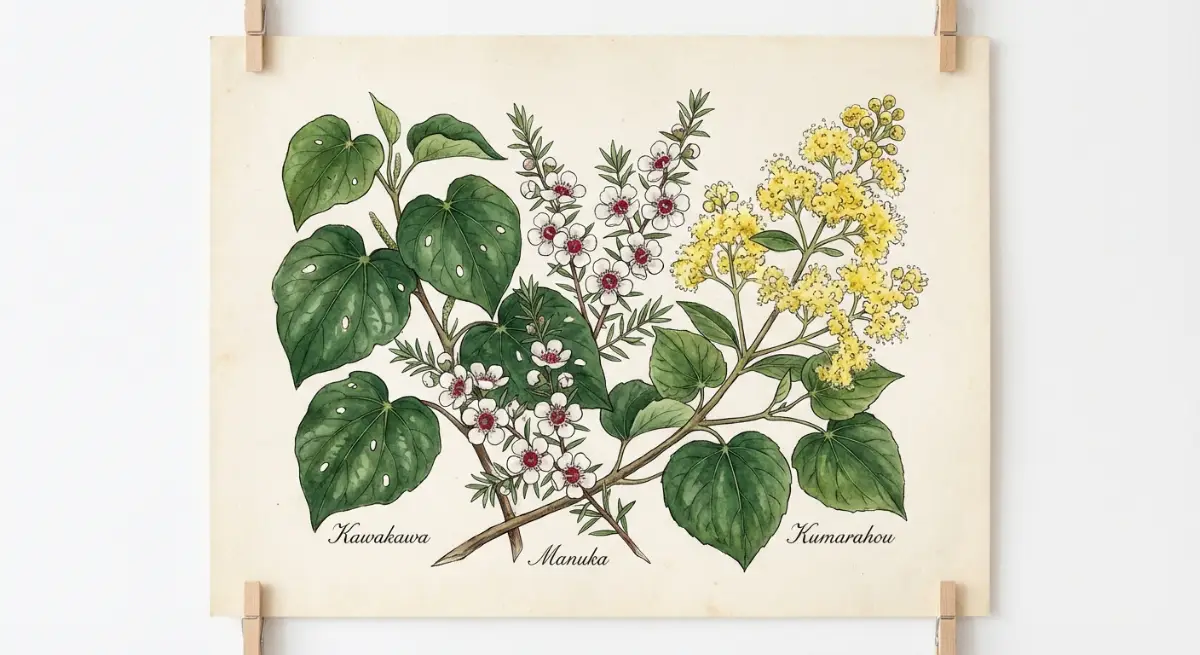
When focusing on DIY herbal remedies NZ, three specific plants stand out for their versatility, safety, and accessibility.
Kawakawa (Piper excelsum)
Often called the “NZ Pharmacy,” Kawakawa is easily identified by its heart-shaped leaves, often riddled with holes from the looper moth caterpillar. In Rongoā Māori, it is believed that the leaves with the most holes contain the highest concentration of medicinal actives, as the plant produces more defense chemicals in response to the insects.
Uses: It is excellent for digestive issues (bloating, cramps) when taken as a tea. Topically, Kawakawa balm is superior for soothing eczema, insect bites, and minor cuts. Chewing a leaf can also numb a toothache due to its analgesic properties.
Manuka (Leptospermum scoparium)
World-famous for its honey, the Manuka plant itself is a powerhouse. It has strong antibacterial, antifungal, and anti-inflammatory properties.
Uses: A steam inhalation of Manuka leaves is effective for clearing sinus congestion and colds. A strong decoction of the bark or leaves can be used as a mouthwash for gum health or a wash for fungal skin infections. Learn more about native flora at Te Ara – The Encyclopedia of New Zealand.
Kumarahou (Pomaderris kumeraho)
Known as “Gumdigger’s Soap” because the flowers create a lather when rubbed with water, Kumarahou is a premier respiratory herb.
Uses: It is traditionally used to treat bronchitis, asthma, and deep chest coughs. It has a very bitter taste, so it is often mixed with Manuka honey to make it palatable. It is also used as a blood purifier and general tonic.
Proper Storage and Shelf Life of Preparations
The effort put into harvesting and crafting remedies is wasted if they spoil. Proper storage maximizes potency and safety.
Ideal Conditions
Heat, light, oxygen, and moisture are the primary factors that degrade herbal products. All remedies should be stored in a cool, dark cupboard. Tinctures and dried herbs should be kept in airtight glass containers. Balms should be kept away from direct sunlight to prevent melting and oil rancidity.
Labeling
Always label your products immediately. A label should include:
- The name of the remedy (e.g., “Kawakawa Balm”).
- The ingredients used (including solvent type).
- The date of manufacture.
- The intended dosage.
General Shelf Life Guide
While shelf life varies based on hygiene and storage, these are general rules of thumb:
- Water-based Infusions/Decoctions: 24-48 hours in the refrigerator. Treat them like food; they spoil quickly.
- Syrups: 3-6 months if refrigerated and made with a high sugar/honey content.
- Oils and Balms: 1-2 years. Discard if they smell rancid (like old crayons).
- Tinctures (Alcohol): 3-5 years or longer.
- Dried Herbs: 1 year for leaves/flowers, 2 years for roots/barks.
People Also Ask
What is the best natural antibiotic in NZ?
Manuka (Leptospermum scoparium) is widely considered the most potent natural antibiotic in New Zealand. Its leaves and bark have been traditionally used to fight bacterial and fungal infections, and Manuka honey is scientifically proven to have significant antibacterial properties.
How do you make Kawakawa tea?
To make Kawakawa tea, pick 3-4 fresh Kawakawa leaves (preferably with insect holes). Wash them, tear them slightly to release oils, and place them in a teapot. Pour boiling water over the leaves and steep for 10-15 minutes. Strain and drink. You can add ginger or lemon for extra flavor.
Is it legal to pick native plants in NZ?
It depends on the location. You cannot pick plants in National Parks or scenic reserves without a permit. However, you can harvest on private land with the owner’s permission or in designated areas. Always follow Tikanga and sustainable harvesting practices regardless of legality.
What are the benefits of Manuka oil?
Manuka oil is highly valued for its antimicrobial, antihistamine, and anti-inflammatory properties. It is often used to treat acne, fungal skin infections (like athlete’s foot), insect bites, and to reduce inflammation in skin conditions.
How long do homemade herbal balms last?
If stored correctly in a cool, dark place and made with fresh oils and sterile equipment, homemade herbal balms typically last between 1 to 2 years. Adding Vitamin E oil can help act as a natural antioxidant to extend shelf life.
Can I use dried herbs for tinctures?
Yes, dried herbs are often preferred for tinctures because the water content in fresh herbs can dilute the alcohol and increase the risk of spoilage. If using dried herbs, fill the jar halfway; if using fresh, fill it two-thirds full before adding alcohol.