
Clinical studies on Rongoā Māori are increasingly validating the pharmacological efficacy of New Zealand native plants through rigorous scientific analysis. Current research focuses on the antimicrobial, anti-inflammatory, and cytotoxic properties of key species like Kawakawa, Manuka, and Kumarahou, effectively bridging the gap between traditional Matauranga Māori wisdom and modern evidence-based medicine for integrated healthcare solutions.
The History of Pharmacological Research on NZ Natives
The intersection of Rongoā Māori (traditional Māori healing) and Western pharmacological science is a field of study that has evolved significantly over the last century. While Rongoā has been practiced for centuries, rooted in a holistic worldview that encompasses spiritual (wairua), physical (tinana), family (whānau), and mental (hinengaro) health, the clinical validation of these remedies via the scientific method is a more recent phenomenon.
Early European explorers, including Captain James Cook and botanist Joseph Banks, noted the medicinal uses of native flora by Māori. However, early documented “research” was often observational rather than analytical. It wasn’t until the mid-20th century that systematic chemical analysis began to identify the bioactive compounds responsible for the healing properties observed by Tohunga (expert practitioners).

In recent decades, the approach has shifted from merely cataloging plants to sophisticated ethnopharmacology. Universities across New Zealand, particularly the University of Auckland and the University of Otago, have established dedicated research units to investigate the molecular mechanisms of these plants. This shift is driven by a global demand for natural therapeutics and a local imperative to honor and validate Matauranga Māori (Māori knowledge) within the national health framework.
The history of this research is not without tension. The “discovery” of active ingredients by Western science often raises questions regarding intellectual property and the protection of indigenous knowledge, famously addressed in the Wai 262 claim. Nevertheless, the collaborative efforts between scientists and Māori communities are now producing a robust body of literature that supports what Māori have known for generations: the New Zealand bush is a pharmacy of immense potency.
Key Studies on Antimicrobial Properties
Among the most extensively researched areas of Rongoā Māori is the antimicrobial capability of native flora. In an era of increasing antibiotic resistance, the search for novel antibacterial agents has turned the spotlight on New Zealand’s unique biodiversity.
Manuka (Leptospermum scoparium)
Manuka is arguably the most clinically validated New Zealand native plant. While the global market is familiar with Manuka honey, the science behind it is profound. Research identified methylglyoxal (MGO) as the primary compound responsible for the non-peroxide antibacterial activity in Manuka honey. Clinical studies have demonstrated its effectiveness against a wide range of pathogens, including Staphylococcus aureus and Helicobacter pylori.
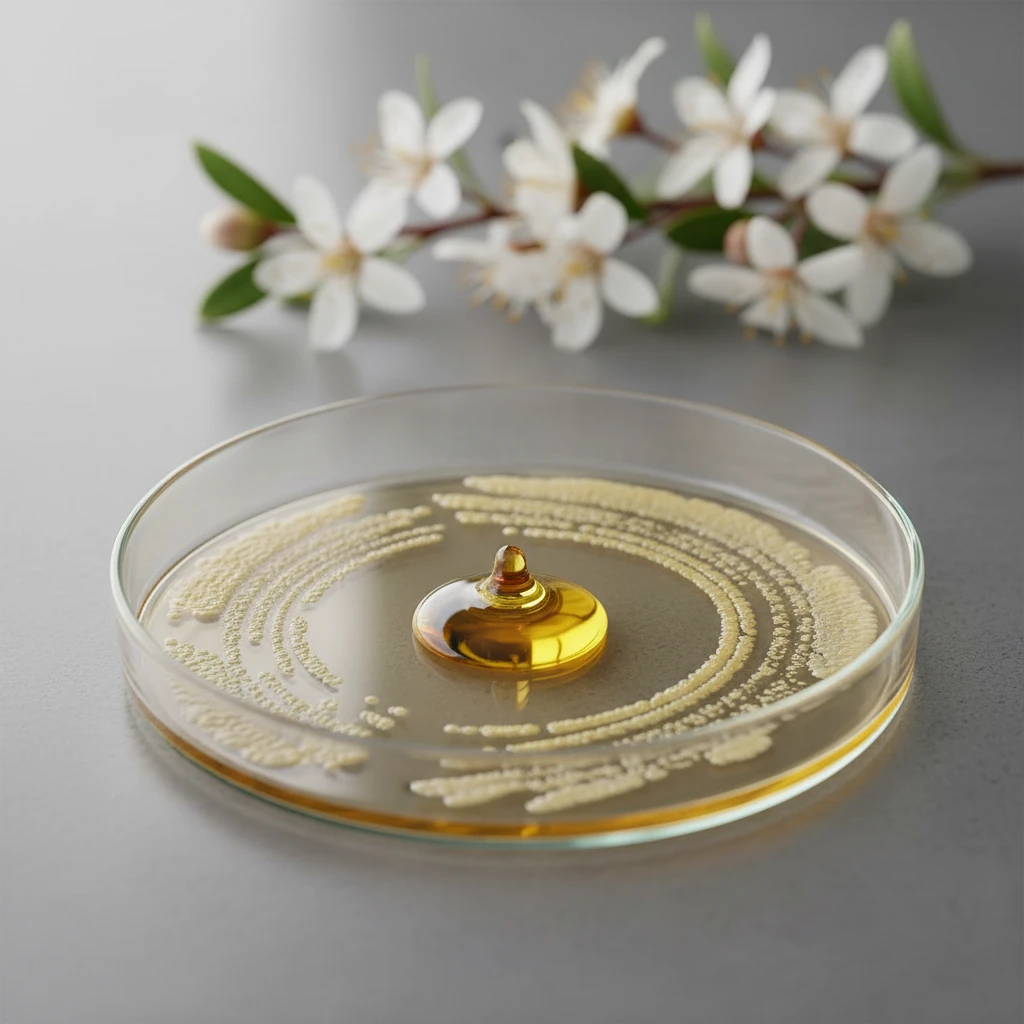
Beyond honey, the essential oil of Manuka has shown significant antimicrobial efficacy. Studies published in journals of ethnopharmacology have highlighted the oil’s ability to disrupt the cell walls of bacteria, making it a potent ingredient in wound care and dermatological treatments. The β-triketone fraction of the oil is often cited as a key marker for high-grade antimicrobial activity.
Kānuka (Kunzea ericoides)
Often confused with Manuka, Kānuka has its own distinct pharmacological profile. Clinical trials have investigated Kānuka oil for the treatment of eczema and skin infections. Research indicates that while Kānuka shares some antibacterial properties with Manuka, it also possesses unique antifungal capabilities. A randomized controlled trial investigated the efficacy of a Kānuka oil formulation for eczema, showing promising results in reducing symptom severity compared to controls.
Harakeke (Phormium tenax)
Harakeke flax gel is traditionally used for burns and cuts. Modern analysis has revealed that the gel at the base of the leaves contains antimicrobial compounds that protect the wound bed while maintaining a moist healing environment. This aligns with modern wound care protocols, validating the traditional application of the raw leaf gel to fresh injuries.
Anti-inflammatory Research Findings: Kawakawa and Beyond
Inflammation is the root cause of many chronic diseases, and Rongoā Māori offers powerful anti-inflammatory agents. The star of this category is undoubtedly Kawakawa (Piper excelsum), often referred to as the “pharmacy of the forest.”
Pharmacology of Kawakawa
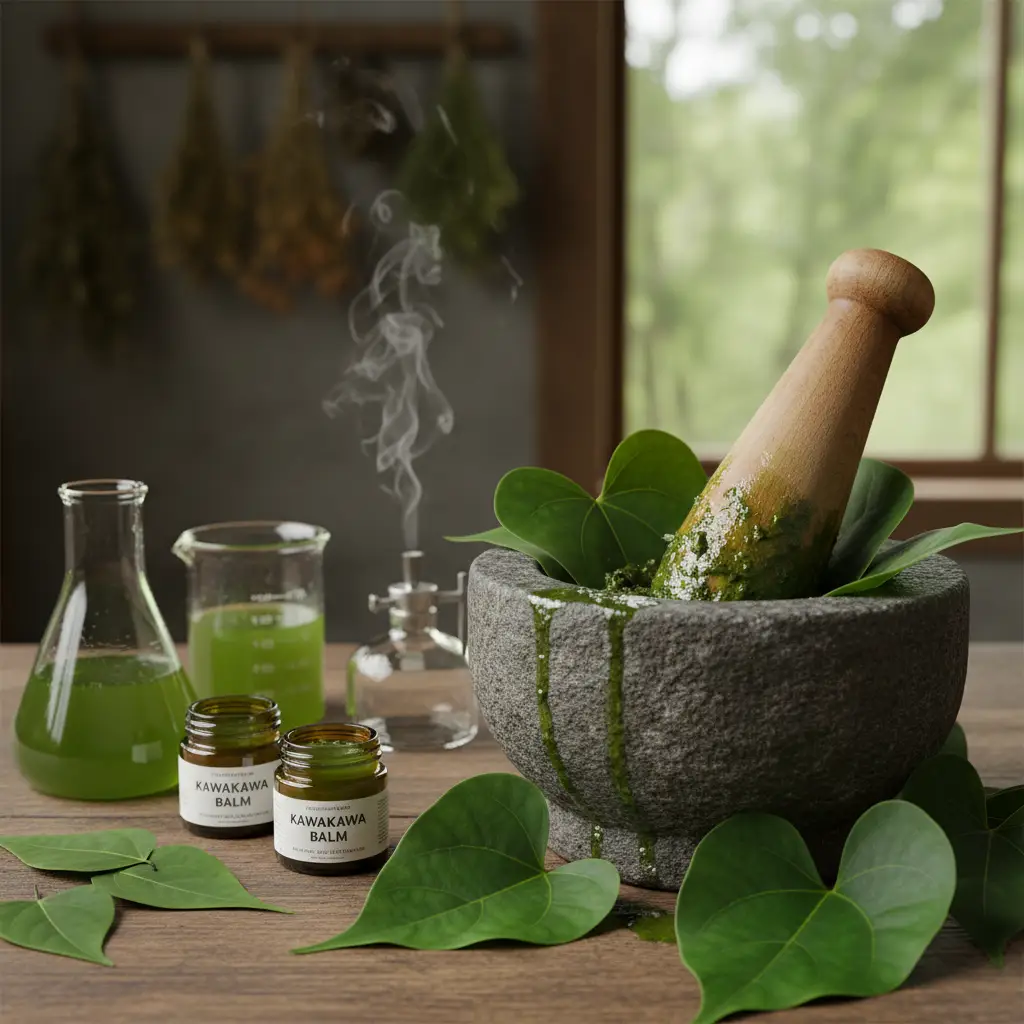
Kawakawa leaves contain a complex profile of bioactive constituents, including myristicin, elemicin, and diyangambin. Diyangambin, a lignan, has been the subject of immunosuppressive and anti-inflammatory studies. Research suggests that extracts from Kawakawa can inhibit the production of nitric oxide and pro-inflammatory cytokines in activated immune cells.
This scientific data supports the traditional use of Kawakawa balms and teas for treating eczema, rheumatism, and gastrointestinal inflammation. The presence of myristicin also provides a mild analgesic (pain-relieving) effect, which explains its historical use for toothache and general aches.
Cytotoxicity and Cancer Research
While one must be careful not to make unsubstantiated medical claims, preliminary studies into the cytotoxic properties of Kawakawa and other natives are ongoing. Cytotoxicity refers to the ability of a substance to be toxic to cells, which is the mechanism by which chemotherapy kills cancer cells. In vitro studies have screened various NZ native plant extracts against cancer cell lines, with some showing dose-dependent inhibitory effects. These studies are in early stages but highlight the potential for future pharmaceutical development derived from Rongoā.
Poroporo (Solanum aviculare)
Poroporo contains solasodine, a steroid alkaloid. Historically used for itchy skin conditions, solasodine is chemically related to the raw materials used in the manufacture of steroidal anti-inflammatory drugs. This provides a direct chemical link between the traditional application of Poroporo juice to itchy skin and the modern understanding of steroidal anti-inflammatories.
Kumarahou: Saponins and Respiratory Health
Kumarahou (Pomaderris kumeraho) is traditionally revered as a lung tonic. It was the primary remedy for bronchitis, asthma, and colds. The clinical validation of Kumarahou focuses largely on its high saponin content.
Saponins are natural surfactants (detergents). When agitated with water, Kumarahou flowers create a lather, earning it the nickname “gumdigger’s soap.” In the context of respiratory health, these saponins act as expectorants. They help to break down the viscosity of mucus in the lungs, making it easier to expel. This mechanism of action is well-understood in pharmacognosy.
Furthermore, studies are investigating the anti-diabetic potential of Kumarahou. Traditional accounts suggest it helps “clean the blood.” Modern research is exploring its effect on lipid metabolism and glucose regulation, although this area requires more robust clinical trials to be conclusive.
Challenges in Clinical Validation and Standardization
Despite the promising results, validating Rongoā Māori through the lens of Western science presents unique challenges. The “gold standard” of double-blind, randomized controlled trials (RCTs) is difficult to apply to holistic therapies.
Standardization of Active Ingredients
In Western medicine, a pill contains a precise milligram dosage of a single active ingredient. In Rongoā, the medicine is a whole plant extract containing hundreds of compounds that work synergistically (the entourage effect). Furthermore, the potency of a plant like Kawakawa varies depending on where it is grown, the time of year it is harvested, and even the time of day it is picked. Establishing a standardized “clinical dose” is therefore complex.
Matauranga vs. Reductionism
Rongoā is not just about chemical constituents; it involves Karakia (prayer) and tikanga (protocols). A reductionist scientific approach that isolates a single molecule risks stripping the remedy of its cultural context and, according to practitioners, its spiritual efficacy. The challenge for researchers is to design studies that respect the holistic nature of Rongoā while still providing rigorous data on safety and efficacy.
The Future of Integrated Healthcare in New Zealand
The future of healthcare in Aotearoa lies in the integration of these two systems. The goal is not to replace Western medicine but to complement it with validated traditional remedies. This is particularly relevant for chronic conditions where lifestyle and holistic management are key.
We are seeing a rise in “Rongoā clinics” operating alongside general practices, and an increase in e-commerce platforms selling high-quality, lab-tested Rongoā products. These products serve as a bridge, allowing consumers to access traditional healing with the assurance of modern quality control.

As clinical studies continue to provide data backing the efficacy of plants like Kawakawa, Manuka, and Kumarahou, the regulatory environment is also shifting. The inclusion of Rongoā Māori in New Zealand’s health strategies signals a move towards a dual-system approach, ensuring that the ancient wisdom of the land is preserved and utilized for the health of future generations.
Is Rongoā Māori scientifically proven?
Many aspects of Rongoā Māori have been validated through scientific research, particularly the antimicrobial properties of Manuka and the anti-inflammatory properties of Kawakawa. However, Rongoā is a holistic practice, and not all its spiritual or energetic components can be measured by current western scientific methods.
What is the active ingredient in Kawakawa?
Kawakawa contains several bioactive compounds, with myristicin, elemicin, and diyangambin being the most notable. Myristicin contributes to its analgesic and anti-inflammatory effects, while diyangambin has shown immunosuppressive potential.
Does Manuka honey work for wounds?
Yes, medical-grade Manuka honey is clinically proven to support wound healing. Its high Methylglyoxal (MGO) content provides strong antibacterial action, and it helps maintain a moist wound environment while lowering pH to promote healing.
How does Kumarahou help the lungs?
Kumarahou contains saponins, which are natural surfactants. These compounds act as an expectorant, helping to loosen and thin mucus in the bronchial tubes, making it easier to cough up and clear the airways.
Are there clinical trials for NZ native plants?
Yes, there are ongoing and past clinical trials conducted by institutions like the University of Auckland and the University of Otago. These trials investigate various applications, including Kanuka oil for eczema and Manuka honey for topical infections.
What is the difference between Rongoā and Western medicine?
Western medicine tends to be reductionist, focusing on isolating symptoms and treating them with specific chemical agents. Rongoā Māori is holistic, treating the patient’s physical, spiritual, mental, and family health as an interconnected whole.