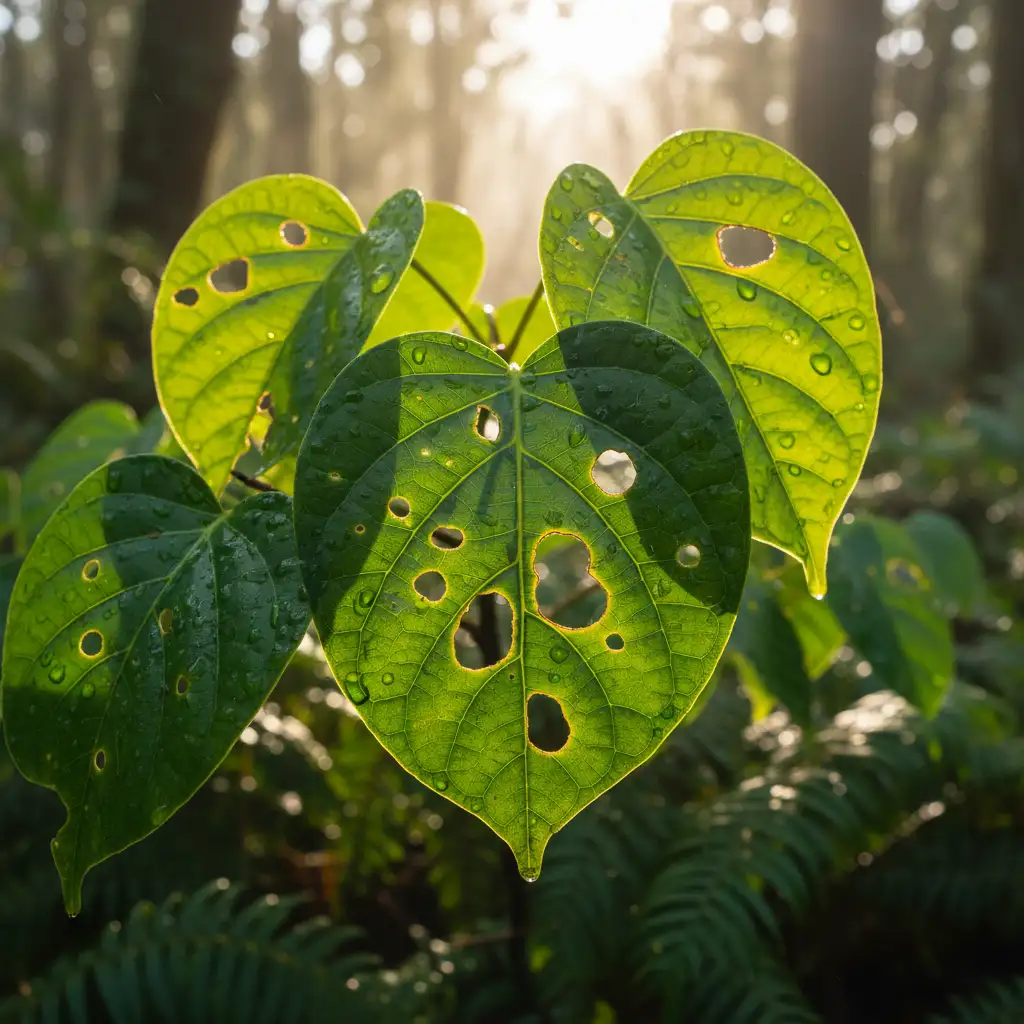
The primary difference between Manuka and Kanuka lies in their tactile characteristics and reproductive structures. A reliable field test is the phrase “Manuka is mean, Kanuka is kind”: Manuka (Leptospermum scoparium) leaves are prickly to the touch, whereas Kanuka (Kunzea ericoides) leaves feel soft. Visually, Manuka produces large, solitary flowers and persistent woody seed capsules, while Kanuka features smaller flowers growing in clusters and small, fragile capsules that drop in autumn.
Taxonomy and Overview: The Tea Tree Confusion
In the lush, evergreen bush of Aotearoa New Zealand, two species dominate the landscape, often growing side-by-side and confusing novice foragers, hikers, and even budding herbalists. These are Manuka (Leptospermum scoparium) and Kanuka (Kunzea ericoides). While they share a superficial resemblance—often leading to them both being colloquially referred to as “Tea Tree” following Captain Cook’s early experiments with brewing their leaves—they are distinct species with unique botanical features, chemical profiles, and ecological roles.
Understanding the difference between Manuka and Kanuka is not merely an academic exercise; it is critical for safe and effective herbal practice. While both belong to the Myrtaceae family (the myrtle family), which includes Eucalyptus and Pohutukawa, their evolutionary paths diverged significantly. Manuka has historically garnered the lion’s share of international attention due to the marketing of Manuka honey, yet Kanuka holds an equally potent, albeit different, place in New Zealand native herbalism.
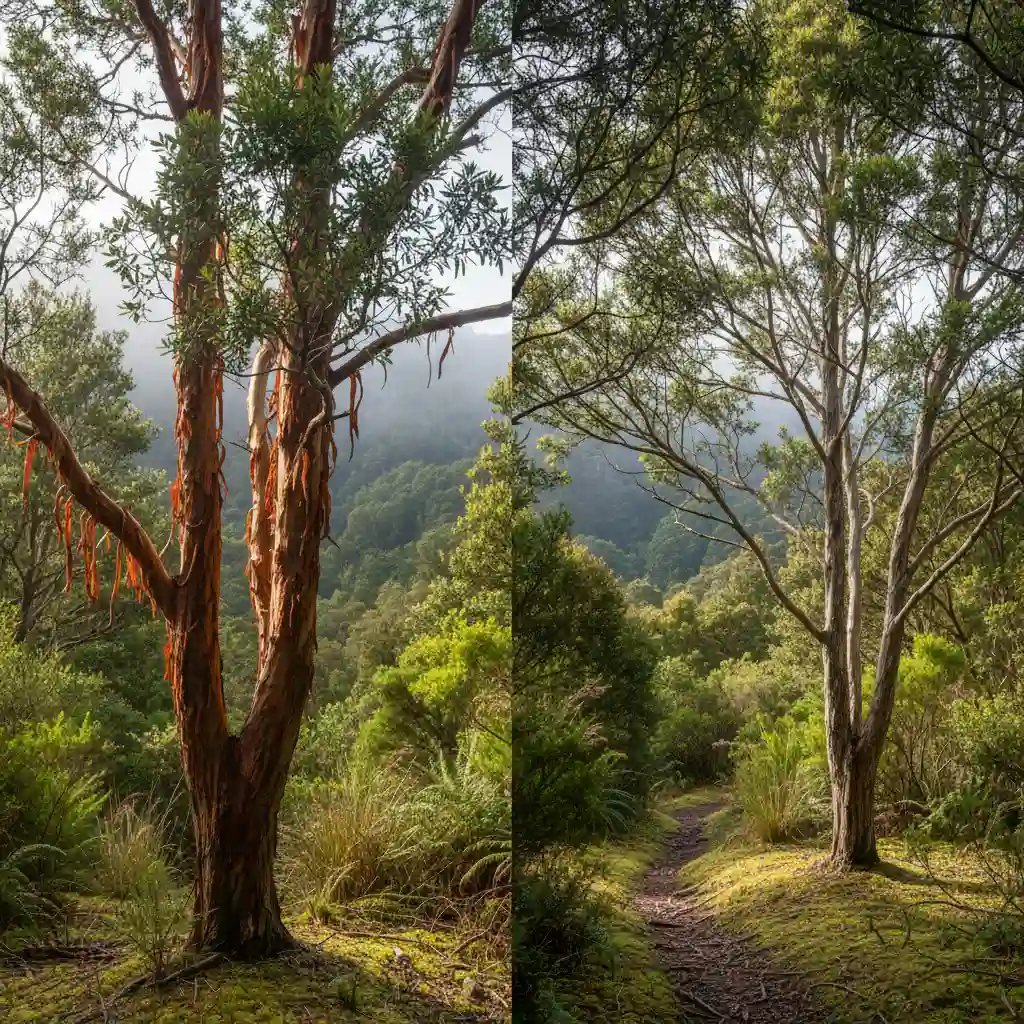
For the ethnomedical practitioner, misidentification can lead to ineffective treatments. While both plants possess antimicrobial properties, the chemical constituents of their essential oils differ drastically. Manuka oil is renowned for its triketone content (particularly in East Cape chemotypes), while Kanuka is rich in alpha-pinene, making it structurally more similar to Australian Eucalyptus in its anti-inflammatory capacity.
The Tactile Test: Prickly vs. Soft
If you find yourself deep in the bush without a magnifying glass or a botanical guide, the most immediate and reliable method of identification is the tactile test. This method relies on the distinct morphology of the leaf tips.
The Mnemonic: “Manuka is Mean, Kanuka is Kind”
This simple rhyme is taught to almost every New Zealand schoolchild and remains the gold standard for quick identification.
Manuka (Mean): When you grasp a branch of Manuka and squeeze it or run your hand against the grain of the foliage, it will feel sharp and prickly. The leaves of Leptospermum scoparium are lanceolate with a stiff, pointed tip. This evolutionary adaptation helps protect the plant from browsing animals and reduces moisture loss in harsh, wind-swept environments.
Kanuka (Kind): Conversely, Kanuka foliage feels soft and silky to the touch. The leaves of Kunzea ericoides are softer, narrower, and lack the sharp, rigid point found in Manuka. You can run your hand through a Kanuka branch without fear of being scratched. This softness belies the tree’s incredible resilience and strength as it matures.
Visual Identification: Leaves, Flowers, and Seeds
While the tactile test is excellent for immediate confirmation, a professional herbalist must also rely on visual markers. These distinctions become apparent when examining the reproductive structures and foliage arrangement closer up.
Foliage Differences
Manuka leaves typically range from 7mm to 20mm in length and 2mm to 6mm in width. They are often broader in the middle and taper to that characteristic sharp point. In contrast, Kanuka leaves are generally similar in length but significantly narrower (often parallel-sided) and alternate along the branchlets rather than growing in the clustered abundance seen in some Manuka varieties.
Flower Arrangement
The flowering habits of these two species provide another clear diagnostic tool, although this is seasonally dependent (usually late spring to summer).
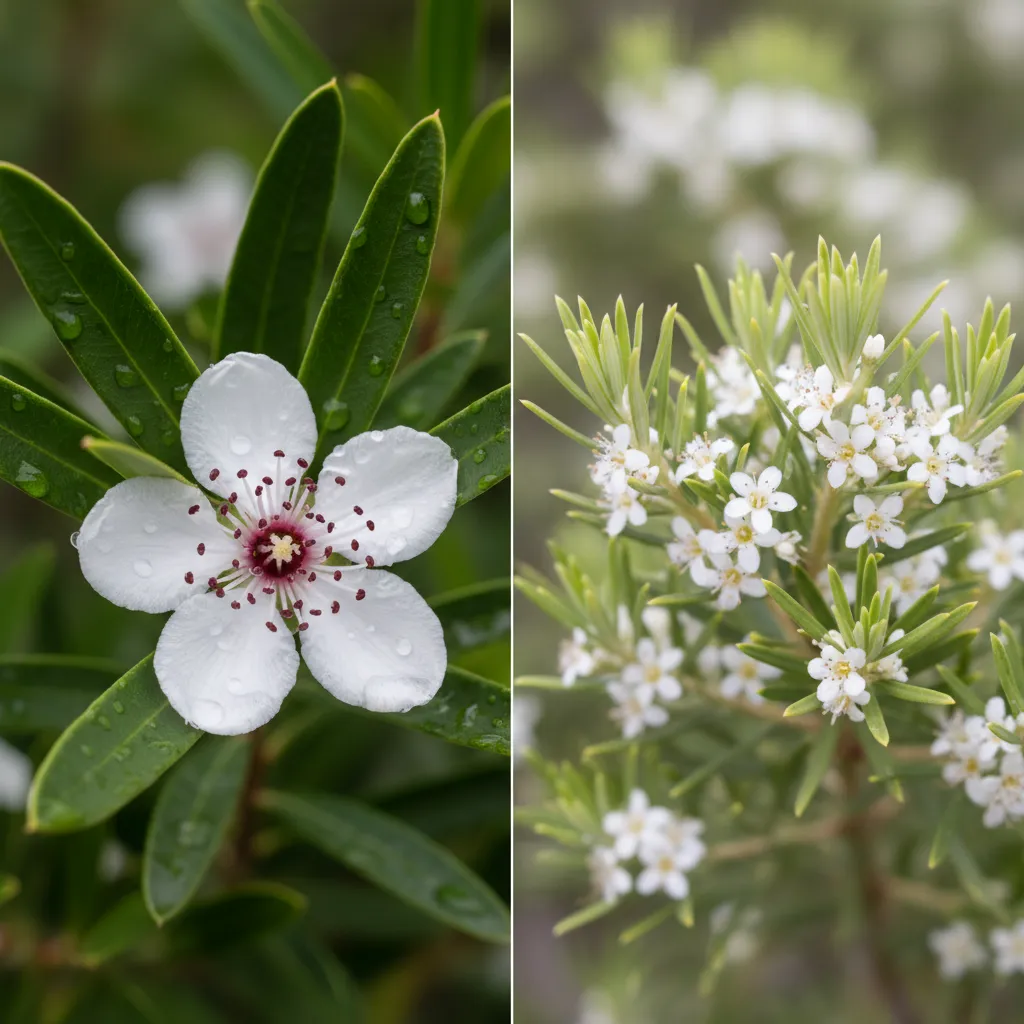
- Manuka Flowers: These are solitary. They grow individually from the leaf axils. They are generally larger (10mm–12mm diameter) and can range in color from pure white to pink and even deep crimson in modern cultivars.
- Kanuka Flowers: These grow in corymbs or clusters. The individual flowers are smaller (4mm–8mm diameter) but appear in such profusion that a Kanuka tree in full bloom looks as though it has been dusted with heavy snow. This “frosting” effect is a key landscape identifier for Kanuka.
Seed Capsules: The Year-Round Indicator
Perhaps the most definitive visual identifier, available even when the plant is not in bloom, is the seed capsule.
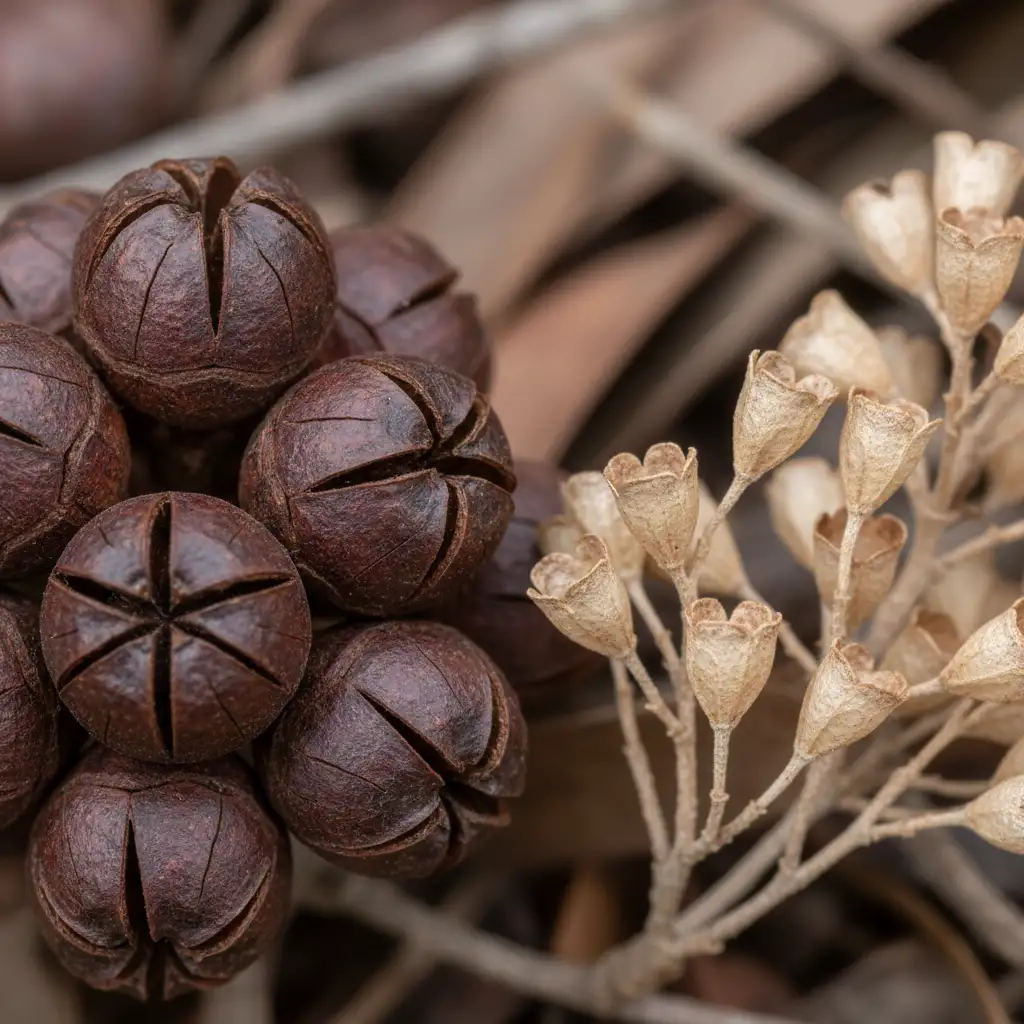
Manuka produces a woody, nut-like capsule that is segmented (usually into five distinct valves). Crucially, these capsules are persistent. They can remain on the branch for years, turning grey and weathering with age. It is common to see a Manuka bush adorned with both fresh flowers and the grey, woody capsules of previous years.
Kanuka capsules are much smaller, cup-shaped, and fragile. They do not persist. Once the seed is dispersed in autumn, the capsule usually shatters or drops off. Therefore, if you see a tree covered in hard, woody nuts, it is almost certainly Manuka.
Ecological Roles and Growth Habits
Observing the plant’s stature and its place in the forest ecosystem provides further clues. Both plants are “pioneer species,” meaning they are often the first to colonize regenerating land, protecting the soil for the eventual growth of canopy giants like Totara and Rimu. However, their potential stature differs.
Manuka is typically a shrub or small tree, rarely exceeding 4 to 5 meters in height, though it can grow taller in dense competition. It often grows in wetlands, clay banks, and exposed coastal ridges. It is incredibly tolerant of wet feet and poor soil.
Kanuka, however, is the giant of the two. It is a tree that can reach heights of 15 to even 30 meters, with a trunk diameter of up to 1 meter. Old-growth Kanuka forests are majestic, with peeling bark that hangs in long, leathery strips (unlike the shorter, flaky bark of Manuka). If you are standing under a towering canopy of “tea tree” that looks like a proper forest rather than a scrub layer, you are standing in a Kanuka grove.
Distinct Medicinal Properties: Rongoā Māori Applications
For the herbalist, the distinction is most vital in the application of medicine. In Rongoā Māori (traditional Māori medicine), both plants are taonga (treasures), but they are used for different specific ailments.
Manuka (Leptospermum scoparium)
Manuka is the “bactericide” of the bush. The essential oil and aqueous extracts are rich in triketones (specifically leptospermone), which provide powerful broad-spectrum antimicrobial action.
- Internal Use: Traditionally, the bark was boiled with water to treat dysentery and diarrhea. The gum (pia) was used as a moisturizer for burns and to ease coughing.
- External Use: Manuka oil is exceptional for treating bacterial skin infections, acne, and fungal issues like athlete’s foot. It is often compared to Australian Tea Tree oil but is generally considered less irritating to the skin while being more effective against gram-positive bacteria.
Kanuka (Kunzea ericoides)
Kanuka is the “anti-inflammatory” of the bush. Its oil profile is dominated by alpha-pinene, which gives it a lighter, sweeter scent compared to the earthy, heavy aroma of Manuka.
- Musculoskeletal Support: Kanuka oil penetrates deep into the tissue. It is highly valued for massaging into sore joints, strains, and sprains. It is the preferred oil for arthritis blends.
- Nervous System: The scent of Kanuka is uplifting and anxiolytic. Inhalation of the steam from leaves is traditionally used to clear sinus congestion and relieve the heaviness of head colds.

The Honey Debate: UMF vs. AGP
The distinction extends to the hive. Manuka honey is globally famous for its Unique Manuka Factor (UMF), derived from Methylglyoxal (MGO). This compound provides non-peroxide antibacterial activity that remains stable even when heated.
Kanuka honey, often overshadowed, possesses different properties. It contains high levels of Arabinogalactans (AGPs), which are immunostimulants. While it does not have the high MGO rating of Manuka, research suggests Kanuka honey may be superior for treating topical skin conditions like rosacea and cold sores due to its anti-inflammatory nature. Consumers should choose Manuka for wound care and digestive health, and Kanuka for skin health and immune support.
Sustainable Harvesting Practices
As interest in these plants grows, so does the pressure on wild populations. Sustainable harvesting is not just about ensuring regrowth; it is about tikanga (correct protocol).
When harvesting leaves for tea or distillation, or bark for decoctions:
- Karakia and Intent: Begin with an acknowledgement of Tāne Mahuta (the guardian of the forest). Harvest with a clear intention of healing, not greed.
- Pruning Rules: Never strip a branch completely. Take only the tips of the foliage, leaving enough for the plant to continue photosynthesis. Do not harvest from the “leader” (the main vertical shoot) of a young tree, as this stunts vertical growth.
- Bark Harvesting: Only take loose, flaking bark from the sunny side of the tree. Never cut into the cambium layer (the green living tissue beneath the bark), as this opens the tree to infection and death.
- Wood Collection: Kanuka is often sought as firewood because it burns incredibly hot (comparable to oak). However, one should only harvest fallen wood or dead standing wood, rather than felling live trees, especially given the ecological importance of Kanuka as a nursery crop for native forests.
Conclusion
While Manuka and Kanuka share the landscape and a history of being brewed into tea, they are distinct entities with unique gifts. Manuka is the prickly protector, offering potent antibacterial defense and wound healing. Kanuka is the soft giant, providing anti-inflammatory relief and sheltering the forest floor. By learning to distinguish the “mean” from the “kind,” we deepen our connection to the land and ensure we are utilizing the correct rongoā for our health needs.
Frequently Asked Questions
Can I drink tea made from both Manuka and Kanuka leaves?
Yes, both plants can be used to make tea. Manuka tea tends to be more bitter and earthy, often used for digestive benefits. Kanuka tea has a milder, sweeter, and more aromatic flavor, often preferred for relaxation. Ensure you have correctly identified the plant and are harvesting from a pollution-free area.
Which is better for firewood, Manuka or Kanuka?
Kanuka is generally considered the superior firewood. It is a hardwood that burns very hot and slow, making it efficient for home heating. Manuka also burns hot but is often smaller in diameter and burns slightly faster than mature Kanuka.
Are Manuka and Kanuka related to Australian Tea Tree?
Yes, distantly. They are all in the Myrtaceae family. However, the Australian Tea Tree usually refers to Melaleuca alternifolia. While they share some antiseptic properties, the chemical profiles and scents are quite different.
How can I tell the difference if there are no flowers or seed capsules?
Use the tactile test. Squeeze the foliage. If it hurts or feels sharp (prickly), it is Manuka. If it feels soft and silky, it is Kanuka. Also, look at the bark; Kanuka bark peels in long strips, whereas Manuka bark is shorter and flakier.
Does Kanuka honey have UMF ratings?
No. The UMF rating measures Methylglyoxal (MGO), which is unique to Manuka honey. Kanuka honey is tested for other compounds, such as AGPs, but it does not carry a UMF rating. It is valuable for different reasons, primarily anti-inflammatory properties.
Why is Manuka more expensive than Kanuka?
The price difference is largely driven by the global marketing success of the UMF rating system for Manuka honey and the scientific validation of its unique antibacterial properties. Kanuka is currently undervalued in the market despite its own powerful medicinal benefits.