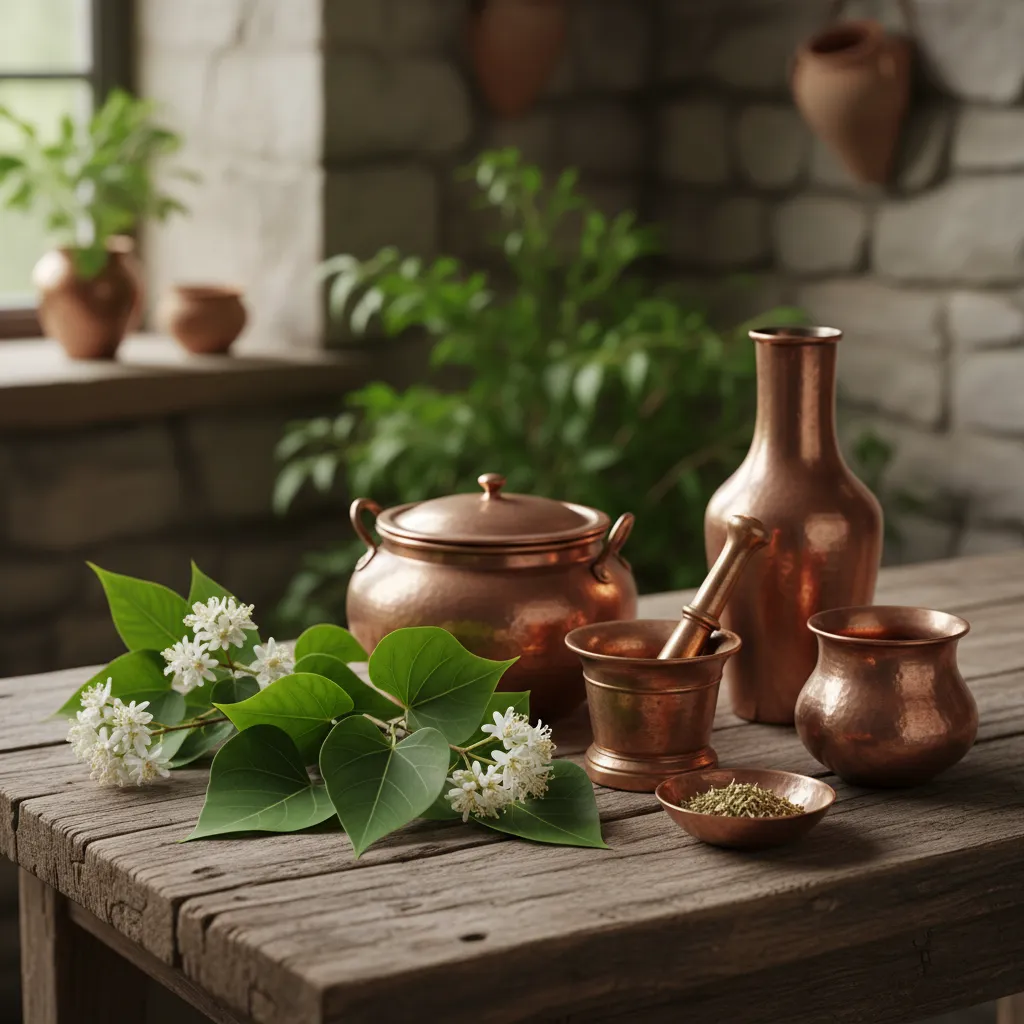
Integrating TCM NZ herbs involves categorizing New Zealand native plants according to Traditional Chinese Medicine energetics—specifically taste (five flavors), temperature (hot, warm, neutral, cool, cold), and channel tropism. By mapping indigenous plants like Kawakawa and Manuka onto TCM frameworks at our Home, practitioners can create locally sourced, sustainable formulas that address specific disharmonies such as Qi stagnation or Damp-Heat while respecting the whakapapa of the local flora.
The Philosophy of Integration: Why Localize TCM?
Traditional Chinese Medicine (TCM) is a comprehensive medical system developed over thousands of years, deeply rooted in the observation of nature. However, a core tenet of ancient herbal wisdom is the concept of Dào Dì (geo-authenticity), which emphasizes the relationship between a plant and its environment. While importing herbs from China is standard practice, there is a growing movement among New Zealand herbalists to apply TCM diagnostic frameworks to the flora growing in their own backyard.
New Zealand’s isolation has produced a unique botanical landscape, evolving distinct chemical and energetic profiles to survive specific climatic challenges. Integrating TCM NZ herbs is not about replacing the classic Chinese materia medica, but rather about expanding the practitioner’s toolkit to include locally abundant resources. This approach reduces carbon footprints, ensures freshness, and arguably provides medicine that is energetically resonant with the people living in that same environment. This concept aligns with the macrobiotic principle that one should eat and heal with what grows within their immediate radius.

Understanding TCM Energetics in an NZ Context
To successfully utilize New Zealand herbs within a TCM paradigm, one must move beyond chemical constituents and look at the plants through the lens of energetics. This involves classifying plants based on three primary factors: Temperature, Taste, and Channel Affiliation.
Temperature: The Yin and Yang of NZ Flora
The New Zealand climate is maritime, often damp and windy. Consequently, many native plants have evolved properties to counteract these conditions. We see an abundance of aromatic, warming plants (Yang) that disperse dampness and cold. However, there are also cooling bitters (Yin) found in the forest understory.
- Hot/Warm: Herbs that speed up metabolism, disperse cold, and move blood (e.g., Horopito).
- Neutral: Herbs that balance and nourish without extreme thermal shifts.
- Cool/Cold: Herbs that clear heat, reduce inflammation, and sedate (e.g., Kumarahou).
The Five Flavors
In TCM, taste determines function. By tasting raw NZ herbs, practitioners can deduce their therapeutic actions:
- Pungent (Acrid): Disperses and moves Qi/Blood (e.g., Kawakawa).
- Bitter: Drains heat and dries dampness (e.g., Koromiko).
- Sweet: Tonifies and harmonizes (e.g., Harakeke gel).
- Sour: Astringes and prevents leakage.
- Salty: Softens hardness and enters the Kidney channel.
Mapping NZ Native Plants to TCM Principles
Developing a “New Zealand Materia Medica” requires rigorous testing and observation. Below is an analysis of key NZ herbs through the TCM lens. Note that these classifications are based on the consensus of modern integrated herbalists and organoleptic testing.
Kawakawa (Piper excelsum): The Pungent Mover
Energetics: Pungent, slightly bitter, Warm.
Channels: Heart, Spleen, Stomach.
TCM Actions: Disperses Wind-Cold-Damp, regulates Qi, invigorates Blood, harmonizes the Stomach.
Kawakawa is often the first herb integrated by TCM practitioners in NZ. Its numbing effect on the tongue (due to myristicin) indicates its ability to disperse wind and alleviate pain, similar to Xi Xin (Asarum) but generally safer and less toxic. This assessment is a cornerstone of the practice, much like Understanding TCM Tongue Diagnosis. It is excellent for rheumatic complaints (Bi syndrome) aggravated by the cold, damp NZ winters. Its heart-shaped leaves also suggest an affinity for the Heart channel, useful for emotional stagnation.
Kumarahou (Pomaderris kumeraho): The Bitter Drainer
Energetics: Bitter, Cold.
Channels: Lung, Liver.
TCM Actions: Clears Lung Heat, transforms Phlegm, drains Dampness.
Kumarahou contains saponins which create a soapy lather, indicating its ability to “scrub” and clear turbidity. In TCM terms, it is a superior herb for Phlegm-Heat in the Lungs (bronchitis, productive coughs). Its bitter quality also suggests it enters the Liver to clear damp-heat, potentially useful in skin conditions like eczema that present with weeping and redness. For other dermal treatments, read about Ponga (Silver Fern): Exploring its Topical Applications.
Manuka (Leptospermum scoparium): The Aromatic Astringent
Energetics: Aromatic, Bitter, Astringent, Cool to Neutral.
Channels: Lung, Spleen, Bladder.
TCM Actions: Clears Damp-Heat, resolves toxins, astringes discharge.
While famous for its honey, the leaf and bark of Manuka are potent medicines. The aromatic nature pierces through dampness, while its astringency helps bind loose stool or heal wounds. It acts somewhat like a combination of Ku Shen (Sophora) for damp-heat and mild aromatics for the digestion.
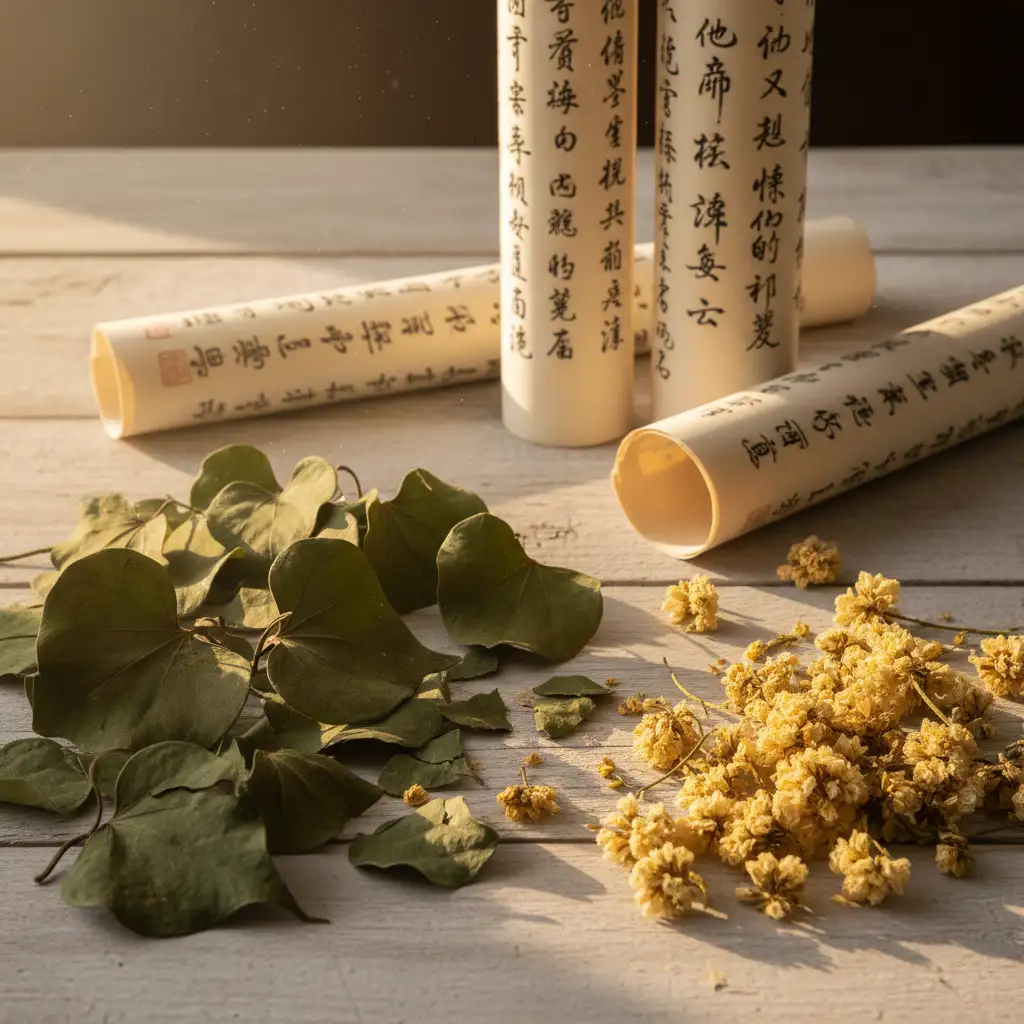
Synergies and Distinctions: TCM and Rongoā Māori
It is critical to approach this integration with cultural safety and respect. Rongoā Māori is the traditional healing system of the Māori people, encompassing herbal medicine (Rongoā Rākau), physical therapies (Mirimiri), and spiritual healing (Wairua). It is a holistic system with its own distinct whakapapa (genealogy) and protocols.
TCM provides a diagnostic framework, not a replacement for Rongoā knowledge. When a TCM practitioner uses Kawakawa, they are applying a Chinese theoretical model to a Māori taonga (treasure). The synergy lies in the functional overlap:
- Holism: Both systems view the body as an integrated whole connected to the environment.
- Vital Energy: The concept of Qi in TCM shares similarities with Mauri (life force) in Te Ao Māori, though they are not identical.
- Gut Health: Both systems place heavy emphasis on the digestive system (Spleen/Stomach in TCM, puku in Rongoā) as the center of health.
For a deeper understanding of the indigenous perspective, resources like Te Ara – The Encyclopedia of New Zealand provide authoritative information on traditional uses.
Clinical Application: Creating Integrated Formulas
The true art of TCM lies in formulation—combining herbs to enhance efficacy and reduce toxicity. Here is how an integrated practitioner might construct a formula using NZ herbs for a common condition: Wind-Cold attacking the Lungs (common cold with chills, clear runny nose).
Sample Formula Construction
Chief Herb (Jun): Kawakawa.
Role: Disperses the exterior cold, releases the muscle layer, moves Qi.
Deputy Herb (Chen): Manuka.
Role: Assists in clearing dampness and antimicrobial action against the pathogen.
Assistant Herb (Zuo): Horopito (Pseudowintera colorata).
Role: Strongly warming (Hot), aids in pushing out the cold. Used sparingly due to its intense heat (Yang).
Envoy Herb (Shi): Harakeke (root or gel).
Role: Harmonizes the harshness of the pungent herbs, protects the stomach fluids (Yin).
This theoretical formula mimics the structure of classic prescriptions like Gui Zhi Tang but utilizes the unique chemistry of the New Zealand bush. Practitioners must be skilled in pulse and tongue diagnosis to ensure the herbs match the patient’s internal climate.

Challenges, Ethics, and Sustainability
While the integration of TCM and NZ herbs offers immense potential, it faces significant challenges.
Sustainability and Conservation
Many NZ natives are slow-growing. Harvesting bark or roots can kill the tree if not done correctly. Practitioners must adhere to sustainable harvesting practices (tikanga), ensuring that only what is needed is taken and that the plant can regenerate. Over-harvesting for commercial gain is a major threat to biodiversity.
Standardization and Safety
Unlike the Chinese materia medica, which has thousands of years of documented dosages and contraindications, the TCM classification of NZ herbs is relatively new. There is less data on drug-herb interactions. For instance, the coumarins in certain plants may interact with blood thinners. Caution and conservative dosing are required.
Cultural Appropriation
Using NZ herbs requires acknowledging their Māori lineage. It is unethical to strip the plant of its cultural context solely for profit. Non-Māori practitioners should seek to learn from Rongoā experts where possible and credit the source of the botanical knowledge. For more on the legal and cultural framework of plant rights in NZ, refer to government publications on the Department of Conservation website.
People Also Ask
Can Kawakawa be used as a substitute for TCM herbs?
Yes, Kawakawa is often compared to TCM herbs that release the exterior and move Qi, such as Gui Zhi (Cinnamon Twig) or mild Ma Huang. It is warming and pungent, making it suitable for Wind-Cold patterns and rheumatic pain, but it has its own unique chemical profile and is not a direct 1:1 clone.
Is Manuka honey considered Yin or Yang in TCM?
Manuka honey is generally considered neutral to slightly warm and nourishing (Yin-building) for the Spleen and Lung Qi, similar to other honeys (Feng Mi). However, the Manuka plant (leaves/bark) is more astringent, bitter, and cooling/drying compared to the sweet honey.
What NZ herb is best for clearing damp-heat?
Kumarahou is a primary candidate for clearing damp-heat, particularly in the Lungs and Liver. Its bitter taste and saponin content make it effective for resolving thick phlegm and bronchial congestion, paralleling the actions of herbs like Huang Qin.
How does Horopito fit into the Five Elements theory?
Horopito is strongly associated with the Fire element due to its intense heat and pungent taste (hot pepper tree). In TCM terms, it is a potent Yang tonic that warms the Middle Jiao, disperses cold, and kills parasites, acting similarly to Hua Jiao (Sichuan Pepper).
Are there risks in combining TCM and Rongoā Māori?
The main risk is not chemical incompatibility, but rather misdiagnosis or incorrect preparation. Additionally, cultural risks exist if the practitioner does not respect the protocols (tikanga) of harvesting and using the plants. From a safety perspective, one should always check for herb-drug interactions.
Where can I study integrated TCM and NZ herbal medicine?
There are specialized courses in New Zealand that focus on Rongoā Māori, and some TCM colleges in NZ are beginning to introduce native herbs into their curriculum. However, much of this specific integration is currently taught through workshops by experienced clinical herbalists and bi-cultural practitioners.