Te Ao Māori Rongoā represents the intersection of the indigenous Māori worldview and traditional healing practices. As explored on our Home, it defines health not merely as the absence of disease, but as a dynamic balance between the physical body (*tinana*), the spiritual realm (*wairua*), the mind (*hinengaro*), and the extended family structure (*whānau*), rooted in a deep connection to the natural world.
The Holistic Nature of Te Ao Māori
To understand Rongoā, one must first understand Te Ao Māori—the Māori world. This worldview is distinct from the compartmentalized approach often found in Western medicine. In Te Ao Māori, everything is interconnected. The universe is viewed as a holistic organism where the physical and spiritual realities are woven together. Consequently, Rongoā Māori (traditional healing) cannot be reduced to a simple list of herbal remedies; it is a system of healing that addresses the whole person within their wider environment.
At the heart of this worldview is the concept of *Hauora* (well-being). The most widely recognized model for understanding this is Mason Durie’s Te Whare Tapa Whā, which compares health to the four walls of a house. If one wall is missing or damaged, the house becomes unstable. These four walls are:
- Taha Tinana (Physical Health): The capacity for physical growth and development.
- Taha Wairua (Spiritual Health): The capacity for faith and wider communion.
- Taha Whānau (Family Health): The capacity to belong, care, and share.
- Taha Hinengaro (Mental Health): The capacity to communicate, to think, and to feel.
In the context of Rongoā, a practitioner (tohunga or kairomiromi) does not look at a physical symptom in isolation. A skin ailment, for example, is not treated solely with a topical balm (rongoā rākau) or extracts detailed in Tincture Making with New Zealand Herbs: Alcohol & Glycerine Extracts. The healer investigates whether there is an imbalance in the *wairua* or stress within the *whānau* that is manifesting physically. This holistic lens is the defining characteristic of Te Ao Māori Rongoā.

Whakapapa: Connecting Humans, Nature, and Spirit
Central to Te Ao Māori is *Whakapapa* (genealogy). However, whakapapa extends far beyond human lineage. It traces the genealogy of all things back to the primordial parents, Ranginui (Sky Father) and Papatūānuku (Earth Mother). Because of this shared origin, Māori view plants, trees, rivers, and mountains as ancestors and kin, rather than mere resources to be exploited.
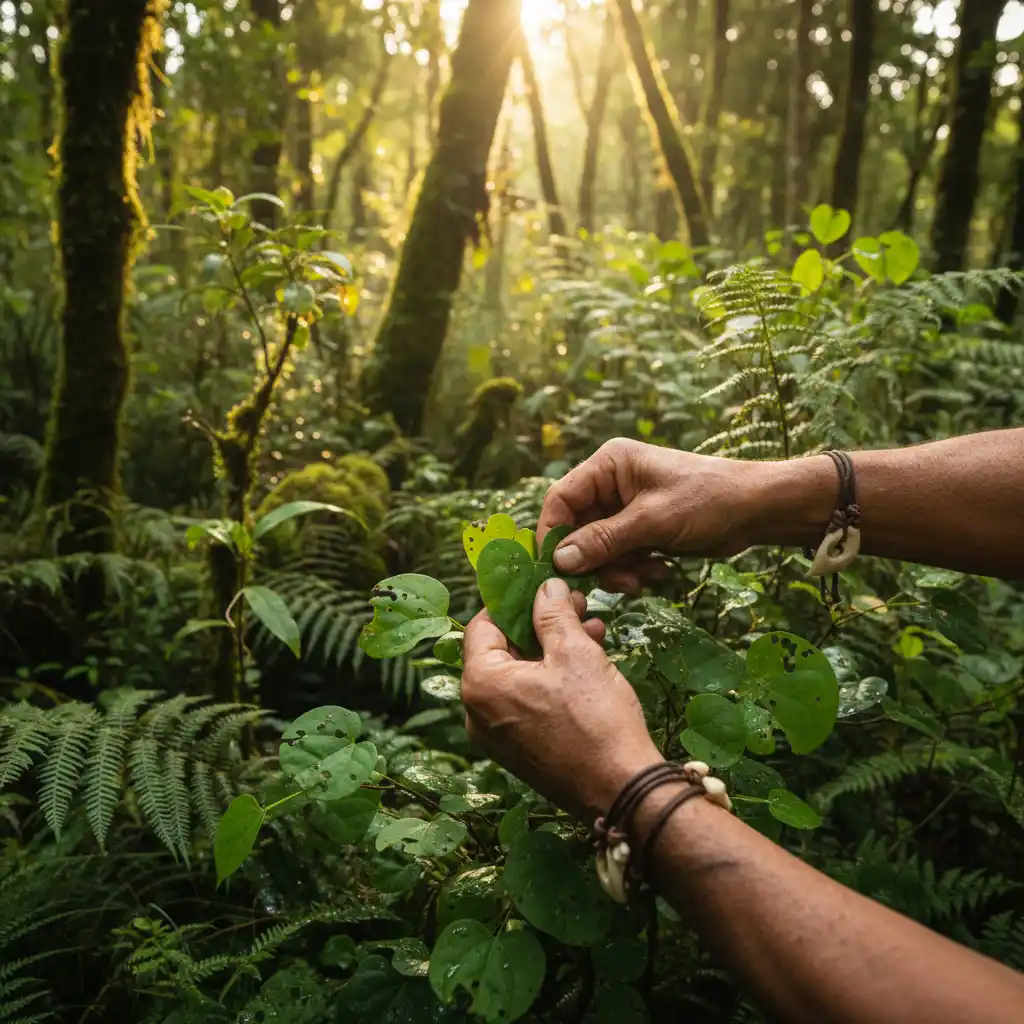
This familial connection fundamentally alters how medicine is gathered and administered. When a Rongoā practitioner enters the forest (Te Wao Nui a Tāne) to harvest Kawakawa or Kūmarahou, they are entering the domain of Tāne Mahuta (God of the Forest). They are visiting relatives. This relationship dictates that the harvesting process is reciprocal.
The concept of *Mauri* is also critical here. Mauri is the life force or essential essence that exists in all things—people, plants, and water. In Rongoā, the goal is often to restore the mauri of the patient. The plants used in healing also possess mauri. If a plant is harvested without respect, or from a polluted environment, its mauri is compromised, rendering the medicine less effective or even harmful. Therefore, the environmental health of the land is directly tied to the efficacy of the medicine.
The Role of Wairua (Spirituality) in Healing
In Western medicine, spirituality is often separated from clinical practice. In Te Ao Māori Rongoā, *Wairua* is omnipresent and often considered the most vital component of health. It is believed that physical illness is frequently a manifestation of spiritual disharmony or a breach of *tapu* (sacred restriction).
Because of this, *Karakia* (prayer or incantation) is an essential medical tool, not just a religious formality. Karakia is used to:
- Clear the way for healing to occur.
- Acknowledge the source of life and knowledge.
- Set the intention for the medicine being prepared.
- Lift the *tapu* from the plants so they can be used for healing (transitioning them to *noa* or common use).
For more in-depth information on the cultural context of these practices, Te Ara – The Encyclopedia of New Zealand offers comprehensive resources on traditional medicinal plant usage.
Tikanga: Ethics and Protocols in Rongoā
The practice of Rongoā is governed by *Tikanga*—customary practices, protocols, and ethics. These are not written laws but are deeply ingrained cultural norms that ensure safety and respect, especially when Identifying Authentic Rongoā Practitioners and Resources. Understanding Te Ao Māori means understanding that you cannot separate the medicine from the tikanga.
Sustainable Harvesting
One of the primary ethical pillars is *Kaitiakitanga* (guardianship). A practitioner never takes more than they need. The first plant found is often left to ensure the species continues to thrive. Harvesting is usually done on the east side of the bush to catch the morning sun (connected to new life), and gratitude is always expressed to the plant and the atua (gods).
Mana and Knowledge
In Te Ao Māori, knowledge is not owned; it is held in trust. The *Mana* (authority/prestige) of the Rongoā comes from the ancestors. Therefore, commercializing Rongoā without acknowledging its source or respecting the tikanga is seen as a violation of the medicine’s integrity. This worldview clashes with modern patent laws but is essential for maintaining the purity of the practice.
How Worldview Shapes Diagnostic Approaches
The diagnostic process in Rongoā is distinctively shaped by Te Ao Māori. A consultation often begins with *Whakawhanaungatanga* (building relationships). The healer needs to know who the patient is, where they are from, and who their people are. This establishes a connection and helps locate the individual within their whakapapa.
Diagnosis involves “reading” the patient on multiple levels:
- Observation: Looking at physical signs (skin color, eyes, posture).
- Listening: Hearing the patient’s story, often listening for what is not said.
- Sensing: Feeling the mauri and wairua of the patient. Practitioners may use *mirimiri* (massage) not just to manipulate tissue, but to sense energy blockages.
Because the worldview accepts the reality of the unseen, a diagnosis might attribute physical pain to grief held in the body, a disconnection from one’s land, or an unresolved conflict in the family. Consequently, the prescription might involve herbal tonics, but also a directive to visit an ancestral urupā (cemetery) or reconcile with a sibling.
Integrating Te Ao Māori into Modern Wellness
As interest in natural and holistic health grows globally, there is a resurgence of Rongoā Māori in New Zealand. However, integrating Te Ao Māori into modern wellness hubs requires careful navigation to avoid appropriation.
For modern herbalists and wellness seekers, adopting this worldview means moving away from a transactional relationship with nature (


